For aspiring musicians, the best electric guitars for beginners in 2026 offer high-quality, player-friendly options that provide excellent value and playability. Top recommendations include the Yamaha Pacifica 112V, Squier Affinity Stratocaster, and Epiphone Les Paul Special, all typically priced between $200 and $450. These models are designed to be comfortable, durable, and versatile, making them ideal for new players.
Electric Guitar: Overview and Evolution
The electric guitar is a cornerstone of modern music, shaping genres from rock and blues to jazz and metal. Unlike acoustic guitars, electric guitars use electromagnetic pickups to convert string vibrations into an electrical signal, which is then amplified and manipulated to create a vast spectrum of sounds. This ability to sculpt tone and its dynamic range has made it an iconic instrument globally.
The electric guitar’s story began in the early 1930s, driven by the need for guitars to be heard alongside louder brass instruments and drums. Pioneers like George Beauchamp and Adolph Rickenbacker developed early instruments with electromagnetic pickups. Les Paul’s “The Log” in 1941 demonstrated the potential of a feedback-resistant solid-body design. The 1950s saw the introduction of iconic models like Fender’s Telecaster (1950) and Stratocaster (1954), and Gibson’s Les Paul (1952). These foundational designs continue to evolve, offering unprecedented quality even at entry-level price points today.
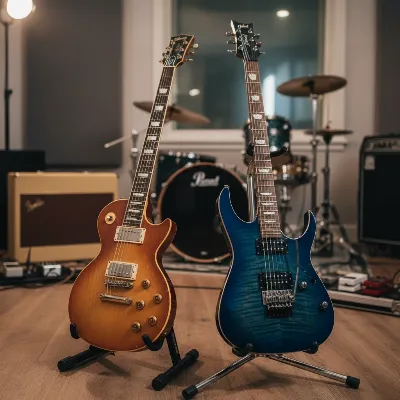 A vintage electric guitar alongside a modern electric guitar, showcasing the evolution of the instrument over decades, in a studio setting with warm lighting.
Popular Electric Guitar Types
Understanding the various iconic body shapes and designs, each with its own sonic characteristics and playability, can help beginners narrow down their preferences.
Stratocaster: Versatility and Classic Appeal
The Stratocaster, a Fender design, is one of the most recognizable electric guitar shapes. It features a distinctive double-cutaway body for comfortable playing and easy access to upper frets. Strats are known for their bright, clear, and articulate sound, typically produced by three single-coil pickups. This configuration offers immense tonal versatility, from clean funk and blues tones to gritty rock sounds. Many beginners find the Stratocaster’s contoured body and comfortable neck profile appealing. Iconic users include Jimi Hendrix and Eric Clapton. For beginners, the Squier Classic Vibe Stratocaster and Yamaha Pacifica 112V are highly recommended for their quality and playability.
Telecaster: Simplicity and Twang
Another legendary Fender design, the Telecaster, features a simpler, single-cutaway slab body. It is known for its punchy, resonant tone, often described as “twangy,” typically using two single-coil pickups. The Telecaster is a workhorse guitar, celebrated for its robust construction and ability to cut through a mix. While associated with country music, its versatility makes it a staple in blues, rock, and indie genres. Players appreciate its straightforward controls and dependable performance. Keith Richards and Bruce Springsteen are famous Telecaster players. The Squier Classic Vibe Telecaster offers an excellent entry point for new players.
Les Paul: Sustain and Power
|
Our Picks for the Best Electric Guitar in 2026
As an Amazon Associate I earn from qualifying purchases.
|
||
| Num | Product | Action |
|---|---|---|
| 1 | WINZZ EGM100 30 Inches Real Kids Electric Guitar with Beginner Kit, Right Handed (Gradient Pink) |

|
| 2 | Jackson Dinky Minion JS1X Electric Guitar - Black |
|
| 3 | LyxPro 39 inch Electric Guitar Kit Bundle with 20w Amplifier, All Accessories, Digital Clip On Tuner, Six Strings, Two Picks, Tremolo Bar, Shoulder Strap, Case Bag Starter kit Full Size - Blue |
|
| 4 | 16inch Mini Guitar Toy for Kids and Beginners, Electric Guitar with Strap for Toddlers and Boys and Girls Instrument Toys |
|
| 5 | Fender Mini Stratocaster Electric Guitar Kit, Beginner Guitar Kit, with 2-Year Warranty, with Frontman 10G Amp, Padded Gig Bag, Strap, Cable, Tuner, and Picks, Daphne Blue |
|
| 6 | 39 Inch Electric Guitar Bag 7mm Padding Waterproof Electric Guitar Case, Electric Guitar Gig Bag Backpack with Neck Strap and Pockets, Black |
|
| 7 | Ibanez GRG131DX - Black Flat |
|
| 8 | RockJam Electric Guitar Kit with 10-Watt Amp, Gig Bag, Picks, Spare Strings & Lessons |
|
| 9 | STRICH Electric Guitar Beginner Kit, Solid Body 39" Full Size Electric Guitar HSS Pick Up for Starter, with 10W Amp, Bag, Digital Tuner, Capo, Strap, String,Cable, Picks, SST-S20 Sapphire Blue |
|
| 10 | Tostar 39 Inch Full Size Electric Guitar Kit For Beginners And Adults,SSS Pickup Stratocaster Guitarra Electrica Set Includes Tremolo Bridge,Amp,Strings,Stand,Case Bag, Birthday Holiday Gifts, Red |
|
The Les Paul, created by Gibson, is synonymous with rock and blues. Its single-cutaway, typically heavier mahogany body, and glued-in (set) neck contribute to its legendary sustain and warm, thick tone. Les Pauls commonly feature two humbucker pickups, which produce a powerful, rich sound with significantly less hum than single-coils, making them ideal for distorted rock, metal, and jazz. While sometimes heavier, many players find its substantial feel and powerful output inspiring. Jimmy Page and Slash are famous Les Paul players. For beginners, the Epiphone Les Paul Studio and Epiphone Les Paul Tribute Plus provide authentic Les Paul aesthetics and tone at an accessible price.
SG: Aggression and Comfort
The SG, also a Gibson design, is a lighter, more radical double-cutaway alternative to the Les Paul. Its thinner mahogany body and excellent upper-fret access make it comfortable to play for long sessions. Like the Les Paul, the SG typically features humbucker pickups, delivering a powerful, aggressive, and sustain-rich tone, often with a slightly brighter edge due to its thinner body. It is a favorite among hard rock and metal players, as well as blues and classic rock musicians. Angus Young of AC/DC and Tony Iommi of Black Sabbath are iconic SG players. The Epiphone SG Special Satin E1 is a popular choice for beginners seeking this distinct style.
Other Electric Guitar Types: Hollow and Semi-Hollow Body
While solid-body guitars are generally recommended for beginners due to their robust nature and feedback resistance, hollow body and semi-hollow body guitars are also available. These instruments feature hollow chambers, giving them a more resonant, acoustic-like tone. Hollow bodies are primarily used in jazz for their warm sound, while semi-hollow bodies (with a solid block through the center) balance resonance and feedback resistance, making them popular in blues, rockabilly, and some rock genres. Brands like Ibanez and Gretsch offer excellent semi-hollow options, though solid-body electrics remain the standard starting point for beginners.
Detailed Anatomy of an Electric Guitar
Understanding the individual components of an electric guitar helps in appreciating how different elements contribute to its sound and playability.
Body: The Foundation of Tone
The guitar’s body is crucial for both comfort and tonal character. The choice of wood, or “tonewood,” significantly influences the instrument’s resonance and sustain.
- Alder: Common for Fender-style guitars, known for balanced tone with strong upper mids and good sustain. It is relatively lightweight.
- Ash: Offers a bright, airy tone with good sustain and scooped mids. Swamp ash is particularly prized.
- Mahogany:: A denser, heavier wood used for Gibson-style guitars. It produces a warm, rich tone with strong low-mids and excellent sustain.
- Maple: Often used for guitar tops on mahogany bodies or for entire bodies on brighter-sounding instruments, providing brightness and clarity.
The body’s shape (Strat, Tele, Les Paul, SG) also impacts playing comfort.
Neck: Playability and Feel
The neck is where hands interact most directly with the guitar, making its feel paramount for playability.
- Woods: Maple is common for necks due to its stability and bright tone, often paired with a maple or rosewood fretboard. Mahogany necks offer warmth and are typically found on Gibson-style guitars.
- Neck Shapes: These describe the profile of the back of the neck.
- C-shape: A common, comfortable, and versatile profile, suitable for most players.
- D-shape: Flatter and broader, often preferred by players with larger hands.
- V-shape: Offers a distinct feel that some players find comfortable, especially for thumb-over-the-neck techniques. The overall thickness and width of the neck also impact ease of fretting chords and navigating the fretboard.
Pickups: The Voice of the Guitar
Pickups are the “microphones” of an electric guitar, translating string vibrations into an electrical signal. Their type and configuration dramatically shape the guitar’s sound.
- Single-coil: Produce a bright, clear, and articulate sound with good treble response. Ideal for funk, blues, indie, and pop, but can be susceptible to hum.
- Humbucker: Designed to “buck the hum” of single-coils. They consist of two coils wired out of phase, producing a fatter, warmer, and more powerful sound with higher output and virtually no hum. Perfect for rock, metal, and styles requiring distortion.
- P90:: Often described as “fat” single-coils, P90s blend the clarity and bite of a single-coil with some warmth and punch of a humbucker. They are versatile for blues, punk, and rock.
- Active Pickups: Use a battery-powered preamp to boost the signal, offering a precise, high-output, and often compressed sound. Popular in modern metal for clarity under heavy distortion.
Many beginner guitars offer versatile pickup configurations, such as an HSS (Humbucker-Single-coil-Single-coil) setup on a Strat-style body, providing a wide tonal palette.
Bridge: Stability and Sustain
The bridge anchors the strings at the body end and plays a vital role in tuning stability, intonation, and sustain.
- Fixed Bridge: A non-moving bridge (e.g., hardtail, tune-o-matic). These are simpler, offer excellent tuning stability, and contribute to long sustain. They are a great choice for beginners as they require less maintenance.
- Tremolo Bridge: Also known as a “whammy bar,” this allows players to vary the pitch of the strings, creating vibrato effects. While offering expressive possibilities, tremolo systems can be more complex to set up and maintain tuning stability, making a fixed bridge a more beginner-friendly option.
Good examples of fixed bridges include the hardtail on a Telecaster or the tune-o-matic on a Les Paul. Stratocasters often feature a synchronized tremolo.
Other Essential Components
- Tuners (Machine Heads): Located on the headstock, these geared mechanisms adjust string tension and tune the guitar. Good quality tuners are essential for maintaining tuning stability.
- Nut: A small strip of material (bone, plastic, synthetic) at the top of the neck, guiding the strings to the tuners. It impacts string action and tuning.
- Volume/Tone Controls: Knobs on the guitar body that adjust the overall volume and treble content (tone) of your sound.
- Selector Switch: Allows you to choose which pickup or combination of pickups is active, changing the guitar’s tonal output.
Comparison Table of Top Electric Guitar Brands
Many reputable manufacturers offer excellent beginner-friendly electric guitars. Here’s a comparison of some popular choices:
| Brand | Key Characteristics | Typical Price Range (Beginner Models) | Pros | Cons |
|---|---|---|---|---|
| Squier | Fender’s affordable sub-brand, classic Strat/Tele designs | $200 – $500 | Excellent value, authentic Fender feel/sound, wide variety of models (Affinity, Sonic, Classic Vibe). | Lower-end models may require setup adjustments, components might be less premium than Fender. |
| Epiphone | Gibson’s accessible sub-brand, Les Paul/SG styles | $250 – $600 | Classic Gibson looks and tone (especially humbuckers), good build quality, robust feel. | Can be heavier than Squier models, some fret finishes may be less refined on entry-level models. |
| Yamaha | Known for Pacifica series, excellent quality for price | $250 – $450 | Superb build quality, comfortable playability, versatile tones (often HSS), great long-term investment. | Less “iconic” brand appeal compared to Fender/Gibson for some players, designs are more understated. |
| Ibanez | Modern designs, shred-friendly necks, versatile pickups | $200 – $550 | Fast, thin necks for easy playability, great for rock/metal, good entry-level options (GIO, miKro). | Aesthetics may not appeal to all, focus on modern playability might not suit traditionalists. |
| PRS SE | Premium quality, versatile tones, beautiful aesthetics | $600 – $900+ | Higher-end beginner/intermediate, excellent playability, superb tone, great “grow-into” guitar. | More expensive initial investment for a beginner. |
| Jackson | Aggressive designs, built for metal and hard rock | $250 – $550 | Fast necks, high-output pickups, durable, ideal for heavier genres. | Less versatile for clean tones, specific aesthetic may not suit all genres or players. |
| Gretsch | Vintage-inspired, distinct tone, often semi-hollow | $400 – $700 | Unique vintage aesthetic, warm and articulate tones, good for rockabilly, blues, classic rock. | Can be more specialized in sound, some semi-hollow models might be prone to feedback with high gain. |
| ESP LTD | Metal and hard rock focus, modern designs | $300 – $600 | Solid construction, powerful pickups, comfortable for aggressive playing, good value for heavy styles. | Similar to Jackson, genre-specific, designs can be polarizing. |
Electric Guitar Buying Guide
Choosing your first electric guitar is an exciting adventure, and several factors should guide your decision. Take your time to consider what truly suits your needs and aspirations.
Factors to Consider
- Budget: Beginner electric guitars range from $150 to $600+. Starter packs often offer the best initial value, bundling a guitar, amplifier, and accessories. Investing a little more often yields better playability and sound, enhancing the learning experience.
- Playing Style & Music Genre: Your chosen genre heavily influences the ideal pickup configuration, body shape, and tonal characteristics.
- Blues/Classic Rock: Stratocaster, Telecaster, Les Paul, SG.
- Hard Rock/Metal: Les Paul, SG, Ibanez, Jackson, ESP LTD.
- Funk/Pop/Indie: Stratocaster, Telecaster.
- Jazz: Hollow body, semi-hollow body, Les Paul.
- Skill Level: Look for features like comfortable neck profiles, lighter weight, and reliable tuning. A proper guitar setup (low string action without fret buzz) is vital for playability.
- Aesthetics: If you love the look of your guitar, you’ll be more motivated to pick it up and play. Classic body styles like the Stratocaster, Telecaster, Les Paul, and SG each offer distinct visual appeal.
Recommendations by Skill Level
- For Absolute Beginners: Focus on comfort, durability, and versatility. The Yamaha Pacifica 112V, Squier Affinity Stratocaster or Telecaster, and Epiphone Les Paul Special are fantastic starting points. These offer a great balance of playability, decent tone, and affordability. Consider a starter pack.
- For Intermediate Players (or Beginners wanting to “grow into” a guitar): If your budget allows, consider models like the Squier Classic Vibe Series (Stratocaster/Telecaster), Epiphone Les Paul Studio, or Ibanez GIO Series. These offer enhanced components, better finishes, and more refined tones. The PRS SE Silver Sky is an excellent premium option.
- For Younger/Smaller Players:: Consider guitars with a shorter scale length or smaller bodies, like the Ibanez miKro GRGM21M or the Squier Mini Strat. These are designed for smaller hands and arms.
 A person happily trying out different electric guitars in a music store, considering their options.
Essential Accessories
Your electric guitar won’t make a sound on its own. Here are the must-have accessories:
- Amplifier (Amp): Essential for hearing your electric guitar. A small practice amp (5-15 watts) with a headphone jack and auxiliary input is perfect for beginners.
- Guitar Cable (Instrument Cable):: Connects your guitar to the amp.
- Picks (Plectrums): Come in various thicknesses; experiment to find what feels best.
- Strap: For playing while standing.
- Tuner: A clip-on digital tuner is accurate and affordable.
- Gig Bag/Case:: To protect your guitar when transporting or storing it.
- Extra Strings:: Strings break, especially when learning to bend notes. Have a spare set.
- Capo (Optional):: A clamp that shortens the playable length of the strings, allowing you to change the key of open chords.
> “The best beginner electric guitar isn’t necessarily the most expensive one; it’s the one that feels comfortable, sounds inspiring, and makes you want to pick it up every single day.” – Alex Rivera, Senior Guitar Technician at ReviewMusical.com
Common Issues and Solutions
Even the best electric guitars can develop minor issues. Knowing how to troubleshoot common problems can save a trip to the repair shop.
- Buzzing Strings (Fret Buzz): Often caused by low string action, uneven frets, or insufficient neck relief.
- Simple Fix: Check if the action is too low. A slight adjustment to the bridge saddles or truss rod can help, but truss rod adjustments are best left to experienced hands or a professional.
- No Sound from Guitar:
- Simple Fix: Check all connections: guitar to cable, cable to amp, amp to power outlet. Ensure the guitar’s volume knob and the amp’s volume are turned up. Test with a different cable or amp if possible.
- Amp Hum/Noise: Can be caused by single-coil pickups, poor grounding, faulty cables, or interference from electronics.
- Simple Fix: Try moving away from other electronic devices. Use humbucker pickups if available. Check if cables are properly shielded.
- Intonation Issues (Out of Tune Up the Neck): If open strings are in tune but notes higher on the fretboard are off.
- Simple Fix: This requires adjusting the individual bridge saddles. It’s a precise process often best done with a tuner or handled by a professional.
- Difficulty Staying in Tune: Could be old strings, faulty tuners, or a poorly cut nut.
- Simple Fix: Change strings regularly. Ensure strings are properly wound on tuners. A professional can inspect and adjust the nut if necessary.
When simple fixes don’t work, or if you’re unsure, it’s always best to take your guitar to a professional technician. They can diagnose and repair more complex issues, ensuring your instrument plays its best.
Maintenance and Cleaning Electric Guitar
Proper care of your electric guitar ensures its longevity, preserves its playability, and maintains its aesthetic appeal. Regular maintenance is key to a happy instrument.
How to Preserve Your Electric Guitar
- Store Properly: When not playing, keep your guitar in a gig bag or hard case to protect it from dust, humidity changes, and accidental knocks. Avoid extreme temperatures and direct sunlight.
- Control Humidity: Guitars are sensitive to humidity. In very dry or humid environments, consider using a guitar humidifier or dehumidifier to maintain a stable environment (around 45-55% relative humidity).
- Loosen Strings for Storage (Long-Term): If storing for an extended period (months), detuning the strings slightly can relieve tension on the neck. For daily storage, keep them at pitch.
- Regular String Changes: Old strings lose their tone, sustain, and can feel dull. Change them every 1-3 months, depending on how often you play. Fresh strings make a huge difference in sound and feel.
Proper Cleaning Steps
Regular cleaning keeps your guitar looking and feeling great.
- Wipe Down After Each Play: Use a soft, lint-free microfiber cloth to wipe down the strings, fretboard, and body after every playing session. This removes sweat, oil, and grime that can corrode strings and dirty the finish.
- Clean the Fretboard: Periodically (e.g., during string changes), clean the fretboard. For rosewood or ebony fretboards, use a dedicated fretboard cleaner or lemon oil to remove grime and moisturize the wood. Maple fretboards, especially finished ones, can be cleaned with a damp cloth.
- Polish the Body: Use a guitar-specific polish or cleaner on the body to remove fingerprints and smudges, restoring its shine. Avoid harsh household cleaners, which can damage the finish.
- Clean Hardware: Wipe down bridges, tuners, and other metal parts with a dry cloth. For stubborn grime, a very slightly damp cloth can be used, ensuring to dry thoroughly afterward.
Recommended Maintenance Products
- Microfiber Cloths: Essential for daily wiping.
- Guitar Polish/Cleaner: Specifically formulated for guitar finishes.
- Fretboard Conditioner/Oil: For unfinished rosewood or ebony fretboards (e.g., Dunlop Lemon Oil, Music Nomad F-One Oil).
- String Cleaner: Wipes or solutions designed to extend string life.
- Guitar Humidifier: If you live in a very dry climate.
By following these simple care routines, your first electric guitar will remain a reliable and inspiring companion throughout your musical journey.
Conclusion
Choosing your first electric guitar in 2026 is an exciting opportunity, with manufacturers offering exceptional quality and playability at accessible price points. From the versatile Yamaha Pacifica 112V and the iconic Squier Stratocaster to the powerful Epiphone Les Paul and shred-ready Ibanez GIO, there’s a perfect instrument waiting to kickstart your musical adventure. Remember to prioritize comfort, understand the basic components, and select a guitar that inspires you to play every day. Equip yourself with essential accessories, practice good maintenance, and don’t be afraid to seek professional help when needed. The journey of learning electric guitar is incredibly rewarding, and with the right instrument in hand, you’re well on your way to creating your own electrifying sounds.
What kind of music are you most excited to create with your first electric guitar?
Frequently Asked Questions
Which electric guitar is best for small hands?
For players with smaller hands, guitars with shorter scale lengths and thinner neck profiles are ideal. Models like the Ibanez miKro GRGM21M or the Squier Mini Stratocaster are specifically designed to be more
Frequently Asked Questions
Which electric guitar is best for small hands?
For players with smaller hands, guitars with shorter scale lengths and thinner neck profiles are ideal. Models like the Ibanez miKro GRGM21M or the Squier Mini Stratocaster are specifically designed to be more comfortable for smaller hands and arms, making them easier to play and learn on.
What is the typical price range for a good beginner electric guitar?
Good beginner electric guitars typically range from $200 to $600. Starter packs, which often include a guitar, amplifier, and essential accessories, can offer excellent value within this price bracket, providing everything a new player needs to get started.
What are the essential accessories needed for a new electric guitar?
Essential accessories for a new electric guitar include an amplifier (5-15 watts is good for practice), a guitar cable, picks, a strap, a tuner (clip-on digital tuners are popular), a gig bag or case for protection, and extra strings. These items ensure you can play, protect, and maintain your instrument.
How often should I change the strings on my electric guitar?
You should change your electric guitar strings every 1-3 months, depending on how often you play. Old strings lose their tone, sustain, and can feel dull, negatively impacting your playing experience. Regular string changes significantly improve sound and feel.
What are the main differences between single-coil and humbucker pickups?
Single-coil pickups produce a bright, clear, and articulate sound, ideal for genres like funk and blues, but can be susceptible to hum. Humbucker pickups consist of two coils wired out of phase, producing a fatter, warmer, and more powerful sound with higher output and virtually no hum, making them perfect for rock and metal.
How to Maintain and Clean Your Electric Guitar
Proper care of your electric guitar ensures its longevity, preserves its playability, and maintains its aesthetic appeal. Regular maintenance is key to a happy instrument.
Use a soft, lint-free microfiber cloth to wipe down the strings, fretboard, and body after every playing session. This removes sweat, oil, and grime that can corrode strings and dirty the finish, extending the life of your instrument.
During string changes, clean the fretboard. For rosewood or ebony fretboards, use a dedicated fretboard cleaner or lemon oil to remove grime and moisturize the wood. Maple fretboards, especially finished ones, can be cleaned with a damp cloth.
Use a guitar-specific polish or cleaner on the body to remove fingerprints and smudges, restoring its shine. Avoid harsh household cleaners, which can damage the finish and potentially devalue your guitar.
Wipe down bridges, tuners, and other metal parts with a dry cloth. For stubborn grime, a very slightly damp cloth can be used, ensuring to dry thoroughly afterward to prevent corrosion and maintain functionality.

I got one of the recommended guitars, and while it’s generally good, I found the action a bit high right out of the box. It made some of the barre chords a little tougher than I expected for a beginner model. I’ll probably take it to a local shop to get it set up properly, which adds a bit to the overall cost. Still, it sounds decent.
I was torn between a few models, but the mention of the Yamaha Pacifica 112V’s versatility really sold me. It’s true, this guitar can handle so many different styles, which is awesome when you’re still figuring out what kind of music you want to play. The build quality is impressive for a guitar in the $200-$450 range.
I just picked up the Squier Affinity Stratocaster after reading about it here, and I’m absolutely loving it! The playability is fantastic for a beginner like me, and it feels really comfortable to hold. For the price point, I honestly don’t think you can beat the quality. It’s been perfect for learning my first few chords and riffs.
The Epiphone Les Paul Special was a solid recommendation. I’ve been playing it for a few weeks now, and it sounds great through my small practice amp. My only minor complaint is that the tuning pegs feel a little bit loose sometimes, but it holds tune well enough for practice. Definitely a good value for someone just starting out.