The best hollow body electric guitars for jazz in 2026 include iconic models like the Gibson ES-175 and L-5, alongside modern favorites such as the Ibanez GB10SEFM, Epiphone Broadway, D’Angelico Excel EXL-1, Eastman AR series, and select Gretsch Electromatic Hollow Body models. These instruments are prized for their warm, resonant tones, essential for achieving the authentic jazz sound due to their entirely hollow internal cavities and specific pickup configurations.
Electric Guitar: Overview and Historical Development
The electric guitar has profoundly shaped modern music, and within its diverse family, the hollow body stands as a venerable cornerstone, particularly in jazz. Its journey began in the 1930s as guitarists sought greater volume to compete with big band horns and percussion. Early innovators like Gibson adapted existing acoustic archtop designs by adding electromagnetic pickups, effectively birthing the first electric guitars. These early hollow bodies, often referred to as “jazz boxes,” quickly became the standard for jazz musicians, defining the genre’s amplified sound for decades. Iconic models like the Gibson ES-150, championed by Charlie Christian, marked critical milestones, establishing the warm, resonant, and often “woody” tone that remains synonymous with traditional jazz guitar. This distinct tonal characteristic, combined with their elegant aesthetics, solidified their place in music history.
Popular Hollow Body Electric Guitar Classifications
When discussing electric guitars for jazz, it is crucial to distinguish between true hollow body and semi-hollow body instruments, as their construction significantly impacts their sound and performance. A true hollow body electric guitar possesses an entirely empty internal cavity, much like an acoustic archtop. This design allows for maximum acoustic resonance, producing a fat, warm, and highly expressive tone that breathes with every note. However, this resonance also makes them more susceptible to feedback at higher volumes. In contrast, semi-hollow body guitars incorporate a solid wood block running through the center of their body. This center block significantly reduces feedback, enhances sustain, and allows for higher gain settings, making them more versatile across genres, including jazz fusion, blues, and rock. While semi-hollows are incredibly popular, for the purest, traditional jazz tone, the fully hollow body remains the gold standard. For expert electric guitar reviews on this site.
Gibson ES-175 & L-5
The Gibson ES-175 is arguably the most iconic hollow body jazz guitar, having been in continuous production since 1949. Its laminated maple construction and set-in humbucking pickups offer a rich, warm, and articulate tone with excellent feedback resistance for a hollow body. Legends like Wes Montgomery, Joe Pass, and Jim Hall famously wielded the ES-175, cementing its status as a jazz workhorse. The Gibson L-5, particularly the L-5CES (Cutaway Electric Spanish), represents the pinnacle of Gibson’s archtop craftsmanship. Introduced in 1922 as an acoustic and electrified in the 1950s, the L-5 is characterized by its carved spruce top and figured maple back and sides. It delivers unparalleled acoustic projection and a complex, sophisticated amplified tone, making it a dream instrument for many professionals, notably Wes Montgomery.
Ibanez GB Series (e.g., GB10SEFM)
|
Our Picks for the Best Electric Guitar in 2026
As an Amazon Associate I earn from qualifying purchases.
|
||
| Num | Product | Action |
|---|---|---|
| 1 | LyxPro 39 inch Electric Guitar Kit Bundle with 20w Amplifier, All Accessories, Digital Clip On Tuner, Six Strings, Two Picks, Tremolo Bar, Shoulder Strap, Case Bag Starter kit Full Size - Blue |

|
| 2 | STRICH Electric Guitar Beginner Kit, Solid Body 39" Full Size Electric Guitar HSS Pick Up for Starter, with 10W Amp, Bag, Digital Tuner, Capo, Strap, String,Cable, Picks, SST-S20 Sapphire Blue |
|
| 3 | 39 Inch Electric Guitar Bag 7mm Padding Waterproof Electric Guitar Case, Electric Guitar Gig Bag Backpack with Neck Strap and Pockets, Black |
|
| 4 | Jackson Dinky Minion JS1X Electric Guitar - Black |
|
| 5 | Tostar 39 Inch Full Size Electric Guitar Kit For Beginners And Adults,SSS Pickup Stratocaster Guitarra Electrica Set Includes Tremolo Bridge,Amp,Strings,Stand,Case Bag, Birthday Holiday Gifts, Red |
|
| 6 | WINZZ EGM100 30 Inches Real Kids Electric Guitar with Beginner Kit, Right Handed (Gradient Pink) |
|
| 7 | RockJam Electric Guitar Kit with 10-Watt Amp, Gig Bag, Picks, Spare Strings & Lessons |
|
| 8 | 16inch Mini Guitar Toy for Kids and Beginners, Electric Guitar with Strap for Toddlers and Boys and Girls Instrument Toys |
|
| 9 | Ibanez GRG131DX - Black Flat |
|
| 10 | Fender Mini Stratocaster Electric Guitar Kit, Beginner Guitar Kit, with 2-Year Warranty, with Frontman 10G Amp, Padded Gig Bag, Strap, Cable, Tuner, and Picks, Daphne Blue |
|
Ibanez has a strong legacy in jazz guitars, largely thanks to its collaborations with jazz great George Benson. The Ibanez GB10SEFM, part of the George Benson signature series, is a prime example of a premium hollow body designed specifically for jazz. Unlike larger jazz boxes, the GB10SEFM features a slightly smaller, more manageable body, yet still delivers a rich, articulate hollow body tone. Its custom GB special humbuckers are tailored for warm, clear jazz sounds, and its compact size helps mitigate feedback. This model is highly favored by players seeking that George Benson-esque clarity and playability.
Epiphone Broadway
Epiphone has long offered excellent value in the archtop market, and the Epiphone Broadway stands out as a classic hollow body jazz guitar. With its large, deep, fully hollow body and traditional arched top and back, the Broadway exudes vintage charm. It often features a floating bridge and a distinctive Frequensator tailpiece, contributing to its old-school aesthetic and resonant sound. Equipped with Alnico Classic Pro humbuckers, it delivers a thick, warm tone perfect for chordal runs, vamps, and smooth jazz leads, making it a delightful and accessible option for traditional jazz players.
D’Angelico Excel EXL-1
D’Angelico guitars are renowned for their timeless archtop designs and impeccable craftsmanship. The D’Angelico Excel EXL-1 is a premium hollow body that embodies the quintessential jazz guitar experience. Its large, fully hollow laminated spruce top and flamed maple body contribute to a bright, resonant tone with excellent projection. Featuring a single floating mini-humbucker pickup at the neck, it produces a clear, articulate, and warm jazz sound, making it a favorite among discriminating professionals who appreciate both its classic aesthetics and superb tonal qualities.
Eastman AR Series
Eastman Guitars are celebrated for combining old-world craftsmanship with modern reliability, often rivaling vintage archtops in tone and feel at a more accessible price point. Models like the Eastman AR503CE are prime examples of their commitment to the hollow body tradition. These boutique instruments typically feature solid spruce tops and laminated maple back and sides, offering a highly resonant and expressive voice. Hand-carved or meticulously crafted, Eastman hollow bodies are known for their exceptional playability and warm, rich jazz tones, making them a superb choice for serious players.
Gretsch Electromatic Hollow Body Models
While many Gretsch models are associated with rockabilly and country, certain Gretsch Electromatic Hollow Body guitars, such as the G5420T, offer authentic vintage aesthetics and tones that can be beautifully adapted for jazz. These guitars feature fully hollow laminated maple bodies and dual FT-5E Filter’Tron humbucking pickups, which deliver a powerful yet clear sound. When paired with the right amp and tone settings, their inherent warmth and distinctive character can produce a cutting, yet smooth jazz tone, suitable for players looking for a unique sonic signature.
> “The deep, resonant voice of a true hollow body guitar provides a tonal palette that is irreplaceable for traditional jazz. It’s not just about the notes; it’s about the air, the breath, and the acoustic character that shines through even when amplified.” – Admin, ReviewMusical.com
Detailed Construction of Electric Guitars
The intricate construction of an electric guitar, especially a hollow body, significantly influences its playability, tone, and response. Understanding these components helps in appreciating the instrument’s character.
Body
The body of a hollow body electric guitar is typically crafted from tonewoods that contribute to its resonant qualities. Maple is a very common choice for the back and sides, often laminated, providing brightness and sustain. For the top, spruce (often laminated) is frequently used, renowned for its excellent resonance and projection, creating a lively and articulate sound. The larger, fully hollow construction allows the entire body to vibrate, producing a richer, more acoustic-like tone compared to solid body or semi-hollow designs. The type of wood affects the warmth, clarity, and overall frequency response of the amplified sound.
Neck
The neck is crucial for playability and comfort. Common woods for necks include maple (known for brightness and stability) and mahogany (offering warmth and sustain). The neck profile or shape, such as C-shape, D-shape, or V-shape, dramatically influences how the guitar feels in your hand. Jazz players often prefer comfortable, well-rounded profiles for complex chord voicings and rapid lead lines. The fingerboard is typically made from ebony or rosewood, both dense woods that provide a smooth playing surface and contribute to the guitar’s attack and sustain.
Pickup
Pickups are the heart of an electric guitar’s amplified sound, converting string vibrations into an electrical signal. For jazz hollow bodies, humbucking pickups are the most common choice, especially low-output or PAF-style (Patent Applied For) humbuckers, like those featuring Alnico V magnets. These pickups are prized for their warm, rounded, and clear tones, with minimal hum. They provide excellent sustain and clarity, allowing individual notes in chords to ring out distinctly, which is vital for jazz. Some hollow bodies may also feature P90 single-coil pickups, offering a brighter, more articulate, and slightly grittier tone, though traditional jazz often favors the smoother sound of humbuckers. Floating pickups, unattached to the body, are sometimes found on traditional carved archtops to maximize acoustic resonance.
Bridge
The bridge system on a hollow body electric guitar primarily influences intonation, sustain, and tuning stability. Many jazz hollow bodies feature a fixed bridge (often a Tune-o-Matic style with a trapeze or stop-bar tailpiece), which anchors the strings securely and contributes to sustain. Traditional archtops frequently employ a floating bridge, where the bridge sits on the top of the guitar and is held in place by string tension. This design maximizes the acoustic vibration of the top, enhancing the guitar’s natural resonance, though it can be more sensitive to setup. Tremolo systems are less common on traditional jazz hollow bodies but can be found on some models that cross into other genres.
Other Components
Beyond the major components, several other parts contribute to the overall performance and feel. Tuners (machine heads) on the headstock are essential for precise and stable tuning, with brands like Gotoh being highly regarded for their quality. The nut, typically made from bone or a synthetic material like Graph Tech NuBone, affects tuning stability and the tone of open strings. Volume and tone controls allow players to shape their sound on the fly, with many jazz players rolling back the tone knob to achieve a darker, mellower timbre. The tailpiece, often a trapeze or Frequensator design, also influences resonance and sustain.
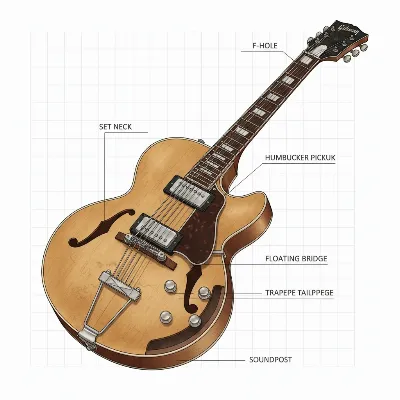 Detailed diagram of a hollow body electric guitar’s internal and external components crucial for jazz tone
Comparing Renowned Electric Guitar Brands
Choosing the right brand is a significant decision, as each offers a unique approach to craftsmanship, tone, and value. Here’s a comparison of top brands known for their hollow body and jazz-suitable electric guitars:
| Brand | Quality | Price Range | Signature Tone | Durability | Pros & Cons (Jazz Focus) |
|---|---|---|---|---|---|
| Gibson | Legendary, premium craftsmanship | High | Classic, warm, rich, articulate | Excellent | Pros: Iconic models (ES-175, L-5), unparalleled heritage, superb tone. Cons: Very high price point, some models (ES-335) are semi-hollow. |
| Ibanez | Excellent, especially for value | Mid to High | Clear, versatile, George Benson clarity | Very Good | Pros: Accessible Artcore series, dedicated jazz models (GB series), smooth playability. Cons: Some models may need pickup upgrades for purist jazz tones, can lean towards fusion. |
| Epiphone | Great value, Gibson-inspired | Low to Mid | Warm, vintage, classic archtop sound | Good | Pros: Affordable versions of iconic designs (Broadway, ES-335-style), great for beginners/intermediate, vintage aesthetic. Cons: Build quality can vary, sometimes needs setup adjustments. |
| D’Angelico | Elegant, premium, classic archtop | Mid to High | Articulate, clear, vintage jazz | Excellent | Pros: Stunning aesthetics, exceptional archtop design, dedicated jazz models (EXL-1), often features floating pickups. Cons: Can be pricier, single pickup models may lack versatility for other genres. |
| Eastman | Boutique, hand-crafted, vintage feel | Mid to High | Organic, resonant, acoustic-like | Excellent | Pros: Hand-carved or meticulously crafted, great value for money compared to high-end vintage, superb acoustic resonance. Cons: Smaller brand awareness, sometimes less available in local stores. |
| Gretsch | Distinctive, vintage-style | Mid | Bright, twangy, but can be warm for jazz | Good | Pros: Unique Filter’Tron humbuckers, iconic looks, specific hollow body models. Cons: Often associated with rockabilly, some models might require more tone shaping for traditional jazz, can be prone to feedback. |
| Yamaha | Consistent, high-quality, versatile | Mid to High | Balanced, clear, modern with jazz flavor | Excellent | Pros: Exceptional build quality (SA2200), reliable, versatile for various styles, good blend of traditional and modern. Cons: SA2200 is semi-hollow, less traditional jazz aesthetic for some purists. |
Electric Guitar Buying Guide
Purchasing a hollow body electric guitar, particularly for jazz, involves considering several factors to ensure it aligns with your musical aspirations and skill level.
Factors to Consider
- Budget: Hollow body guitars range from affordable Epiphones and Ibanez Artcores to high-end Gibsons and D’Angelicos. Define your budget, but remember that quality often correlates with price, especially for craftsmanship and components crucial to jazz tone.
- Playing Style & Genre: Traditional jazz often benefits from full hollow bodies with humbuckers for warm, dark tones. If your style leans towards fusion or blues, a semi-hollow might offer more versatility and feedback resistance.
- Skill Level: Beginners might start with more affordable, robust models like the Epiphone Broadway or Ibanez Artcore series. Intermediate players can explore higher-end Epiphones, mid-range Ibanez, or entry-level Eastman. Professionals often gravitate towards Gibson, D’Angelico, or premium Ibanez models.
- Comfort & Ergonomics: Hollow bodies can be large. Ensure the body size and neck profile are comfortable for your playing posture and hand size, especially if you play extended sessions.
Recommendations by Skill Level
- Beginners: Look for models like the Epiphone Broadway or Ibanez Artcore AF75. These offer excellent jazz tones, good playability, and a classic hollow body feel without breaking the bank.
- Intermediate Players: Consider the D’Angelico Premier EXL-1 (if fully hollow) or the Ibanez GB10SEFM for a significant step up in quality and tone. The Eastman AR series also offers exceptional value at this level.
- Professional Players: The Gibson ES-175 or L-5 remain the pinnacle for many. For those seeking top-tier craftsmanship and tone outside of Gibson, premium D’Angelico or custom Eastman models are excellent choices.
Essential Accessories
To maximize your hollow body jazz guitar experience, consider these accessories:
- Amplifier: A clean, uncolored jazz amplifier is crucial. Popular choices include Polytone Minibrutes, Fender Deluxe Reverbs, or Roland Jazz Chorus amps. The goal is to reproduce the guitar’s natural tone faithfully.
- Strings: Flatwound strings are a hallmark of jazz guitar, offering a smooth feel, reduced finger noise, and a darker, mellower tone.
- Picks: Experiment with various pick thicknesses and materials to find what best suits your attack and tone preferences.
- Capo & Tuner: Essential tools for practice and performance.
- Guitar Case/Gig Bag: Protect your investment, especially for larger hollow body instruments.
Common Issues and Solutions
Hollow body electric guitars, while sonically rich, can present specific challenges that players should be aware of.
Feedback
The most common issue with hollow body guitars is feedback, especially at higher volumes or with distorted tones. This occurs because the hollow body acts like an acoustic sound chamber, resonating sympathetically with the amplifier’s sound.
- Solution: Reducing amplifier volume, adjusting your position relative to the amp, using a volume pedal to momentarily lower output, or even stuffing the F-holes with foam can help. For heavier music, a semi-hollow body is generally a better choice due to its center block, which effectively mitigates feedback.
Buzzing Strings & Loss of Sound
These issues can often stem from poor setup or worn components.
- Buzzing strings: Could be due to incorrect string action, worn frets, or an improperly cut nut. A professional setup is often the best solution.
- Loss of sound/intermittent signal: Check cables, amplifier connections, and the guitar’s output jack for looseness or corrosion. Faulty pickups or wiring may require professional attention.
When to Seek Professional Repair
While simple fixes like tightening a jack or changing strings can be done at home, always consult a professional technician for:
- Persistent buzzing after basic adjustments.
- Electronic issues beyond simple cable checks.
- Structural problems like neck warps or bridge issues.
- Fret work or nut replacement.
Maintenance and Cleaning of Electric Guitars
Proper care extends the life and maintains the playability of your hollow body electric guitar.
How to Preserve Your Guitar’s Lifespan
- Storage: Store your guitar in its case when not in use to protect it from dust, humidity fluctuations, and accidental damage. Ideally, keep it in a climate-controlled environment.
- Humidity Control: Hollow bodies are more susceptible to humidity changes than solid bodies. Use a humidifier in dry climates and a dehumidifier in excessively humid ones to prevent wood warping or cracking.
- String Changes: Change strings regularly, as old strings lose their vibrancy and can impact intonation.
Proper Cleaning Steps
- After Every Play: Wipe down the strings, fretboard, and body with a clean, soft microfiber cloth to remove sweat, oils, and fingerprints. This prevents grime buildup and preserves the finish.
- Body Cleaning: For a deeper clean, use a guitar-specific polish or cleaner sparingly. Apply to a cloth first, then wipe the body. Avoid harsh chemical cleaners.
- Fretboard Conditioning: Periodically (e.g., during string changes), clean and condition an unfinished fretboard (like rosewood or ebony) with a specialized fretboard oil to prevent drying and cracking.
Recommended Maintenance Products
- Microfiber cloths: Soft and non-abrasive for daily wiping.
- Guitar polish/cleaner: Specific formulations for guitar finishes.
- Fretboard oil/conditioner: For unfinished fretboards (e.g., lemon oil).
- String cleaner: To extend string life.
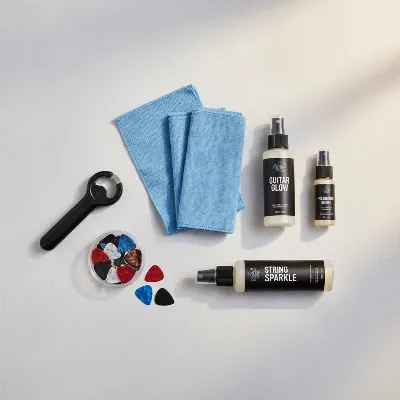 Essential guitar maintenance kit with cleaning products and tools
Conclusion
Choosing the best hollow body electric guitar for jazz is a journey into an instrument steeped in tradition and rich tonality. From the classic resonance of a Gibson ES-175 to the refined clarity of an Ibanez GB, these guitars offer a unique sonic palette essential for achieving that authentic jazz sound. Understanding their construction, knowing the leading brands, and committing to regular maintenance will ensure your chosen instrument not only sounds exceptional but also remains a cherished companion for years to come. Whether you’re a seasoned player or just beginning your jazz exploration, the perfect hollow body awaits to unlock new musical possibilities. What unique melodies will you discover with your new jazz box?
Frequently Asked Questions
What makes a hollow body guitar ideal for jazz?
Hollow body guitars are ideal for jazz due to their entirely hollow construction, which produces a warm, resonant, and acoustic-like tone. This design emphasizes the lower-mid frequencies and offers a distinct “woody” character crucial for traditional jazz sounds, allowing chords to ring out with natural depth and clarity.
Can I play other genres besides jazz on a hollow body electric guitar?
Absolutely! While revered for jazz, hollow body guitars are versatile. Their warm tones are excellent for blues, rockabilly, and even some indie rock. However, their susceptibility to feedback means they are less suitable for high-gain genres like hard rock or metal, where semi-hollow or solid body guitars excel.
What’s the main difference between a hollow body and a semi-hollow body guitar?
The key difference lies in their internal construction. A hollow body is completely empty inside, maximizing resonance but increasing feedback risk. A semi-hollow body has a solid wood block running through its center, which reduces feedback, enhances sustain, and allows for higher volume and gain settings, making it more versatile.
Are hollow body guitars harder to play than solid body guitars?
Not necessarily harder, but different. Hollow bodies tend to be larger and lighter, which might feel different physically. Their enhanced resonance and potential for feedback require more control and finesse in playing technique and amplifier management, which some players might find challenging initially.
Do I need special strings for a hollow body jazz guitar?
Many jazz guitarists prefer flatwound strings for their hollow bodies. Flatwounds offer a smoother feel, reduce finger noise, and contribute to a darker, more mellow tone that is characteristic of traditional jazz. While roundwounds can be used, flatwounds often enhance the desired jazz timbre.
What kind of amplifier should I use with a hollow body jazz guitar?
For a hollow body jazz guitar, a clean, transparent amplifier is highly recommended. Amps like the Roland Jazz Chorus, Fender Deluxe Reverb, or Polytone Minibrute are popular choices as they faithfully reproduce the guitar’s natural, warm tone without adding unwanted coloration or distortion.
How do I prevent feedback on my hollow body guitar?
To minimize feedback, lower your amplifier’s volume, position yourself further from the amp, and avoid facing the amp directly. Using a volume pedal to quickly cut signal, or even placing foam inserts into the F-holes (sound holes), can also help control unwanted resonance during performance.
How to Maintain Your Hollow Body Electric Guitar
Proper care and maintenance are essential to extend the life and preserve the playability of your hollow body electric guitar, ensuring it continues to deliver exceptional jazz tones.
Always store your hollow body guitar in its case when not in use. This protects it from dust, accidental damage, and fluctuations in humidity. Ideally, keep it in a climate-controlled environment to prevent wood warping or cracking.
Hollow body guitars are particularly sensitive to humidity changes. Use a humidifier in dry climates and a dehumidifier in excessively humid ones to maintain optimal wood integrity. This proactive measure helps prevent structural issues over time.
After each playing session, wipe down the strings, fretboard, and body with a clean, soft microfiber cloth. This removes sweat, oils, and fingerprints, preventing grime buildup and preserving the guitar's finish and string life.
For a deeper clean, use a guitar-specific polish or cleaner sparingly, applying it to a cloth first before wiping the body. During string changes, clean and condition unfinished fretboards (like rosewood or ebony) with a specialized fretboard oil to prevent drying and cracking.
Replace your guitar strings regularly, as old strings lose their vibrancy and can negatively impact intonation and tone. Fresh strings contribute significantly to the guitar's overall sound and playability.

I’ve always been a fan of the classic Gibson ES-175, and while it’s a beautiful instrument, I found the price point a bit steep for my current budget. I ended up going with an Epiphone Broadway instead, and while it’s a solid guitar, it doesn’t quite have the same depth of tone as the Gibson. It’s a good alternative, but I still dream of the ES-175.
I was torn between a few models, but the comparison of the Ibanez GB10SEFM really helped me make up my mind. I love the clarity and sustain it offers, which is perfect for my solo work. My only minor gripe is that the finish is a bit more prone to fingerprints than I expected, but that’s a small aesthetic issue for an otherwise incredible instrument.
I’ve been looking for a hollow body that can handle both traditional jazz and some more modern fusion, and the Eastman AR series was a revelation. The entirely hollow internal cavities really do make a difference in the resonance. It feels incredibly well-built and sounds amazing through my amp. Definitely a top-tier instrument for serious players.
I’ve been playing jazz guitar for years, and the D’Angelico Excel EXL-1 has always been on my radar. After reading about its specific pickup configuration and how it contributes to that warm, resonant tone, I finally pulled the trigger. It’s everything I hoped for and more. The playability is fantastic, and it really delivers that authentic jazz sound I’ve been chasing.