The Jackson Soloist electric guitar is a high-performance instrument renowned for its speed, precision, and aggressive tone, making it a favorite among shredders and metal musicians. Introduced in 1984, the Soloist distinguishes itself with a neck-through-body design, 24 jumbo frets, and powerful humbucking pickups, all optimized for demanding playing styles. This design maximizes sustain and provides effortless access to upper frets, setting it apart from traditional electric guitars.
Electric Guitar: Overview and Historical Development
The electric guitar revolutionized 20th-century music, enabling new sounds and performance styles. As hard rock and heavy metal gained popularity in the late 1970s and early 1980s, there was a growing demand for guitars capable of handling increasingly technical and fast playing. This era saw the emergence of brands like Jackson, which originated from a Southern California repair shop acquired from Charvel in 1978 by Grover Jackson. Jackson quickly became known for crafting custom, high-performance instruments, notably influenced by a collaboration with guitarist Randy Rhoads in the early 1980s. The Soloist, officially launched in 1984, was a groundbreaking “superstrat” that cemented Jackson’s reputation as a leader in metal guitar design.
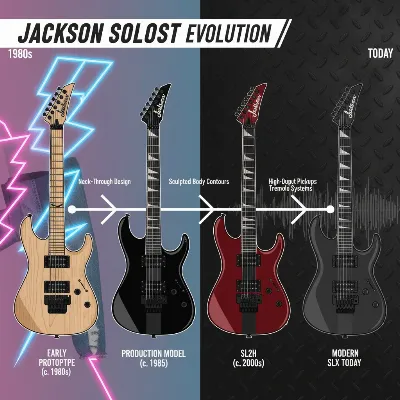 Illustration showing the historical evolution of the Jackson Soloist electric guitar, highlighting its key design features from early models to modern iterations, set against a backdrop of evolving rock and metal music scenes.
Popular Electric Guitar Classifications
While traditional electric guitars like the Stratocaster, Telecaster, and Les Paul established fundamental archetypes, the Jackson Soloist carved its niche within the “superstrat” category. This classification describes guitars that adopt the double-cutaway design of a Fender Stratocaster but incorporate features tailored for modern, high-performance playing, particularly in rock and metal genres.
The Soloist embodies this philosophy by prioritizing speed, sustain, and aggressive tone. It often features a neck-through construction for enhanced sustain, a compound-radius fretboard for effortless soloing, and powerful humbucking pickups designed to deliver high-gain tones. This focus makes it distinct from the more blues- and rock-oriented Stratocaster or the country- and rock-and-roll-favored Telecaster. Within the Soloist lineage, various models exist, such as the flagship USA Select SL1, the humbucker-only SL2H, and the more affordable Pro Series and X Series models, each offering slight variations in wood, hardware, and pickup configurations while retaining the core Soloist essence.
Stratocaster vs. Soloist: A Performance Divide
While both share a double-cutaway shape, the Jackson Soloist and Fender Stratocaster cater to different playing styles. Stratocasters typically feature a bolt-on neck, 21 or 22 frets, and often single-coil pickups, providing bright, articulate clean tones and classic rock crunch. The Soloist, conversely, boasts a neck-through design, 24 jumbo frets, a thinner neck profile, and high-output humbuckers (or HSS configurations) optimized for distorted, high-speed playing and effortless bending. The presence of a Floyd Rose tremolo on many Soloist models further solidifies its position as a tool for aggressive techniques like dive-bombs and elaborate vibrato, which are less common on traditional Strats.
Detailed Construction of Electric Guitar
The Jackson Soloist’s formidable reputation is built upon its meticulously engineered construction, where every component is chosen to enhance playability, sustain, and tone, especially for demanding styles.
Body: Foundation for Sustain and Tone
|
Our Picks for the Best Electric Guitar in 2026
As an Amazon Associate I earn from qualifying purchases.
|
||
| Num | Product | Action |
|---|---|---|
| 1 | 39 Inch Electric Guitar Bag 7mm Padding Waterproof Electric Guitar Case, Electric Guitar Gig Bag Backpack with Neck Strap and Pockets, Black |

|
| 2 | 16inch Mini Guitar Toy for Kids and Beginners, Electric Guitar with Strap for Toddlers and Boys and Girls Instrument Toys |
|
| 3 | Ibanez GRG131DX - Black Flat |
|
| 4 | RockJam Electric Guitar Kit with 10-Watt Amp, Gig Bag, Picks, Spare Strings & Lessons |
|
| 5 | LyxPro 39 inch Electric Guitar Kit Bundle with 20w Amplifier, All Accessories, Digital Clip On Tuner, Six Strings, Two Picks, Tremolo Bar, Shoulder Strap, Case Bag Starter kit Full Size - Blue |
|
| 6 | Jackson Dinky Minion JS1X Electric Guitar - Black |
|
| 7 | Fender Mini Stratocaster Electric Guitar Kit, Beginner Guitar Kit, with 2-Year Warranty, with Frontman 10G Amp, Padded Gig Bag, Strap, Cable, Tuner, and Picks, Daphne Blue |
|
| 8 | WINZZ EGM100 30 Inches Real Kids Electric Guitar with Beginner Kit, Right Handed (Gradient Pink) |
|
| 9 | STRICH Electric Guitar Beginner Kit, Solid Body 39" Full Size Electric Guitar HSS Pick Up for Starter, with 10W Amp, Bag, Digital Tuner, Capo, Strap, String,Cable, Picks, SST-S20 Sapphire Blue |
|
| 10 | Tostar 39 Inch Full Size Electric Guitar Kit For Beginners And Adults,SSS Pickup Stratocaster Guitarra Electrica Set Includes Tremolo Bridge,Amp,Strings,Stand,Case Bag, Birthday Holiday Gifts, Red |
|
The body of a Jackson Soloist is typically crafted from alder, a tonewood known for its balanced tonal properties, offering a resonant foundation that’s neither too bright nor too dark. Some models might feature mahogany for a warmer, thicker tone, or poplar, often paired with visually striking figured maple tops or veneers. A defining characteristic is the neck-through-body construction, where the neck wood extends the entire length of the guitar, with “wings” (body pieces) glued to either side. This design is crucial for maximizing sustain and providing superior upper-fret access due to the absence of a bulky heel joint.
Neck: Engineered for Speed
The neck of a Soloist is often a three-piece quartersawn maple design, frequently reinforced with graphite rods for exceptional stability against temperature and humidity changes. This robust construction is paired with a compound-radius ebony or rosewood fingerboard, which transitions from a more curved radius at the nut (e.g., 12 inches) for comfortable chording to a flatter radius at the higher frets (e.g., 16 inches) for effortless string bending and fast soloing without “fretting out.” With 24 jumbo frets, the Soloist provides an extended range for intricate lead work, and the slim, fast-playing neck profile is a hallmark of its design, allowing for high-velocity runs and complex passages.
Pickups: Voice of Aggression
Jackson Soloists are typically equipped with high-output humbucking pickups, often from Seymour Duncan. Common configurations include HH (Humbucker-Humbucker) or HSS (Humbucker-Single-coil-Single-coil). For instance, models frequently feature a Seymour Duncan JB TB-4 in the bridge position for powerful, cutting tones and a ’59 SH-1N in the neck for warm, articulate leads. More affordable series might utilize Duncan Designed pickups or Jackson’s own high-output humbuckers. These pickups are specifically chosen for their ability to deliver aggressive, articulate tones with plenty of gain, making them ideal for heavy rock and metal genres, while still offering clarity for clean passages when required.
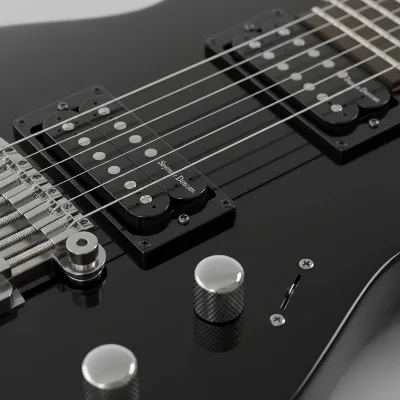 Close-up shot of Seymour Duncan humbucker pickups on a Jackson Soloist electric guitar, highlighting their detailed construction and placement, with a blurred guitar body in the background.
Bridge: Stability and Expression
A critical component for many Soloist players is the bridge system. The Floyd Rose double-locking tremolo is standard on many models (including Original, 1500 Series, and 1000 Series variants). This system offers unparalleled tuning stability, even under aggressive whammy bar abuse like dive-bombs and fluttering, allowing for extreme pitch modulation without going out of tune. Some Soloist models, however, opt for a fixed bridge, such as a Hipshot hardtail or a tune-o-matic with string-through-body design, catering to players who prioritize absolute tuning stability and sustain over tremolo capabilities. These fixed bridge options simplify string changes and setup, appealing to a different subset of high-performance guitarists.
Other Parts: Precision and Playability
Attention to detail extends to other components. Jackson Soloists often feature Gotoh MG-T locking tuners for enhanced tuning stability and quicker string changes. Luminlay side dots are a practical addition, glowing in the dark to assist with fretboard navigation on dimly lit stages. The heel-mount truss rod adjustment wheel provides convenient access for neck relief adjustments without removing the neck. Dunlop dual-locking strap buttons ensure the guitar stays securely attached during energetic performances. These elements collectively contribute to the Soloist’s reputation as a reliable and high-performance instrument.
Comparison Table of Famous Electric Guitar Brands
When considering a Jackson Soloist, it’s helpful to understand how it stacks up against other prominent electric guitar brands. While each brand offers unique strengths, the Soloist generally targets players with specific performance demands.
| Feature / Brand | Jackson Soloist | Fender Stratocaster | Gibson Les Paul | PRS Custom 24 |
|---|---|---|---|---|
| Primary Focus | Shred, Metal, Speed | Versatility, Classic Rock, Blues | Hard Rock, Blues, Warmth | Modern Rock, Versatility, Craftsmanship |
| Neck Construction | Neck-Through (dominant) | Bolt-On | Set-Neck | Set-Neck |
| Fretboard Radius | Compound (12″-16″ typical) | Single (7.25″, 9.5″, 12″) | Single (10″, 12″) | Single (10″) |
| Frets | 24 Jumbo (Stainless Steel common) | 21, 22, or 24 (Medium Jumbo common) | 22 Medium Jumbo | 24 Medium Jumbo |
| Body Wood | Alder, Mahogany, Poplar (wings) | Alder, Ash | Mahogany (often with Maple top) | Mahogany (with Maple top) |
| Pickups | High-output Humbuckers (Seymour Duncan JB/59, Distortion), HSS | Single-coils (often SSS, HSS) | Humbuckers (PAF-style) | Humbuckers |
| Bridge | Floyd Rose Tremolo (dominant), Fixed | Synchronized Tremolo, Hardtail | Tune-o-matic, Stopbar | PRS Tremolo, Hardtail (Floyd Rose available on some) |
| Playability | Extremely fast, smooth upper-fret access | Comfortable, classic feel | Solid, powerful, robust | Smooth, ergonomic, balanced |
| Typical Tone | Aggressive, cutting, high-gain | Bright, clear, articulate, bell-like | Thick, rich, sustain-heavy | Clear, versatile, harmonically rich |
Key Comparisons:
- Jackson vs. Fender: The Soloist generally features thinner, faster necks and 24 frets, making it superior for shredding, while the Strat offers a more traditional feel and classic tones. Jackson’s neck-through design also typically provides more sustain than a bolt-on Strat.
- Jackson vs. Gibson: Les Pauls are known for their thick, warm tones and sustain from their set-neck mahogany construction. The Soloist, while also offering sustain, prioritizes aggressive attack and speed with its flatter fretboard and high-output pickups, making it more suited for contemporary heavy genres.
- Jackson vs. PRS: PRS guitars are renowned for their exquisite craftsmanship, versatile tones, and often beautiful aesthetic. While a PRS Custom 24 can handle high-gain, the Jackson Soloist is often purpose-built for extreme speed and heavy genres from the ground up, with specific neck profiles and hardware choices optimized for that niche.
> “The Jackson Soloist isn’t just a guitar; it’s a statement. It declares a commitment to speed, precision, and an unyielding sonic attack that few other instruments can match in its category.” – Alex Shredder, Pro Guitar Technician & Session Musician
Jackson Soloist Electric Guitar Buying Guide
Choosing the right electric guitar, especially a high-performance instrument like the Jackson Soloist, requires careful consideration. Here’s a guide to help you make an informed decision.
Factors to Consider:
- Budget: Jackson offers Soloist models across various price points. The JS Series is entry-level, perfect for beginners, offering Jackson’s core features at an affordable price. The X Series and Pro Series provide mid-tier options with upgraded components and craftsmanship, ideal for intermediate players. The USA Select Series represents premium, American-made instruments with top-tier materials and build quality, designed for professional musicians and collectors.
- Playing Style & Genre: The Soloist excels in metal, hard rock, and shred-oriented genres due to its fast neck, high-output pickups, and tremolo system. If your primary focus is blistering solos, intricate riffs, and heavy rhythms, a Soloist is an excellent choice. If you lean towards blues, jazz, or classic rock, you might find other models more traditionally suited, though the Soloist can be surprisingly versatile.
- Skill Level:
- Beginners: While a Soloist can be inspiring, a more affordable JS Series or Dinky model might be a better starting point to get familiar with Jackson’s feel without a significant investment. Focus on understanding basic guitar care and setup first.
- Intermediate Players: The Pro Series Soloists offer a fantastic balance of features, quality, and price, providing a professional-grade instrument that can grow with your skills.
- Professional Players: The USA Select Series offers uncompromising quality, custom options, and the finest components for touring, recording, and serious performance.
Essential Accessories:
- Amplifier: A good amplifier is crucial. For metal and hard rock, look for amps with high-gain channels or consider modeling amps that offer a wide range of tones.
- Cables: Invest in high-quality instrument cables to ensure signal integrity.
- Picks: Experiment with different pick thicknesses and materials to find what suits your playing style.
- Strap & Strap Locks: A comfortable strap and reliable strap locks (like Dunlop dual-locking strap buttons often included with Soloists) are essential for playing standing up.
- Tuner: A reliable tuner (clip-on, pedal, or app) is a must-have for maintaining pitch.
- Gig Bag/Case: Protect your investment. Many Jackson Soloists come with a Jackson Foam-Core case for good protection.
- Cleaning Supplies: Microfiber cloths, string cleaner, fretboard conditioner, and guitar polish will keep your instrument in top condition.
Common Electric Guitar Issues and Solutions
Even with its robust build, a high-performance electric guitar like the Jackson Soloist can encounter common issues. Understanding these and knowing how to address them can save time and maintain your instrument’s playability.
Common Problems and Simple Solutions
- Tuning Instability (especially with Floyd Rose): While Floyd Rose systems are designed for stability, improper setup is a frequent culprit.
- Cause: Incorrect string stretching, loose locking nut pads, worn bridge knife-edges, or springs in the tremolo cavity being set unevenly.
- Fix: Ensure strings are properly stretched when new. Tighten locking nut pads securely. If the problem persists, inspect the bridge for wear; professional setup may be needed. Ensure tremolo springs are balanced.
- Fretting Out or Buzzing: This occurs when strings prematurely mute or buzz against higher frets, especially during bends.
- Cause: Insufficient neck relief (neck is too straight), action set too low, or uneven frets.
- Fix: Adjust the truss rod to add a slight forward bow to the neck (turn counter-clockwise). Raise the bridge saddle height if needed. For persistent issues, a professional fret leveling and crowning may be necessary.
- Active Pickup Battery Drain (e.g., EMG-equipped models): Some Soloists use active pickups that require a 9V battery.
- Cause: Leaving the guitar plugged in when not playing, or a faulty output jack (stereo jack wired incorrectly) can cause the battery to drain quickly.
- Fix: Always unplug the instrument cable from the guitar when not in use. If the problem persists even when unplugged, the output jack might be faulty or improperly wired, requiring inspection or replacement by a technician.
- Electronic Crackling or Intermittent Sound:
- Cause: Dirty potentiometers (volume/tone knobs), loose wiring, or a faulty input jack.
- Fix: Spray electrical contact cleaner into the potentiometers and rotate them vigorously. Check all solder joints for looseness. A professional can diagnose and repair wiring issues or replace faulty components.
- Sharp Fret Ends: This can be uncomfortable and even cut fingers.
- Cause: Wood shrinkage due to low humidity, causing frets to protrude.
- Fix: Store the guitar in a humidity-controlled environment (ideally 45-55% relative humidity). For existing sharp ends, a guitar technician can carefully file and smooth them.
When to Seek Professional Help
While many minor issues can be addressed at home, certain problems are best left to a qualified guitar technician. These include complex Floyd Rose setups and intonation, significant fret work (leveling, crowning, refretting), extensive electronic repairs, or any structural damage to the neck or body. Attempting advanced repairs without proper tools and experience can lead to further damage.
Electric Guitar Maintenance and Cleaning
Proper maintenance and cleaning are crucial for preserving your Jackson Soloist’s playability, tone, and appearance, extending its lifespan for years of shredding.
How to Maintain Your Electric Guitar to Increase Lifespan
- Humidity and Temperature Control: Store your guitar in a stable environment. Extreme fluctuations in temperature and humidity can cause wood to expand or contract, leading to issues like sharp fret ends, neck warping, or finish cracks. Ideally, maintain relative humidity between 45% and 55%. A good case offers some protection, but a humidifier/dehumidifier in your guitar room or case can be beneficial.
- Regular Setups: Even if you don’t notice major problems, a periodic professional setup (every 6-12 months) ensures optimal action, intonation, and neck relief. This helps prevent minor issues from becoming major ones.
- Handle with Care: Always pick up and put down your guitar gently. Avoid leaning it against walls or amplifiers where it could fall. Use a quality stand or hang it properly.
- Check Hardware Tightness: Periodically check screws on tuners, bridge, strap buttons, and control knobs. Gently tighten any that feel loose, but avoid overtightening.
Proper Electric Guitar Cleaning Steps
- Wipe Down After Each Use: After every playing session, use a soft, lint-free microfiber cloth to wipe down the strings, fretboard, and body. This removes sweat, oils, and grime that can degrade components and dull the finish.
- String Cleaning and Replacement: Strings collect dirt and dull over time. Use a dedicated string cleaner for a deeper clean every few weeks. More importantly, change your strings regularly (every 1-3 months for frequent players, or before major performances) to maintain optimal tone and feel.
- Fretboard Cleaning:
- Unfinished Fretboards (Ebony, Rosewood): When changing strings, use a soft brush to remove dirt buildup. Apply a small amount of fretboard conditioner or lemon oil (designed for guitars, not household cleaners) to hydrate the wood. Wipe off any excess after a few minutes.
- Finished Fretboards (Maple with lacquer): Simply wipe with a damp cloth (water only), then dry immediately. Do not use oils.
- Hardware Cleaning: Use a soft cloth dampened with isopropyl alcohol (sparingly) to clean metal hardware like the bridge, tuners, and control knobs. This helps remove grime and prevents corrosion. Be careful not to get alcohol on the guitar’s finish if it’s not poly.
- Body Cleaning: For glossy finishes, use a guitar-specific polish or cleaner to remove smudges and restore shine. For satin finishes, a damp cloth is usually sufficient, as polishes can make them shiny.
Recommended Maintenance and Cleaning Products
- Microfiber Cloths: Essential for all wiping tasks.
- Guitar String Cleaner: Helps prolong string life and maintain tone.
- Fretboard Conditioner/Lemon Oil: For unfinished fretboards (ebony, rosewood) to prevent drying out.
- Guitar Polish/Cleaner: Specific formulations for guitar finishes (ensure it matches your guitar’s finish type).
- Isopropyl Alcohol: For cleaning metal hardware (use with caution).
Conclusion
The Jackson Soloist electric guitar stands as a purpose-built design, offering a unique blend of craftsmanship, high-performance features, and a distinctive voice. From its groundbreaking neck-through construction and ultra-fast neck profiles to its powerful pickups and stable tremolo systems, every aspect is engineered for the demands of modern, aggressive playing. It’s a guitar that doesn’t just meet expectations for speed and sustain; it redefines them, earning its place in the hands of shredders and metal musicians worldwide. While its specialized nature might require a player to adapt, the rewards are immense, offering an instrument capable of extraordinary sonic expression.
Are you ready to unleash your full potential with an instrument engineered for uncompromised performance?
Frequently Asked Questions
Is the Jackson Soloist only suitable for metal music?
While the Jackson Soloist is undeniably a favorite among metal and hard rock musicians due to its high-output pickups, fast neck, and exceptional sustain, its versatile electronics and clear clean tones mean it can be adapted for genres like fusion, progressive rock, and even some blues, offering more flexibility than its aggressive reputation might suggest.
What is the main advantage of a neck-through construction in the Soloist?
The primary advantage of the neck-through construction in the Jackson Soloist is significantly enhanced sustain and resonance. By having the neck wood extend through the entire body, vibrations travel more freely across the instrument, resulting in longer-lasting notes and a more integrated feel between the neck and body. It also provides superior upper fret access.
How does the compound radius fretboard benefit playability?
A compound radius fretboard, typically 12″-16″ on a Soloist, offers a versatile playing surface. The rounder radius at the nut provides greater comfort for chording, while the progressively flatter radius towards the higher frets makes string bending easier and reduces the chance of “fretting out” during fast lead playing and wide vibratos.
Are Floyd Rose tremolos difficult to maintain on a Soloist?
Floyd Rose tremolo systems offer unparalleled tuning stability for aggressive pitch bending but can be more complex to set up and maintain than fixed bridges. Tasks like string changes and intonation adjustments require specific steps and tools. However, once properly set up, they hold tune remarkably well, making the effort worthwhile for many players.
What is the difference between a Jackson Soloist and a Jackson Dinky?
The primary differences between a Jackson Soloist and a Dinky lie in their construction and price points. The Soloist almost exclusively features a neck-through-body construction, offering premium sustain and upper-fret access, and is typically found in higher-end series. The Dinky, while also a “superstrat” shape, usually features a bolt-on neck, making it more affordable and found across a wider range of Jackson’s series, including beginner-friendly options.
Maintain and Clean Your Electric Guitar
Proper maintenance and cleaning are crucial for preserving your Jackson Soloist's playability, tone, and appearance, extending its lifespan for years of shredding.
After every playing session, use a soft, lint-free microfiber cloth to wipe down the strings, fretboard, and body. This removes sweat, oils, and grime that can degrade components and dull the finish.
Strings collect dirt and dull over time. Use a dedicated string cleaner for a deeper clean every few weeks. Change your strings regularly (every 1-3 months for frequent players) to maintain optimal tone and feel.
For unfinished fretboards (ebony, rosewood), use a soft brush to remove dirt and apply a small amount of fretboard conditioner or lemon oil when changing strings. For finished maple fretboards, simply wipe with a damp cloth and dry immediately.
Use a soft cloth dampened with isopropyl alcohol (sparingly) to clean metal hardware like the bridge and tuners, being careful not to get alcohol on the finish. For glossy finishes, use a guitar-specific polish; for satin finishes, a damp cloth is usually sufficient.

I’ve been playing metal for years, and the Jackson Soloist is just a beast. The neck-through-body design really does make a difference in sustain, it’s incredible. Plus, those 24 jumbo frets make shredding feel so much more natural and less of a struggle. Definitely worth the investment if you’re serious about high-gain playing.
I picked up a Soloist recently, hoping for that ultimate metal machine. It’s definitely fast and the tone is aggressive, but I found the setup out of the box wasn’t quite perfect for my preferences. Had to spend some time adjusting the action to get it just right. Once dialed in, it’s solid, but that initial tweak was a bit of a hassle.
Got my Soloist a few months ago and I’m loving it for my progressive rock stuff. The humbucking pickups are super powerful and give me that aggressive tone I crave. My only minor gripe is that the upper fret access, while good, took a little getting used to compared to my old guitar. Still, it’s a fantastic instrument overall.
As someone who grew up in the 80s, the Soloist has always been a dream guitar. The precision and speed it offers are unmatched for fast playing. It’s clear why it became a favorite among shredders; this thing just rips. The build quality is top-notch, too.