The Fender Player Stratocaster, a cornerstone of Fender’s Mexican-made lineup, continues the Stratocaster’s legacy by offering an accessible gateway to legendary tone and feel for aspiring musicians and seasoned gigging artists. This model, particularly the Player II iterations, stands up to scrutiny in 2026 by balancing classic aesthetics with modern playability, reliable construction, and versatile Alnico 5 single-coil pickups, making it a highly regarded mid-range electric guitar.
The Enduring Legacy of the Fender Stratocaster
The Stratocaster, first introduced in 1954, was a revolutionary design that quickly became a cultural icon. Its sleek, contoured body, three-pickup configuration, and innovative tremolo system offered players unprecedented comfort, tonal variety, and expressive capabilities. From the searing blues of Stevie Ray Vaughan to the psychedelic explorations of Jimi Hendrix and the intricate rhythms of Nile Rodgers, the Strat has proven its adaptability across every conceivable musical landscape. The Player series represents Fender’s commitment to bringing this timeless design to a wider audience, balancing classic aesthetics with modern playability and reliable construction, ensuring the Strat’s legacy continues to evolve and inspire new generations of guitarists.
Dissecting the Fender Player Stratocaster: Features and Design
The Fender Player Stratocaster, particularly the recent Player II iterations, is a shows Fender’s ability to deliver quality and innovation at an approachable price point. Every element, from the wood selection to the electronic components, is chosen to contribute to its distinctive sound and feel.
Body and Neck: The Foundation of Tone and Feel
At the heart of the Player Stratocaster’s robust construction is its alder body, known for its balanced tone, pronounced upper midrange, and excellent sustain. Finished in a durable gloss polyester, these bodies also feature the Stratocaster’s signature hand-rounded contours, ensuring comfortable playability whether you’re standing on stage or lounging on a sofa.
The neck is crafted from maple, a bright and resonant wood, often featuring a comfortable modern “C” or “Deep C” shape. A highlight for many players is the satin urethane finish on the back of the neck, which allows for fast, unhindered movement across the fretboard, preventing the common “sticky” feeling associated with gloss finishes. The Player II models have seen welcome improvements, including the return of rosewood fretboards (replacing Pau Ferro) and rolled fretboard edges, which significantly enhance comfort and provide a “played-in” feel right out of the box. With 22 medium jumbo frets and a 9.5-inch radius (or a compound 10-14″ radius on some Player Plus models), the fretboard strikes a balance that accommodates both chording and lead playing with ease.
Pickups and Electronics: The Voice of the Strat
|
Our Picks for the Best Electric Guitar in 2026
As an Amazon Associate I earn from qualifying purchases.
|
||
| Num | Product | Action |
|---|---|---|
| 1 | Ibanez GRG131DX - Black Flat |

|
| 2 | Fender Mini Stratocaster Electric Guitar Kit, Beginner Guitar Kit, with 2-Year Warranty, with Frontman 10G Amp, Padded Gig Bag, Strap, Cable, Tuner, and Picks, Daphne Blue |
|
| 3 | 16inch Mini Guitar Toy for Kids and Beginners, Electric Guitar with Strap for Toddlers and Boys and Girls Instrument Toys |
|
| 4 | 39 Inch Electric Guitar Bag 7mm Padding Waterproof Electric Guitar Case, Electric Guitar Gig Bag Backpack with Neck Strap and Pockets, Black |
|
| 5 | LyxPro 39 inch Electric Guitar Kit Bundle with 20w Amplifier, All Accessories, Digital Clip On Tuner, Six Strings, Two Picks, Tremolo Bar, Shoulder Strap, Case Bag Starter kit Full Size - Blue |
|
| 6 | WINZZ EGM100 30 Inches Real Kids Electric Guitar with Beginner Kit, Right Handed (Gradient Pink) |
|
| 7 | Jackson Dinky Minion JS1X Electric Guitar - Black |
|
| 8 | RockJam Electric Guitar Kit with 10-Watt Amp, Gig Bag, Picks, Spare Strings & Lessons |
|
| 9 | STRICH Electric Guitar Beginner Kit, Solid Body 39" Full Size Electric Guitar HSS Pick Up for Starter, with 10W Amp, Bag, Digital Tuner, Capo, Strap, String,Cable, Picks, SST-S20 Sapphire Blue |
|
| 10 | Tostar 39 Inch Full Size Electric Guitar Kit For Beginners And Adults,SSS Pickup Stratocaster Guitarra Electrica Set Includes Tremolo Bridge,Amp,Strings,Stand,Case Bag, Birthday Holiday Gifts, Red |
|
The Player Stratocaster is equipped with Player Series Alnico 5 Strat single-coil pickups. These pickups are specifically designed to deliver a modern Strat voice, characterized by a powerful, gutsy tone with higher output than many vintage-style pickups. They retain the classic “Strat spank” and bell-like chime but with added punch, making the guitar incredibly versatile across various musical genres.
The control layout is classic Strat: a master volume, a tone knob for the neck and middle pickups, and a dedicated tone knob for the bridge pickup. This crucial update, compared to older Strat designs, allows players to tame the bridge pickup’s brightness for smoother lead tones. The five-way switch provides all the traditional pickup combinations, including the coveted in-between sounds often referred to as “quack.” Internally, the electronics are well-regarded, featuring full-sized pots and a robust pickup selector switch, along with body shielding to minimize hum. For those seeking a hum-free experience without sacrificing single-coil tone, the Player Plus series offers noiseless, single-coil sized humbuckers.
Hardware: Reliability and Performance
Fender has outfitted the Player Stratocaster with reliable hardware engineered for stable performance. The 2-point synchronized tremolo system with bent steel saddles offers smooth vibrato action and generally maintains tuning stability well once the strings are properly stretched. The tremolo block itself is often noted for its chunky construction, which contributes positively to the guitar’s sustain.
Sealed die-cast tuners provide solid tuning stability, ensuring your guitar stays in pitch during extended playing sessions. A synthetic bone nut is standard, offering decent performance, though some players might opt for an upgrade to bone or a self-lubricating material for even smoother tuning, especially with heavy tremolo use.
Performance and Playability: A Hands-On Assessment
The true test of any electric guitar lies in its playability and sonic capabilities. The Fender Player Stratocaster consistently earns high marks for its comfortable feel and versatile tones, cementing its reputation as a genuinely giggable instrument.
Upon picking up a Player Stratocaster, many players immediately appreciate its balanced weight and natural ergonomics. The sculpted alder body fits comfortably against the player, making it easy to handle whether standing or sitting. The satin-finished neck is a particular highlight; it feels fast and smooth, allowing the hand to glide effortlessly, which is a significant advantage during extended practice or performance.
The fretwork is generally good, though not always as perfectly rounded as on Fender’s more expensive American-made models due to the time-intensive nature of that process. However, the medium jumbo frets paired with the 9.5-inch radius (or compound radius on Player Plus) provide a comfortable playing surface that facilitates both intricate lead work and open chords. Out-of-the-box setups are often commendable, with low action and no noticeable high frets, though minor adjustments to string height or intonation are standard practice for personal preference.
> “The Player Stratocaster brings pretty much everything you could want in a modern Strat to an affordable price point. We found that the three Alnico 5 pickups onboard create a powerful, gutsy tone that you just won’t find in a Strat with more classic appointments. The output is higher than that of most Strat sets, making the Player series a highly versatile choice for anyone looking to get a little more from their guitar.” – Art Thompson, GuitarPlayer Reviewer
Sonically, the Player Stratocaster lives up to the Stratocaster name. The Alnico 5 single-coils deliver clear, articulate cleans, shimmering with that characteristic “quack” in the in-between positions. When pushed through an overdriven amplifier, the pickups provide a gutsy, powerful tone that can handle everything from blues-rock crunch to classic hard rock. The added output compared to vintage pickups makes it especially well-suited for modern playing styles that demand a bit more aggression. Its versatility is truly impressive, seamlessly transitioning between genres.
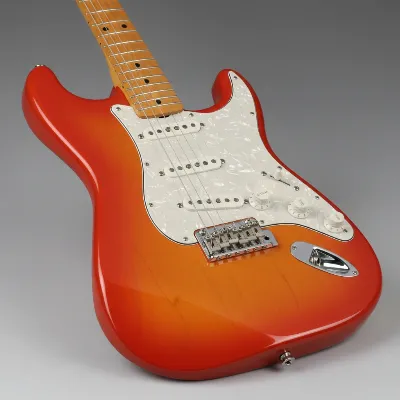 A detailed close-up of a Fender Player Stratocaster's alder body and maple neck joint, showcasing the gloss polyester finish and sleek contours.
Fender Player Stratocaster vs. Its Peers: A Comparative Look
When considering the Fender Player Stratocaster, it’s natural to compare it with other models in the vast Fender family, particularly the American-made series and its more budget-friendly Squier counterparts. The Player series consistently shines as a fantastic middle-ground option, offering exceptional value.
Compared to American-made Fender models like the American Professional II or American Ultra, the Player Stratocaster holds its own remarkably well, especially given its significantly lower price point. While the American series often boast premium features such as V-Mod II pickups, deeper neck contours, and meticulous fret finishing, the Player series provides comparable tone and playability that many professional musicians find perfectly suitable for gigging. Some even claim the Player II can sound and play as good as a USA top model at less than half the price. The “Made in Mexico” designation allows Fender to maintain strict quality control while offering a more accessible price.
On the other end of the spectrum, the Player Stratocaster is a significant upgrade from most Squier models, including the highly-regarded Classic Vibe series. While Squiers offer incredible value for beginners, the Player series provides superior components, build quality, and typically a more refined playing experience that justifies the step up. The Player Series pickups, hardware, and overall fit and finish are a noticeable improvement, making it a natural progression for intermediate players or those seeking a more robust, reliable instrument without breaking the bank.
Comparison Table: Fender Stratocaster Tiers
| Feature | Squier Classic Vibe Stratocaster | Fender Player Stratocaster | Fender American Professional II Stratocaster |
|---|---|---|---|
| Origin | Indonesia/China | Mexico | USA |
| Body Wood | Nyatoh/Pine | Alder | Alder |
| Neck Wood | Maple | Maple | Maple/Roasted Maple |
| Fretboard | Indian Laurel/Maple | Rosewood/Maple (Player II) | Rosewood/Maple |
| Pickups | Fender-designed Alnico single-coils | Player Series Alnico 5 single-coils | V-Mod II single-coils |
| Fretboard Radius | 9.5″ | 9.5″ (or 10-14″ compound on Player Plus) | 9.5″ |
| Fret Edges | Standard | Rolled (Player II) | Rolled |
| Bridge | 6-saddle Vintage-style Synchronized Tremolo | 2-Point Synchronized Tremolo with bent steel saddles | 2-Point Synchronized Tremolo with Cold-Rolled Steel Block |
| Price Point | Entry-level | Mid-range | Professional/High-end |
| Target User | Beginners, budget-conscious | Intermediates, gigging musicians | Professionals, discerning enthusiasts |
Your Buying Guide: Is the Fender Player Stratocaster Right for You?
Choosing an electric guitar is a personal journey, and the Fender Player Stratocaster offers a compelling option for a wide range of players. To determine if it’s the right fit for you, consider these key factors:
Budget: The Player Stratocaster is positioned in the mid-range market, offering exceptional quality and Fender prestige without the premium price tag of American-made models. It represents an outstanding “bang for your buck.”
Playing Style and Genre: Its versatile Alnico 5 pickups and comfortable playability make it suitable for almost any genre. If you play rock, blues, funk, pop, or even jazz, the Player Strat can easily adapt. Its higher output leans slightly towards modern tones, but it can still produce classic Strat sparkle.
Skill Level:
- Beginners: While a Squier might be a more budget-friendly first step, a Player Stratocaster offers a superior playing experience that can motivate faster progress and prevent the need for an early upgrade. Its comfortable neck and reliable hardware are very forgiving.
- Intermediate Players: This is arguably the Player Stratocaster’s sweet spot. It provides a significant upgrade in tone, feel, and build quality from entry-level guitars, offering a professional-level instrument for practice, recording, and gigging.
- Professional Players: Many pros choose Player Stratocasters as reliable gigging guitars or backup instruments, appreciating their robust construction and excellent playability without the anxiety of taking a high-value American instrument on the road.
Essential Accessories: to budget for accessories! You’ll need:
- Amplifier: Essential for hearing your electric guitar.
- Guitar Cable: A good quality cable is crucial.
- Picks: Experiment with different gauges and materials.
- Strap: For playing standing up.
- Tuner: A clip-on or pedal tuner is indispensable.
- Gig Bag/Case: To protect your investment.
- Extra Strings: Always good to have on hand.
- Capo: For playing in different keys.
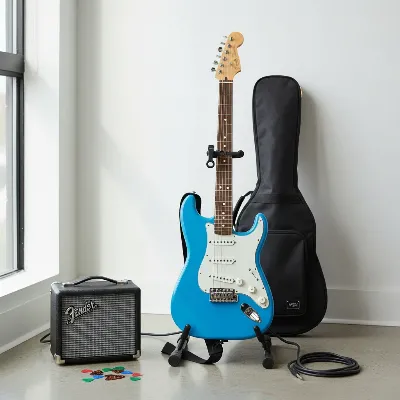 A Fender Player Stratocaster on a stand surrounded by essential guitar accessories like an amplifier, picks, capo, and tuner, in a studio setting.
Common Challenges and Maintenance for Your Player Stratocaster
While the Fender Player Stratocaster is lauded for its quality, like any instrument, it can sometimes present minor issues or simply require regular upkeep. Awareness of these can enhance your playing experience and prolong the life of your guitar.
Addressing Common Issues
Tuning Instability: New strings always need to be stretched thoroughly. After installing new strings, gently pull them up away from the fretboard several times along their length, then retune. Repeat this process until they hold pitch consistently. Lubricating the nut slots and bridge saddles with a product like Nut Sauce or a graphite-based lubricant can also significantly improve tuning stability, especially with tremolo use. [cite: common_issues_1, common_issues_4]
Buzzing Strings/High Frets: Occasionally, a new guitar might have a buzzing string or a slightly high fret. While many Player Stratocasters arrive with an excellent factory setup, it’s wise to inspect it thoroughly upon purchase. Minor buzzing can often be resolved with truss rod adjustments or slight saddle height tweaks. If a fret is truly high, a professional fret leveling may be necessary. Always check your guitar carefully within the return period. [cite: common_issues_2, common_issues_5]
Nut Issues: The synthetic bone nut is functional, but sometimes strings can get caught, leading to tuning issues. Lubrication is the primary solution here. In some cases, a nut might be cut slightly too high, causing a buzzing B string. This often requires a luthier to recut the nut slots properly. [cite: common_issues_2]
Lack of Second String Tree: Some Stratocasters, including Player models, come with only one string tree, which can cause buzzing behind the nut for the D and G strings. Installing a second string tree or upgrading to staggered-height tuners can effectively resolve this. [cite: common_issues_3]
Volume Knob Placement: Some players find the master volume knob too close to the strings, leading to accidental adjustments during aggressive strumming. This is a design characteristic of the Stratocaster and often requires adapting your playing technique or, in some cases, custom modifications.
Keeping Your Player Stratocaster Pristine: Care and Maintenance
Proper care and regular maintenance are crucial for preserving your Fender Player Stratocaster’s playability, tone, and aesthetic appeal.
Routine Cleaning:
- After Every Play: Wipe down the strings and fretboard with a clean, dry microfibre cloth to remove sweat and oils, which can degrade strings and fretboard wood.
- Body: Use a soft, clean cloth to wipe the body. For deeper cleaning, apply a guitar-specific polish or cleaner sparingly.
- Hardware: Use a dry cloth to wipe down bridge, tuners, and pickups. Avoid abrasive cleaners.
Fretboard Care:
- Rosewood/Pau Ferro: These unfinished woods benefit from conditioning every few months or when changing strings. Use a dedicated fretboard conditioner or lemon oil (sparingly) to prevent drying and cracking.
- Maple: Maple fretboards are usually lacquered. Wipe clean with a damp cloth and mild soap if needed, then dry thoroughly.
String Changes: Change your strings regularly, typically every 1-3 months depending on how often you play and your body chemistry. Old, corroded strings dampen tone and intonation. When changing strings, clean the fretboard thoroughly.
Environmental Control: Store your guitar in a stable environment. Extreme changes in temperature and humidity can cause the wood to expand, contract, or even crack, leading to fret sprout, neck warping, and finish damage. A good gig bag or case offers some protection, but avoid leaving it in direct sunlight or extreme cold.
When to Seek Professional Help: While minor adjustments can be done at home, don’t hesitate to take your Player Stratocaster to a qualified guitar technician (luthier) for:
- Persistent buzzing or intonation issues you can’t resolve.
- Significant neck relief problems.
- Electronic issues (crackling pots, intermittent sound).
- Fret leveling or dressing.
- Bridge or nut replacements.
Conclusion
The Fender Player Stratocaster remains an exceptional electric guitar in 2026, building upon its already strong reputation with iterative improvements that enhance playability and overall quality. It successfully bridges the gap between affordable entry-level instruments and high-end professional models, offering a robust, versatile, and inspiring instrument that stands out in its class. Whether you’re an aspiring artist taking your first serious steps, an intermediate player seeking a reliable upgrade, or a seasoned musician needing a dependable workhorse, the Player Stratocaster consistently delivers classic Fender tone, comfortable playability, and enduring value. Its blend of traditional aesthetics and modern enhancements ensures that it not only honors the Stratocaster’s rich legacy but also propels it confidently into the future. Are you ready to discover the iconic sound and feel that has captivated generations of guitarists?
Frequently Asked Questions
What are the main differences between the Fender Player and Player II Stratocasters?
The Player II, an iteration typically seen from 2024 onwards, brings key upgrades like rolled fretboard edges, a return to rosewood fingerboards (from Pau Ferro), and subtle cosmetic enhancements. These changes primarily focus on improving playability and aesthetic appeal without dramatically altering the core design.
Is the Fender Player Stratocaster a good guitar for beginners?
Yes, the Fender Player Stratocaster is an excellent choice for beginners who are serious about learning. Its comfortable neck, reliable hardware, and versatile sound make it easy to play and adaptable to various styles, providing a much more satisfying experience than many entry-level alternatives.
How does the “Made in Mexico” quality compare to “Made in USA” Fenders?
“Made in Mexico” Fenders, including the Player series, offer excellent quality and consistency for their price point. While USA models typically feature premium components and more meticulous hand-finishing, the MIM Player series delivers comparable tone and playability that often surprises players, making it a fantastic value option.
What kind of music is the Fender Player Stratocaster best for?
The Fender Player Stratocaster is renowned for its versatility, making it suitable for almost any genre. It excels in rock, blues, funk, pop, country, and even lighter jazz. Its Alnico 5 single-coil pickups provide a wide range of tones from sparkling clean to gutsy overdrive.
What are common upgrades people make to a Fender Player Stratocaster?
Common upgrades include replacing the synthetic bone nut with a TUSQ or bone nut for improved tuning stability and sustain, upgrading the bridge saddles (e.g., to steel block saddles), and sometimes swapping pickups for a different tonal flavor or noise reduction (like noiseless pickups).
Does the Player Stratocaster hold its value well?
Fender instruments generally hold their value better than many other brands, and the Player Stratocaster is no exception. Its popularity, reliable build, and iconic design contribute to a strong resale market, especially if kept in good condition.
Is the tremolo system on the Player Stratocaster reliable?
The 2-point synchronized tremolo system on the Player Stratocaster is generally considered reliable for moderate use. Once properly set up and with strings stretched, it maintains tuning stability well. For heavy dive-bombing, consistent nut lubrication is highly recommended.
Maintain Your Fender Player Stratocaster
Proper care and regular maintenance are crucial for preserving your Fender Player Stratocaster's playability, tone, and aesthetic appeal, addressing common issues and ensuring longevity.
After every play, wipe down the strings and fretboard with a clean, dry microfibre cloth to remove sweat and oils. For the body, use a soft, clean cloth, and for deeper cleaning, apply a guitar-specific polish sparingly. Wipe down hardware like the bridge, tuners, and pickups with a dry cloth, avoiding abrasive cleaners.
For rosewood or Pau Ferro fretboards, condition them every few months or when changing strings using a dedicated fretboard conditioner or lemon oil (sparingly) to prevent drying and cracking. Maple fretboards, which are usually lacquered, can be cleaned with a damp cloth and mild soap if needed, then dried thoroughly.
Change your strings typically every 1-3 months, depending on how often you play and your body chemistry, as old, corroded strings dampen tone and intonation. When changing strings, take the opportunity to clean the fretboard thoroughly.
Store your guitar in a stable environment, avoiding extreme changes in temperature and humidity, which can cause wood expansion, contraction, or cracking. A good gig bag or case offers some protection, but do not leave the guitar in direct sunlight or extreme cold.
While minor adjustments can be done at home, consult a qualified guitar technician (luthier) for persistent buzzing or intonation issues, significant neck relief problems, electronic issues, fret leveling or dressing, or bridge/nut replacements.

I’ve been playing for years, and the Player Stratocaster really holds its own. The Alnico 5 pickups deliver that classic Strat quack, but they’re surprisingly versatile for different genres. It’s a fantastic guitar for gigging musicians who need reliability without breaking the bank. Definitely a workhorse.
I picked up a Player II Strat recently, and while the tone is great, I’ve had some minor issues with the fret ends being a little sharp. It’s not a dealbreaker, and I can probably fix it myself, but it’s something to watch out for. Otherwise, the contoured body feels super comfortable, and it looks awesome.
As an aspiring musician, this guitar has been a game-changer. The Player Stratocaster makes those legendary tones accessible, and it feels incredible to play. It’s clear why it’s a cornerstone of Fender’s lineup; it just inspires you to pick it up and practice. Highly recommend it for anyone serious about their craft.
Got my Player Strat a few months ago, and I’m really happy with it. The modern playability is a huge plus, especially coming from an older Squier. I do wish the tremolo system was a bit more stable for really aggressive dives, but for everyday use, it’s perfectly fine. Great value for a Mexican-made Fender.