Cleaning electric guitar strings at home safely and effectively involves daily wipe-downs with a microfiber cloth and periodic deep cleaning with a dedicated string cleaner. This routine significantly extends string life by removing sweat, oils, and skin cells, which otherwise dampen vibrations, accelerate corrosion, and lead to a dull tone and rough feel. Regular maintenance ensures your strings sound their best and enhances playability.
Why Cleaning Your Electric Guitar Strings Matters
Every time you play, your fingers deposit sweat, natural oils, and microscopic skin cells onto your strings. This residue accumulates, particularly within the windings of lower-gauge strings, leading to several detrimental effects. Firstly, it dampens the strings’ natural vibrations, causing them to lose their bright, resonant tone and sound dull or “dead.” Secondly, these contaminants accelerate corrosion, resulting in rust and a rough, sticky feel under your fingers, which makes bending and sliding uncomfortable. Regularly cleaning your electric guitar strings preserves your instrument’s voice, enhances playability, and extends string life, saving you money on frequent replacements.
Essential Tools and Materials for String Cleaning
Gathering the right tools is crucial for a safe and effective cleaning process. Using inappropriate materials can damage your strings or your guitar’s finish.
Here’s what you’ll need:
- Microfiber Cloths: These soft, lint-free cloths effectively trap dirt and oil without scratching. Keep a few on hand for general wiping and applying cleaners.
- Dedicated Guitar String Cleaner/Conditioner: Products like GHS Fast Fret, Dunlop 65 String Cleaner, or D’Addario XLR8 are formulated to break down grime and protect string metal without harming your guitar. They often include lubricants for a slicker feel.
- Fretboard Conditioner (Optional but Recommended): For unfinished fretboards (e.g., rosewood, ebony), a product like lemon oil cleans and hydrates the wood, preventing drying and cracking. Finished maple fretboards typically only need a dry wipe.
- Soft Protective Cloth: Lay this on your workspace to protect your guitar’s finish from accidental scratches.
Having these items ready ensures thorough and safe string cleaning without compromising your instrument.
Step-by-Step Guide to Cleaning Your Strings
Effective string cleaning involves both daily maintenance and occasional deep cleaning.
Pre-Playing Habits: The First Line of Defense
The simplest yet most impactful step to prolonging string life is often overlooked: wash your hands thoroughly with soap and water before every playing session. This minimizes the transfer of oils and dirt from your fingers to your strings, significantly reducing buildup and slowing down the corrosion process. A quick handwash can make a world of difference in how long your strings stay fresh.
Daily Post-Playing Wipe-Down
|
Our Picks for the Best Electric Guitar in 2026
As an Amazon Associate I earn from qualifying purchases.
|
||
| Num | Product | Action |
|---|---|---|
| 1 | Tostar 39 Inch Full Size Electric Guitar Kit For Beginners And Adults,SSS Pickup Stratocaster Guitarra Electrica Set Includes Tremolo Bridge,Amp,Strings,Stand,Case Bag, Birthday Holiday Gifts, Red |

|
| 2 | STRICH Electric Guitar Beginner Kit, Solid Body 39" Full Size Electric Guitar HSS Pick Up for Starter, with 10W Amp, Bag, Digital Tuner, Capo, Strap, String,Cable, Picks, SST-S20 Sapphire Blue |
|
| 3 | Ibanez GRG131DX - Black Flat |
|
| 4 | 16inch Mini Guitar Toy for Kids and Beginners, Electric Guitar with Strap for Toddlers and Boys and Girls Instrument Toys |
|
| 5 | WINZZ EGM100 30 Inches Real Kids Electric Guitar with Beginner Kit, Right Handed (Gradient Pink) |
|
| 6 | Jackson Dinky Minion JS1X Electric Guitar - Black |
|
| 7 | Fender Mini Stratocaster Electric Guitar Kit, Beginner Guitar Kit, with 2-Year Warranty, with Frontman 10G Amp, Padded Gig Bag, Strap, Cable, Tuner, and Picks, Daphne Blue |
|
| 8 | RockJam Electric Guitar Kit with 10-Watt Amp, Gig Bag, Picks, Spare Strings & Lessons |
|
| 9 | 39 Inch Electric Guitar Bag 7mm Padding Waterproof Electric Guitar Case, Electric Guitar Gig Bag Backpack with Neck Strap and Pockets, Black |
|
| 10 | LyxPro 39 inch Electric Guitar Kit Bundle with 20w Amplifier, All Accessories, Digital Clip On Tuner, Six Strings, Two Picks, Tremolo Bar, Shoulder Strap, Case Bag Starter kit Full Size - Blue |
|
After each practice session or gig, make it a habit to perform a quick wipe-down. This routine takes mere seconds but is incredibly effective at removing surface grime before it can embed itself.
- Prepare: Lay your guitar on a soft, clean surface.
- Wipe Each String: Take a clean, dry microfiber cloth. Pinch each string individually between your thumb and forefinger, wrapping the cloth completely around it.
- From Nut to Bridge: Gently run the cloth along the length of the string, from the nut (the white or black piece at the top of the fretboard) down to the bridge. Ensure you wipe both the top and underside of each string. You’ll often see the accumulated grime on the cloth, confirming its effectiveness. Repeat for all six strings.
This simple action removes the majority of sweat, oils, and dead skin cells that accumulate during playing, keeping your strings feeling smoother and sounding brighter for longer.
Deep Cleaning with a Dedicated String Cleaner
For a more thorough clean, especially if your strings are feeling particularly sticky or losing their brightness despite daily wiping, a dedicated string cleaner is invaluable. Aim to do this every few playing sessions, or whenever your strings feel like they need an extra boost.
- Protect Your Guitar: Before applying any liquid cleaner, gently slide a thin cloth or a piece of paper (like a cereal box cut-out) under the strings, between the strings and the fretboard. This prevents any excess cleaner from seeping onto the fretboard wood or finish, which is especially important for unfinished fretboards.
- Apply Cleaner to Cloth: Dispense a small amount of your chosen string cleaner onto a separate, clean microfiber cloth. Never apply the cleaner directly to your strings or the guitar body, as this can lead to over-saturation and potential damage to other components.
- Thoroughly Wipe Strings: Pinch each string with the dampened cloth, just as you did for the daily wipe-down. Work your way from the nut to the bridge, wiping each string thoroughly on all sides. You might need to apply a little more pressure for stubborn grime.
- Remove Excess: After cleaning, use a clean, dry part of your microfiber cloth to wipe away any excess cleaner or residue from the strings. This ensures no sticky film is left behind, which could attract more dirt.
This deep cleaning process rejuvenates your strings, restoring their slick feel and much of their original tonal clarity.
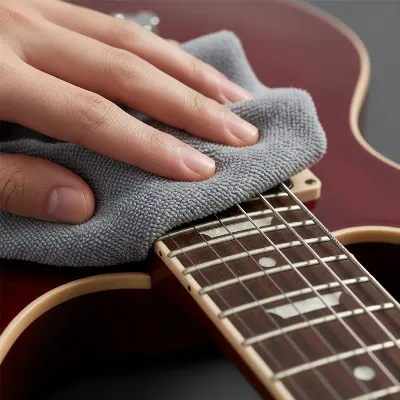 Electric guitar strings being wiped down with a microfiber cloth by a musician's hand
Common Mistakes to Avoid When Cleaning Strings
While cleaning strings can extend their life, doing it incorrectly can cause more harm than good. Be mindful of these common pitfalls:
- Using Household Cleaners: This is perhaps the biggest mistake. Household cleaning products like bleach, glass cleaner, furniture polish, vinegar, or even WD-40 are not designed for guitar strings or finishes. They contain harsh chemicals that can corrode string metals, strip guitar finishes, dry out unfinished fretboards, or leave behind damaging residues. Always stick to guitar-specific cleaning products.
- Applying Excessive Pressure: While you want to be thorough, scrubbing too hard can potentially wear down string coatings (if present) or even micro-scratch the strings, leading to premature wear. Use a firm but gentle touch.
- Applying Liquids Directly: Spraying or dripping string cleaner directly onto the strings can lead to the liquid running down onto the fretboard, pickups, or other sensitive electronic components, potentially causing damage or leaving stains. Always apply cleaners to a cloth first.
- Using Abrasive Materials: Paper towels, rough cloths, or even old, dirty rags can be abrasive and scratch your strings or guitar finish. Always opt for soft, clean microfiber cloths.
- Ignoring Fretboard Maintenance: A dirty fretboard can transfer grime back onto clean strings. While you’re cleaning the strings, take a moment to wipe down the fretboard. For unfinished fretboards, consider a dedicated fretboard conditioner (like a small amount of lemon oil) a few times a year.
By avoiding these mistakes, you ensure your cleaning efforts are beneficial, not damaging.
> “Many guitarists underestimate the power of consistent, gentle cleaning. It’s not about scrubbing hard, but about regular, mindful maintenance. Your guitar will thank you with a sustained, vibrant tone.” – John Smith, Master Luthier and Guitar Technician
Extending the Life of Your Electric Guitar Strings
Beyond cleaning, several practices contribute to maximizing your string’s lifespan and maintaining their optimal performance.
Consistent cleaning is, of course, paramount. Making the daily wipe-down a non-negotiable part of your routine will drastically reduce the rate at which strings corrode and lose their vibrancy. Proper storage also plays a significant role. When not in use, store your electric guitar in a good quality case or gig bag. This protects it from dust, humidity fluctuations, and accidental bumps, all of which can contribute to string degradation.
Another excellent strategy is considering coated strings. Brands like Elixir, D’Addario XS, or Ernie Ball Paradigm offer strings with a micro-thin protective layer that resists dirt and oils, significantly extending their playable life compared to traditional uncoated strings. While they might have a slightly different feel initially, many players find the longevity and sustained tone worth the difference.
Even with the best care, strings will eventually wear out. Knowing when to change them is key. Signs that it’s time for new strings include:
- Dull or Dead Tone: The strings lack their original brightness and sustain.
- Poor Intonation: Your guitar struggles to stay in tune across the fretboard.
- Rough or Sticky Feel: The strings feel gritty or resistant under your fingers.
- Visible Corrosion or Rust: Dark spots or actual rust on the strings are clear indicators.
- Breakage: A snapped string is the most obvious sign, often indicating the set is nearing the end of its life.
While cleaning extends life, it doesn’t make strings immortal. Replace them regularly – typically every 3 months or 100 hours of playing, whichever comes first – to ensure your guitar always sounds its best.
Beyond Strings: Fretboard Care
Often, the health of your strings is intertwined with the cleanliness of your fretboard. A neglected fretboard can become a reservoir for grime, which then transfers back onto your freshly cleaned strings.
Keeping your fretboard clean not only feels better but also contributes to the longevity of your strings and frets. For finished maple fretboards, a simple wipe with a dry microfiber cloth is usually sufficient. However, for unfinished woods like rosewood or ebony, a little extra care is beneficial. Periodically, you can use a small amount of fretboard conditioner, such as lemon oil. Apply a tiny drop to a clean cloth and gently rub it into the wood, then wipe off any excess with a dry cloth. This cleans the wood, removes built-up grime, and helps to hydrate it, preventing it from drying out and cracking. Always ensure any liquid cleaner or conditioner does not pool around the frets or run down onto the guitar body.
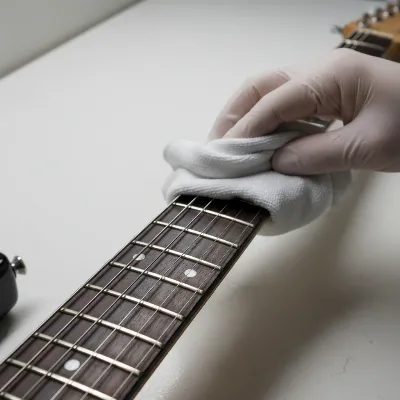 Musician cleaning an electric guitar fretboard with a specialized cleaner and cloth
Conclusion
Maintaining the cleanliness of your electric guitar strings is a fundamental aspect of guitar care that directly impacts your instrument’s performance and longevity. By adopting simple habits like washing your hands before playing and performing a quick wipe-down after each session, you can significantly extend string life and preserve your guitar’s vibrant tone. Incorporating a dedicated string cleaner for deeper maintenance and avoiding harsh household chemicals will further safeguard your investment. clean strings not only sound better but also feel better, enhancing your playing experience. So, take these tips to heart, and keep those electric guitar strings singing beautifully.
Frequently Asked Questions
How often should I clean my electric guitar strings?
You should wipe down your electric guitar strings with a dry microfiber cloth after every playing session. For a deeper clean using a dedicated string cleaner, aim for every few sessions or whenever your strings start to feel sticky or sound dull.
Can I use rubbing alcohol to clean electric guitar strings?
While some guitarists use rubbing alcohol, it is generally not recommended for regular cleaning. Alcohol can dry out unfinished fretboards and potentially strip certain string coatings or guitar finishes. Dedicated guitar string cleaners are formulated to be safe and effective for your instrument.
Will cleaning strings make them last forever?
No, cleaning strings will not make them last forever. While it significantly extends their lifespan and maintains tone quality, strings are consumable items that will eventually wear out, lose their elasticity, and corrode over time. Regular cleaning simply helps you get the maximum playable life out of each set, typically extending it by 20-30%.
What's the best way to clean rusty electric guitar strings?
If your electric guitar strings are already rusty, cleaning might offer a slight, temporary improvement, but it won't fully restore them. Rust indicates metal corrosion, which compromises tone and playability. The best and safest approach for rusty strings is to replace them with a fresh set, as rust cannot be fully reversed.
Are coated electric guitar strings worth the extra cost for cleanliness?
Many guitarists find coated electric guitar strings to be a worthwhile investment. The protective coating significantly reduces the accumulation of sweat, oils, and dirt, leading to a much longer lifespan and more consistent tone compared to uncoated strings. Brands like Elixir and D'Addario XS can last 3-5 times longer than traditional strings.
How to Clean Electric Guitar Strings
This guide outlines the steps for daily and deep cleaning of electric guitar strings to extend their life and maintain optimal tone.
Before every playing session, thoroughly wash your hands with soap and water. This simple habit minimizes the transfer of oils and dirt from your fingers to your strings, significantly reducing buildup and slowing corrosion.
After each practice or gig, lay your guitar on a soft surface. Use a clean, dry microfiber cloth to pinch each string individually and gently run it from the nut to the bridge, wiping both the top and underside. This removes surface grime effectively.
For a more thorough clean, especially if strings feel sticky, slide a thin cloth under the strings to protect the fretboard. Apply a small amount of dedicated string cleaner to a separate clean microfiber cloth, then thoroughly wipe each string from nut to bridge. Never apply cleaner directly to the strings or guitar body.
After cleaning with the dampened cloth, use a clean, dry part of your microfiber cloth to wipe away any excess cleaner or residue from the strings. This prevents a sticky film from forming, which could attract more dirt.

The daily wipe-down with a microfiber cloth is something I’ve been doing for a while, and it really does help extend string life. I’ve noticed less corrosion and my strings don’t feel as gunky. I’m still a bit hesitant about boiling strings, but the other methods mentioned here are solid advice for keeping things clean.
I used to just wipe my strings down with a rag, but after reading about the dedicated string cleaners, I decided to try the Music Nomad String Fuel. What a difference! My strings feel so much smoother and the tone is noticeably brighter, even on an older set. It’s definitely worth the small investment to keep them sounding fresh.
I tried the rubbing alcohol method on an old set of strings, and while it did clean them, I felt like it dried them out a bit too much. The tone was okay, but they didn’t feel as ‘lively’ as when I use a proper string conditioner. It’s a good emergency option, but I’ll stick to the specialized products for my main guitars.
I’ve always struggled with my lower-gauge strings getting dull really fast because of all the gunk in the windings. The advice about using a soft brush to get into those areas during a deep clean was a game-changer for me. My D and G strings sound so much clearer now, and I’m not replacing them nearly as often.