Adjusting your electric guitar’s truss rod is an essential skill for maintaining optimal playability and tone. The truss rod, a metal bar inside the neck, counteracts string tension to control neck curvature, known as neck relief. A common starting point for electric guitar neck relief is between 0.010″ and 0.012″ (0.25mm to 0.30mm) at the 7th or 8th fret, ensuring comfortable action and preventing fret buzz. This DIY adjustment can save time and money on professional setups.
The Electric Guitar Truss Rod: Understanding Its Vital Role
At its core, a truss rod is a metal bar, usually made of steel or graphite, embedded within the neck of most electric guitars. Its primary function is to counteract the considerable tension exerted by the strings, which can amount to hundreds of pounds of pressure. Without a truss rod, this constant pull would inevitably cause the guitar neck to bow forward over time, leading to significant playability issues. The truss rod allows a player or technician to adjust how much, or how little, the neck bows, thus controlling its curvature, known as “neck relief.”
Why is proper neck relief so important? It’s the foundational element for a guitar that plays well and sounds good. A correctly set neck relief ensures comfortable action across the fretboard, helps eliminate unwanted fret buzz, and contributes to accurate intonation. When relief is dialed in, the vibrating strings have just enough space to oscillate freely without hitting the frets, particularly in the middle of the neck where the string’s arc is widest.
Recognizing the Signs: When Your Electric Guitar Needs Truss Rod Adjustment
Knowing when to adjust your electric guitar’s truss rod is crucial for maintaining optimal playability. Ignoring these signs can lead to an uncomfortable playing experience and potentially more serious issues.
Fret Buzz and High Action Indicators
One of the most common reasons to consider a truss rod adjustment is the presence of fret buzz. If you notice buzzing, particularly in the lower frets (1st to 7th) or in the middle frets (around the 5th to 12th), it often indicates an issue with neck relief. Too little relief (a neck that is too flat or even back-bowed) can cause buzzing in the lower frets, while too much relief (an excessive forward bow) can lead to high action and buzzing in the middle frets.
Conversely, if your guitar’s string action feels excessively high, making it difficult or uncomfortable to fret notes, especially in the higher registers, too much neck relief could be the culprit. The strings may sit too far from the fretboard, requiring more force to depress them.
Environmental and String Gauge Influences
|
Our Picks for the Best Electric Guitar in 2026
As an Amazon Associate I earn from qualifying purchases.
|
||
| Num | Product | Action |
|---|---|---|
| 1 | 39 Inch Electric Guitar Bag 7mm Padding Waterproof Electric Guitar Case, Electric Guitar Gig Bag Backpack with Neck Strap and Pockets, Black |

|
| 2 | STRICH Electric Guitar Beginner Kit, Solid Body 39" Full Size Electric Guitar HSS Pick Up for Starter, with 10W Amp, Bag, Digital Tuner, Capo, Strap, String,Cable, Picks, SST-S20 Sapphire Blue |
|
| 3 | 16inch Mini Guitar Toy for Kids and Beginners, Electric Guitar with Strap for Toddlers and Boys and Girls Instrument Toys |
|
| 4 | WINZZ EGM100 30 Inches Real Kids Electric Guitar with Beginner Kit, Right Handed (Gradient Pink) |
|
| 5 | Jackson Dinky Minion JS1X Electric Guitar - Black |
|
| 6 | Tostar 39 Inch Full Size Electric Guitar Kit For Beginners And Adults,SSS Pickup Stratocaster Guitarra Electrica Set Includes Tremolo Bridge,Amp,Strings,Stand,Case Bag, Birthday Holiday Gifts, Red |
|
| 7 | RockJam Electric Guitar Kit with 10-Watt Amp, Gig Bag, Picks, Spare Strings & Lessons |
|
| 8 | LyxPro 39 inch Electric Guitar Kit Bundle with 20w Amplifier, All Accessories, Digital Clip On Tuner, Six Strings, Two Picks, Tremolo Bar, Shoulder Strap, Case Bag Starter kit Full Size - Blue |
|
| 9 | Fender Mini Stratocaster Electric Guitar Kit, Beginner Guitar Kit, with 2-Year Warranty, with Frontman 10G Amp, Padded Gig Bag, Strap, Cable, Tuner, and Picks, Daphne Blue |
|
| 10 | Ibanez GRG131DX - Black Flat |
|
Guitars, being made largely from natural materials like wood, are sensitive to environmental changes. Fluctuations in humidity and temperature can cause the neck wood to expand or contract, leading to shifts in neck relief. This is why it’s common for guitars to require occasional adjustments every 6-12 months, or even seasonally.
Additionally, changing your string gauge can significantly impact neck tension and, consequently, neck relief. Switching to heavier gauge strings will increase tension, pulling the neck forward and adding more relief. Conversely, moving to lighter gauge strings will reduce tension, allowing the neck to straighten or even back-bow slightly. Whenever you change string types or gauges, checking and possibly adjusting your truss rod is a recommended practice.
Essential Tools for DIY Truss Rod Adjustment
Before diving into an adjustment, gathering the right tools is paramount. Using incorrect tools can damage your guitar’s truss rod nut, leading to costly repairs.
Identifying Your Truss Rod Wrench
The most critical tool is the truss rod wrench itself. The type and size of wrench required vary significantly between guitar manufacturers and models. Most modern electric guitars use an Allen wrench (also known as a hex key), which can range in size. Common sizes include 4mm, 5mm, 3/16″, and 5/32″. Gibson guitars, for instance, often use a specific box wrench, while some older Fender models might require a Phillips or large flathead screwdriver at the heel. It’s always best to consult your guitar’s owner’s manual or the manufacturer’s website to confirm the correct wrench size and type. A quality truss rod wrench set that includes multiple sizes is a worthwhile investment for any guitarist.
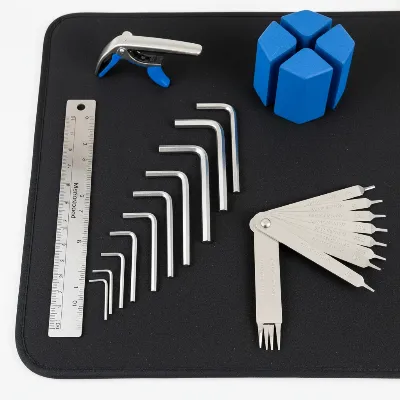 Assortment of essential tools for electric guitar truss rod adjustment, including hex keys, feeler gauges, and a capo.
Precision Measurement Tools: Capos and Feeler Gauges
While eyeballing the neck can give you a rough idea of its straightness, precise measurement tools are essential for accurate neck relief adjustment.
- Capo: A capo is used to hold down the strings at the first fret, effectively creating a consistent “zero point” for your measurements.
- Feeler Gauges: These thin, precisely calibrated metal blades are used to measure the minute gap between the bottom of the string and the top of the fret wire. A typical starting point for electric guitar neck relief is between 0.010″ and 0.012″ (0.25mm to 0.30mm). Feeler gauges allow you to quantify the exact amount of relief, ensuring you don’t over-adjust.
- Straight Edge (Optional but recommended): A notched straight edge can be useful for independently checking the straightness of the fretboard without the strings, helping to identify any twists or humps in the neck itself.
- Electronic Tuner: You’ll need to re-tune your guitar after each minor adjustment, as changes in neck tension will affect tuning.
Single-Action vs. Dual-Action Truss Rods: Knowing Your Guitar’s System
Understanding the type of truss rod in your electric guitar is crucial because it dictates how the adjustment will affect the neck and what corrections it can make.
Characteristics of Single-Action Truss Rods
Single-action (or single-expansion) truss rods are typically threaded at only one end. Their primary function is to counteract forward bow (upbow) in the neck caused by string tension. When tightened (turned clockwise), they pull the neck backward, reducing relief and straightening the neck. When loosened (turned counter-clockwise), they allow the string tension to pull the neck forward, increasing relief.
The limitation of a single-action rod is that it can only pull the neck into a straighter or back-bowed position; it cannot actively push the neck forward to create more relief if the neck is already too flat or back-bowed. These rods are common in vintage guitars and are generally lighter than their dual-action counterparts.
Advantages of Dual-Action Truss Rods
Dual-action (or double-action/two-way) truss rods are threaded at both ends or comprise two rods. This design allows them to apply pressure in both directions: to pull the neck backward (reducing relief) or to push it forward (increasing relief or correcting back-bow). This versatility makes dual-action rods favored by modern builders as they offer more comprehensive control over neck curvature.
If your guitar’s neck has developed a back-bow (curving backward, away from the strings), a dual-action truss rod can actively push the neck into a proper forward relief. While generally heavier due to their construction, dual-action truss rods provide a broader range of adjustment, making them more forgiving for various neck conditions and environmental changes. If you are unsure what type of truss rod your guitar has, checking the manufacturer’s specifications is always the best approach.
Step-by-Step Guide: Adjusting Your Electric Guitar Truss Rod with Confidence
Adjusting your electric guitar’s truss rod is a precise process that requires patience and attention to detail. Follow these steps to ensure a safe and effective adjustment.
Preparation and Initial Assessment
- Prepare Your Workspace: Find a clean, well-lit area where you can comfortably lay your guitar down. A padded surface, such as a guitar mat or a soft towel, is ideal to protect the instrument. A neck support cradle can also be very helpful.
- Tune Your Guitar to Pitch: Ensure your guitar is tuned to your desired playing pitch. String tension directly influences neck relief, so an accurate tuning is essential for correct measurements and adjustments.
- Identify Truss Rod Access: Locate the truss rod adjustment nut. On most electric guitars, it’s either at the headstock (often covered by a plate) or at the heel of the neck where it joins the body (sometimes requiring neck removal, especially on older Fender models).
- Measure Current Neck Relief: This is the most critical step.
- Place a capo at the 1st fret.
- With your other hand, fret the low E string (or any bass string) at the highest fret where the neck joins the body (typically around the 17th or last fret). This acts as a straight edge along the string.
- Look for the gap between the bottom of the string and the top of the fret wire at the 7th or 8th fret – this is where the neck’s curvature is usually deepest.
- Use a feeler gauge to measure this gap. Slide different gauge blades until you find one that just fits with slight friction, without lifting the string. Note this measurement for both the bass and treble sides of the neck to check for potential twist.
- A common relief target is 0.010″ to 0.012″ (0.25mm to 0.30mm), but this can vary based on personal preference and manufacturer recommendations.
Making the Adjustment: Clockwise or Counter-Clockwise?
The direction you turn the truss rod nut depends on the type of truss rod and the desired change in neck relief.
- To Reduce Relief (Flatten the Neck/Correct Forward Bow): Turn the truss rod nut clockwise (tighten). This applies more tension to the truss rod, pulling the neck backward.
- To Increase Relief (Add Bow/Correct Back Bow): Turn the truss rod nut counter-clockwise (loosen). This releases tension, allowing the strings to pull the neck forward.
- Important Note for Single-Action Rods: If you have a single-action truss rod and the neck is back-bowed (too little or negative relief), loosening the rod might not add enough forward bow as it can only relieve tension, not actively push the neck forward.
- Important Note for Dual-Action Rods: Dual-action rods can actively push the neck into a forward bow when loosened if the neck is back-bowed.
Crucial Adjustment Tips:
- Small Increments: Always make adjustments in small increments, typically no more than a quarter-turn at a time.
- Re-tune and Wait: After each small adjustment, re-tune your guitar to pitch and allow the neck to settle for a few minutes (some recommend 5-10 minutes, others up to an hour) before re-measuring the relief. Wood fibers take time to react to changes in tension.
- Don’t Force It: If you encounter excessive resistance or the nut feels exceptionally tight, do not force it. The truss rod might be at its maximum adjustment, or there could be a deeper issue. Forcing it can strip the nut or even snap the rod, leading to very expensive repairs.
- Proper Wrench Seating: Ensure your truss rod wrench is fully and properly seated in the nut before turning. A poorly seated wrench can strip the nut.
Post-Adjustment: Re-tuning and Observation
Once you’ve made your adjustments and achieved the desired neck relief, remove the capo, re-tune the guitar, and play it. Check for the original symptoms you were trying to fix, such as fret buzz or high action. You may need to fine-tune the bridge saddle height and intonation after a truss rod adjustment, as neck relief is just one component of a complete guitar setup. This iterative process of adjusting, measuring, playing, and fine-tuning is key to achieving optimal playability.
Common Pitfalls and Troubleshooting During Truss Rod Adjustment
While DIY truss rod adjustment can be empowering, it’s crucial to be aware of common mistakes and know how to troubleshoot potential issues.
Avoiding Damage: Stripped Nuts and Overtightening
One of the most frequent and costly mistakes is damaging the truss rod nut. This often occurs when using an incorrect wrench size or failing to seat the wrench properly. A stripped nut can make future adjustments impossible without professional repair or even neck replacement. Always use the correct, snug-fitting wrench and apply firm, even pressure when turning.
Overtightening the truss rod is another serious pitfall. Applying too much force or turning the nut too far can snap the truss rod itself. This is an extremely expensive repair, often requiring significant luthier work or a neck replacement. Always adhere to the “small increments” rule (quarter-turns at most), and if you feel significant resistance, stop immediately. It’s better to under-adjust and reassess than to risk irreparable damage.
> “Always approach truss rod adjustments with respect. If you turn it too far, it can snap, and that’s a damn expensive repair. So always make small adjustments and constantly check your progress.” — Ed Mitchell, Former Reviews Editor, Total Guitar Magazine
Addressing Persistent Fret Buzz or Back Bow
If you’ve adjusted your truss rod and still experience persistent fret buzz or if the neck develops a back bow (curving backwards) that won’t correct, here’s what to consider:
- Fret Buzz Still Present: If buzzing persists despite correct neck relief, the issue might not be the truss rod. It could be uneven frets (requiring a fret level, crown, and polish), an improperly cut nut, or bridge saddle height issues. These require further diagnosis and possibly different adjustments.
- Uncorrectable Back Bow (Single-Action): With a single-action truss rod, if the neck is back-bowed and loosening the rod doesn’t introduce enough relief, you might need to try a “back-bow assist” technique (gently bending the neck by hand while loosening the rod) or consult a professional. Single-action rods cannot actively push the neck forward.
- Twisted Neck: If you notice significantly different neck relief measurements between the bass and treble sides of the neck, you might have a twisted neck. A minor twist can sometimes be mitigated with careful truss rod adjustment favoring one side, but severe twists typically require professional intervention, such as fret leveling or even neck replacement.
- Maxed-Out Truss Rod: If the truss rod nut feels very loose (or very tight) and turns without affecting the neck relief, the rod might be “maxed out” or damaged. In such cases, professional assessment is necessary.
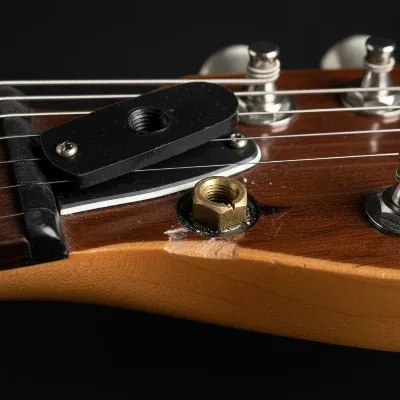 A close-up of a damaged electric guitar truss rod nut, showing signs of stripping from incorrect tools.
Maintaining Optimal Neck Relief for Consistent Electric Guitar Performance
Regular maintenance of your electric guitar’s neck relief is vital for long-term playability and health. A proactive approach can prevent minor issues from escalating into major problems.
Regular Checks and Seasonal Adjustments
Since wood is a natural material, guitar necks are susceptible to changes caused by humidity and temperature. It’s a good practice to check your neck relief periodically, perhaps every 6 to 12 months, or whenever there’s a significant seasonal change in your environment. This allows you to catch minor shifts in curvature before they dramatically impact your playing. If you live in an area with extreme seasonal changes, more frequent checks might be necessary.
Additionally, whenever you change your strings, especially if you’re experimenting with different gauges, take a moment to re-evaluate your neck relief. The new string tension could necessitate a slight truss rod adjustment to compensate.
Preventative Care for Neck Health
Beyond regular adjustments, general preventative care can significantly contribute to maintaining optimal neck relief and overall guitar health:
- Proper Storage: Store your electric guitar in a climate-controlled environment, ideally in its case, to minimize exposure to extreme temperature and humidity fluctuations. A consistent environment helps stabilize the wood and reduce the frequency of truss rod adjustments.
- String Choice: Be mindful of the string gauges you use. Drastically changing between very light and very heavy gauges can put sudden and intense stress on the neck. If you do switch gauges, be prepared to perform a truss rod adjustment and allow the neck time to settle.
- Professional Check-ups: Even with diligent DIY maintenance, occasional professional check-ups by a qualified luthier are beneficial. They can spot subtle issues, perform fret work, or address any underlying problems that might not be apparent to the casual observer.
By incorporating these practices into your routine, you can ensure your electric guitar’s neck remains in excellent condition, providing consistent performance and a comfortable playing experience for years to come.
Conclusion
Mastering the art of electric guitar truss rod adjustment is a powerful skill that allows you to finely tune your instrument for peak performance and personal playing comfort. By understanding the truss rod’s function, recognizing the signs that indicate an adjustment is needed, and following a methodical, step-by-step approach, you can confidently take control of your guitar’s neck relief. Remember to always use the correct tools, make small, incremental adjustments, and give the neck time to settle. This DIY approach not only saves you money but also deepens your connection with your instrument, transforming it into an extension of your musical expression. What subtle changes have you noticed in your electric guitar’s playability lately?
Frequently Asked Questions
What is the ideal neck relief for an electric guitar?
While there’s no single “perfect” number, a common starting point for electric guitar neck relief is typically between 0.010″ and 0.012″ (0.25mm to 0.30mm) at the 7th or 8th fret. This allows the strings to vibrate freely without buzzing, especially for players with a moderate attack. Ultimately, the ideal relief often comes down to personal playing style and string gauge preferences.
Can adjusting the truss rod fix all fret buzz?
No, while the truss rod is crucial for setting neck relief and often resolves fret buzz in the lower or middle frets, it won’t fix all buzzing issues. Fret buzz can also be caused by high or uneven frets, an improperly cut nut, worn frets, or incorrect bridge saddle height. If buzzing persists after a proper truss rod adjustment, other setup elements likely need attention.
How often should I adjust my electric guitar’s truss rod?
It’s a good practice to check your electric guitar’s neck relief every 6 to 12 months, or whenever you notice significant changes in playability, such as new fret buzz or high action. Major environmental changes (humidity, temperature) or switching to a different string gauge will also often necessitate a truss rod adjustment.
Is it safe to adjust the truss rod with strings at full tension?
Yes, it is generally safe to adjust the truss rod with the strings at full tension. In fact, it’s often recommended, as this tension is what the truss rod is counteracting, and you need to assess the neck’s curvature under playing conditions. However, always make very small, incremental turns and never force the adjustment if you feel excessive resistance.
What happens if I over-tighten my electric guitar’s truss rod?
Overtightening the truss rod can lead to a “back-bowed” neck, where the neck curves backward, causing severe fret buzz, especially in the lower frets, and making the guitar very difficult to play. More severely, over-tightening can strip the truss rod nut or, in the worst case, snap the truss rod itself, leading to very costly repairs or neck replacement.

I’ve always been a bit intimidated by truss rod adjustments, but this guide made it so clear. I followed the steps for checking neck relief at the 7th fret and got my action dialed in perfectly. My old Strat feels like a new guitar now, no more buzzing on the lower frets. Definitely saved me a trip to the luthier!
This was exactly what I needed! My Les Paul was getting some annoying fret buzz around the middle of the neck, and I suspected it was a relief issue. The explanation of the truss rod’s role as a metal bar inside the neck made so much sense. I made a small adjustment and the buzz is gone. Thanks for empowering me to do this myself!
Good overview of the basics. I appreciate the mention of the 0.012″ starting point for neck relief, which is a solid recommendation. However, I found the section on identifying whether you need to tighten or loosen a bit vague for a complete beginner. It could use a clearer ‘if this, then that’ breakdown. Still, it’s a decent starting point for DIY maintenance.
Great info here! I’ve been struggling with a bit too much forward bow on my Ibanez, and understanding how the truss rod counteracts string tension really helped. I aimed for that 0.010″ relief and it’s playing much better. My only minor complaint is I wish there was a quick tip on what to do if the nut feels really stuck, but otherwise, super helpful.