Maintaining an electric guitar ensures its longevity and optimal performance, keeping it playing beautifully and sounding its best for years to come. Consistent care involves daily routines like wiping down strings, periodic deep cleaning of the body and fretboard, and crucial setup adjustments such as string action, neck relief, and intonation. Understanding these essential maintenance tips will help preserve your instrument’s condition and troubleshoot common issues effectively.
Electric Guitar: Overview and Evolution
The electric guitar revolutionized music, amplifying sound and opening new sonic possibilities. It emerged in the 1930s as musicians sought louder instruments to compete with horns and drums in big bands. Early pioneers like George Beauchamp and Adolph Rickenbacker developed the first magnetic pickups, leading to the “Frying Pan” in 1931. Over the decades, innovators refined designs, materials, and electronics, culminating in the diverse range of electric guitars we see today, integral to rock, blues, jazz, and countless other genres.
Popular Electric Guitar Types
Different electric guitar types offer unique sounds and playability, influencing their maintenance needs. Understanding these variations can help you appreciate your instrument’s specific characteristics.
Stratocaster
The Fender Stratocaster, introduced in 1954, is renowned for its versatile sound, ergonomic body, and three single-coil pickups. Its distinctive “quack” and bright, articulate tones have made it a favorite among legends like Jimi Hendrix and Eric Clapton. Maintenance often involves keeping its tremolo system in check.
Telecaster
Fender’s original solid-body electric, the Telecaster, known for its punchy, twangy sound and simple, rugged design. Artists from Keith Richards to Bruce Springsteen have embraced its no-frills reliability. Its fixed bridge generally simplifies maintenance compared to tremolo-equipped guitars.
Les Paul
The Gibson Les Paul, launched in 1952, is celebrated for its rich, warm tone, sustain, and powerful humbucker pickups. It’s a powerhouse for rock, blues, and jazz, famously played by Jimmy Page and Slash. Its heft and set-neck construction contribute to its robust feel.
SG
Introduced by Gibson in 1961 as a lighter, more radical alternative to the Les Paul, the SG features a thinner mahogany body and often humbucker pickups. Its excellent upper-fret access and aggressive tone have made it a favorite for guitarists like Angus Young.
Other Electric Guitar Types
Beyond these icons, electric guitars include Hollow body and semi-hollow body designs, which offer warmer, more resonant tones suitable for jazz and blues, such as the Gibson ES-335. These designs can be more sensitive to feedback and humidity due to their construction.
Detailed Anatomy of an Electric Guitar
Understanding your electric guitar’s components is key to effective maintenance. Each part plays a role in its sound, feel, and overall health.
Body
|
Our Picks for the Best Electric Guitar in 2026
As an Amazon Associate I earn from qualifying purchases.
|
||
| Num | Product | Action |
|---|---|---|
| 1 | 39 Inch Electric Guitar Bag 7mm Padding Waterproof Electric Guitar Case, Electric Guitar Gig Bag Backpack with Neck Strap and Pockets, Black |

|
| 2 | Fender Mini Stratocaster Electric Guitar Kit, Beginner Guitar Kit, with 2-Year Warranty, with Frontman 10G Amp, Padded Gig Bag, Strap, Cable, Tuner, and Picks, Daphne Blue |
|
| 3 | Jackson Dinky Minion JS1X Electric Guitar - Black |
|
| 4 | LyxPro 39 inch Electric Guitar Kit Bundle with 20w Amplifier, All Accessories, Digital Clip On Tuner, Six Strings, Two Picks, Tremolo Bar, Shoulder Strap, Case Bag Starter kit Full Size - Blue |
|
| 5 | 16inch Mini Guitar Toy for Kids and Beginners, Electric Guitar with Strap for Toddlers and Boys and Girls Instrument Toys |
|
| 6 | Tostar 39 Inch Full Size Electric Guitar Kit For Beginners And Adults,SSS Pickup Stratocaster Guitarra Electrica Set Includes Tremolo Bridge,Amp,Strings,Stand,Case Bag, Birthday Holiday Gifts, Red |
|
| 7 | WINZZ EGM100 30 Inches Real Kids Electric Guitar with Beginner Kit, Right Handed (Gradient Pink) |
|
| 8 | STRICH Electric Guitar Beginner Kit, Solid Body 39" Full Size Electric Guitar HSS Pick Up for Starter, with 10W Amp, Bag, Digital Tuner, Capo, Strap, String,Cable, Picks, SST-S20 Sapphire Blue |
|
| 9 | RockJam Electric Guitar Kit with 10-Watt Amp, Gig Bag, Picks, Spare Strings & Lessons |
|
| 10 | Ibanez GRG131DX - Black Flat |
|
The guitar’s body significantly impacts its tone and sustain. Alder and Ash are popular for their bright, balanced sound, often found in Fender-style guitars. Mahogany provides warmth and sustain, characteristic of Gibson models. Maple is dense, offering brightness and clarity, often used as a cap on mahogany bodies. The finish protects the wood, requiring specific cleaning care.
Neck
The neck’s material and profile affect playability. Maple is common for its bright tone and stability, while Mahogany offers warmth. Neck shapes like C-shape, D-shape, and V-shape cater to different hand sizes and playing styles. The fretboard (often rosewood or maple) requires conditioning to prevent drying and cracking.
Pickup
Pickups convert string vibrations into electrical signals. Single-coil pickups (Stratocaster, Telecaster) produce bright, clear, and articulate tones but can be prone to hum. Humbuckers (Les Paul, SG) use two coils to cancel hum, delivering a fatter, more powerful sound. P90s are a single-coil variant offering a raw, gritty tone. Cleaning around pickups is essential to avoid dust buildup affecting electronics.
Bridge
The bridge anchors the strings and allows for intonation and action adjustments. Fixed bridges (Tune-o-matic on Les Pauls, hardtail Stratocasters) offer maximum sustain and tuning stability. Tremolo systems (Floyd Rose, synchronized tremolo on Stratocasters) allow for pitch bending but can require more intricate setup and maintenance for tuning stability. Regular cleaning of saddles and moving parts is vital.
Other Components
Tuners (machine heads) at the headstock are responsible for tuning stability and should be kept free of grime. The nut, at the top of the fretboard, guides the strings and affects action. Volume and tone controls (potentiometers) and pickup selector switches can accumulate dust, leading to crackling or intermittent signal issues if not maintained.
Comparison Table of Renowned Electric Guitar Brands
Choosing an electric guitar involves considering brand reputation, quality, and how they relate to long-term maintenance. Here’s a general overview of some leading brands:
| Brand | Key Characteristics | Quality & Durability | Typical Price Range | Notes on Maintenance |
|---|---|---|---|---|
| Fender | Versatile, bright, iconic designs (Strat, Tele) | High, excellent long-term reliability | Mid to High | Readily available parts, easy to work on. |
| Gibson | Warm, thick tones, sustain (Les Paul, SG) | High, classic builds | High | Specific parts may require authorized service. |
| Ibanez | Modern, fast necks, high-output pickups (shred, metal) | Good, built for performance | Mid to High | Often features complex tremolos requiring careful setup. |
| PRS | High-end craftsmanship, versatile tones, aesthetics | Excellent, premium materials | High to Premium | Exceptional build quality reduces common issues. |
| ESP | Aggressive designs, metal-oriented, active pickups | Good, robust for heavy playing | Mid to High | Active electronics require battery changes. |
> “A well-maintained guitar is a happy guitar. It not only sounds better but inspires you to play more.” – John Smith, Master Luthier at Vintage Tone Guitars
Electric Guitar Buying Guide: Longevity Through Informed Choices
While this article focuses on maintenance, selecting the right electric guitar from the outset can simplify future care. Consider factors that contribute to a guitar’s durability and ease of maintenance.
- Budget: Invest in the best quality you can afford. Higher-quality components often mean fewer issues down the road.
- Playability and Build Quality: Check for smooth frets, a straight neck, and securely fitted hardware. These indicators suggest a guitar that will hold up well.
- Type of Bridge: Fixed bridges typically require less maintenance than floating tremolos. If you opt for a tremolo, understand its setup requirements.
- Electronics: Active pickups require batteries, an additional maintenance consideration. Passive pickups are generally more straightforward.
- Accessories: Don’t forget essential accessories. A sturdy hard case or gig bag is crucial for protection during storage and transport. A reliable tuner, guitar stand, cleaning cloths, and guitar-specific cleaning solutions are fundamental to ongoing care.
For beginners, a simpler model with a fixed bridge is often recommended to focus on playing without immediate complex setup needs. Intermediate players might explore guitars with more features, understanding they may introduce additional maintenance tasks. Professional musicians prioritize reliability and specific tonal qualities, often requiring custom setups and regular upkeep.
Common Issues and Troubleshooting
Even with diligent care, electric guitars can develop issues. Knowing how to identify and address them can save you time and potential repair costs.
- Fret Buzz: This irritating noise occurs when a string vibrates against a fret. Common causes include low string action, uneven frets, or incorrect neck relief. Slightly raising the string action at the bridge saddles or adjusting the truss rod can often resolve this. If frets are uneven, a professional fret leveling might be necessary.
- Loss of Sound or Intermittent Signal: If your guitar produces no sound or cuts in and out, first check your cables and amplifier. A faulty output jack, dirty volume/tone pots, or a dead battery (for active pickups) are common culprits. Tighten loose output jacks and use contact cleaner on pots and switches, rotating them to work the cleaner in.
- Buzzing or Humming Noise (beyond normal single-coil hum): This can indicate poor grounding within the guitar’s electronics or interference from nearby electrical devices. Check for loose wires in the control cavity. Moving away from fluorescent lights or dimmer switches can also help.
- Tuning Instability: If your guitar constantly goes out of tune, factors include old or improperly installed strings, a worn nut, or loose tuning machine heads. Ensure strings are properly stretched and wound. A graphite lubricant in the nut slots can help reduce friction.
- Crackling or Popping Sounds: Often associated with dirty potentiometers (volume/tone knobs) or a faulty pickup selector switch. Cleaning these components with an electronics contact cleaner and working the switch/knobs can resolve it.
When simple troubleshooting doesn’t work, or if you’re uncomfortable performing a fix, it’s always best to consult a professional luthier or guitar technician. They have the specialized tools and expertise for complex adjustments or repairs.
Electric Guitar Care and Cleaning
Regular cleaning and proper storage are the cornerstones of electric guitar maintenance, preserving its appearance, playability, and sound.
- Post-Playing Routine: After every playing session, wipe down your strings and fretboard with a clean, soft microfiber cloth. This removes sweat, skin oils, and dirt, preventing corrosion and extending string life. It’s also a good practice to wipe down the body to remove fingerprints.
- Body Cleaning: Use a soft, lint-free microfiber cloth for the body. For glossy finishes, a specialized guitar polish or cleaner can restore shine. For matte or satin finishes, usually a slightly damp cloth followed by a dry one is sufficient, as polishes can create shiny spots. Always apply cleaning solutions to the cloth first, not directly to the guitar. Avoid household cleaners, as they can damage the finish.
- Fretboard Conditioning: For unfinished fretboards (like rosewood or ebony), periodically apply a small amount of lemon oil or a specialized fretboard conditioner. This prevents the wood from drying out and cracking. Always clean the fretboard thoroughly before conditioning. Maple fretboards with a finish typically only require wiping with a damp cloth.
- String Replacement: Old strings lose their tone, become dull, and can even feel sticky or rusty. The frequency of string changes depends on how often you play, but a good rule of thumb is every 4-6 weeks for regular players, or when you notice a degradation in tone or feel.
- Hardware and Electronics Cleaning: Gently clean metal hardware (bridge, tuners) with a soft cloth. For stubborn grime or light rust, a small amount of isopropyl alcohol on a cotton swab can be effective, being careful to avoid painted or finished surfaces. Periodically clean volume/tone knobs and pickup selector switches with a specialized contact cleaner to prevent crackling.
- Proper Storage: Store your electric guitar in a hard case or a gig bag when not in use. This protects it from dust, accidental bumps, and environmental fluctuations. Keep the guitar away from direct sunlight, heating or cooling vents, and areas with extreme temperature or humidity changes.
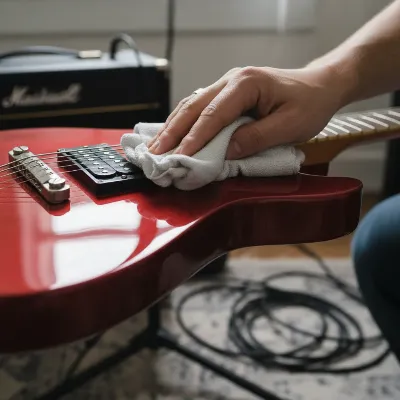 A person wiping down the glossy body of an electric guitar with a soft microfiber cloth, reflecting light on its pristine surface.
Maintenance and Setup
Beyond cleaning, periodic setup adjustments are crucial for optimal playability and intonation, ensuring your electric guitar performs at its peak.
- Adjusting String Action: String action refers to the height of the strings above the fretboard. Too high, and it’s difficult to play; too low, and you risk fret buzz. Adjustments are typically made at the bridge saddles. For most electric guitars, you’ll use an Allen key or a small screwdriver to raise or lower individual saddles. Small adjustments can make a big difference, so proceed incrementally.
- Checking and Adjusting Neck Relief (Truss Rod): The truss rod, running inside the neck, counteracts string tension to maintain the proper neck curvature (relief). A slight forward bow is usually ideal. You can check relief by pressing a string at the first and last fret and observing the gap at the 8th or 9th fret. Adjustments are made with an Allen key, typically at the headstock or where the neck joins the body. Turning clockwise tightens the rod, reducing relief; counter-clockwise loosens it, increasing relief. Always make small, quarter-turn adjustments and allow the wood to settle. If unsure, professional help is recommended.
- Setting Intonation: Correct intonation ensures that notes played up the neck are in tune relative to open strings. You set intonation by comparing the open string’s pitch to the pitch of the 12th-fret harmonic and the fretted note at the 12th fret. If the fretted note is sharp, move the bridge saddle back; if it’s flat, move it forward. This process requires a precise tuner and careful adjustment of each string’s saddle.
- Pickup Height Adjustment: Pickup height influences output and tone. Generally, closer pickups produce higher output and a stronger signal, while lower pickups offer more clarity and dynamic range. Adjust pickup height by turning the screws on either side of the pickup. Experiment to find the sweet spot that suits your playing style and desired tone.
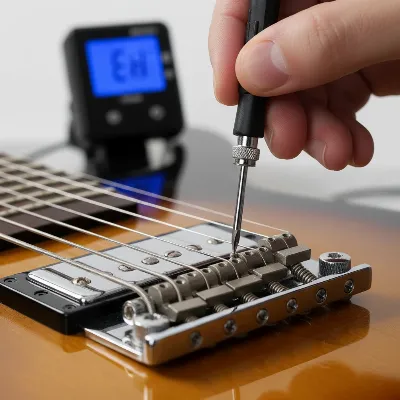 A close-up of a hand adjusting a bridge saddle on an electric guitar for intonation, with a tuner visible in the background.
Electric Guitar Care and Cleaning
Consistent maintenance and cleaning are crucial for preserving your electric guitar’s playability, tone, and overall value. Adhering to a routine ensures your instrument remains in pristine condition.
- Long-Term Storage: When not in use, store your electric guitar in a hard case. This offers superior protection against physical damage and helps stabilize the environment around the instrument. For open storage, a padded guitar stand or wall mount is suitable, ensuring it’s away from hazards.
- Temperature and Humidity Control: Electric guitars, primarily made of wood, are sensitive to temperature and humidity fluctuations. The ideal relative humidity for electric guitars is generally between 40% and 60%. Storing your guitar in a climate-controlled environment, preferably in its case, helps prevent warping, cracking, and issues with the finish or electronics. A hygrometer can help monitor humidity levels in your storage area.
- Daily Wipe-Down: After each session, wipe down the strings, fretboard, and body with a clean, lint-free microfiber cloth. This removes corrosive sweat and oils from your hands, preventing grime buildup and extending string life.
- Body and Neck Cleaning: For the guitar body, use a guitar-specific polish or cleaner with a soft cloth for glossy finishes. For matte finishes, a slightly damp cloth followed by a dry one is usually sufficient, as polishes can create shiny spots. Always apply cleaning solutions to the cloth first, not directly onto the guitar. The back of the neck, especially where your hand rests, can also benefit from a regular wipe-down to remove oils.
- Fretboard Conditioning: Unfinished fretboards (like rosewood or ebony) need occasional conditioning to prevent drying and cracking. After a thorough cleaning, apply a small amount of lemon oil or a specialized fretboard conditioner, then wipe off any excess. Avoid over-conditioning.
- Hardware and Electronics: Use a soft, dry cloth to clean metal hardware, such as the bridge and tuning pegs. For stubborn grime or light rust, a small amount of isopropyl alcohol on a cotton swab can be used carefully, avoiding contact with painted surfaces. Dust can accumulate in volume/tone knobs and selector switches, leading to crackling sounds. Keep these areas clean, and use electronics contact cleaner if issues arise.
- String Maintenance and Replacement: Strings gather dirt and oils, dulling their tone and shortening their lifespan. Wiping them after playing extends their life, but they will eventually need replacement. Changing strings regularly, typically every 4-6 weeks depending on playing frequency, is crucial for maintaining optimal tone and playability.
- Loosening Strings for Storage: If storing your guitar for an extended period, slightly loosen the strings to reduce tension on the neck.
Conclusion
Caring for your electric guitar is a commitment that pays dividends in performance, longevity, and enjoyment. By adopting a routine of regular cleaning, mindful storage, and periodic setup adjustments, you empower yourself to keep your instrument in pristine condition. From wiping down strings after each session to understanding the nuances of neck relief and intonation, every step contributes to maintaining optimal playability and preserving your guitar’s unique voice. Embrace these essential maintenance tips, and your electric guitar will not only sound better but also inspire you for countless musical journeys to come.
What aspect of electric guitar maintenance do you find most challenging to keep up with?
Frequently Asked Questions
How often should I clean my electric guitar strings?
You should wipe down your electric guitar strings with a clean microfiber cloth after every playing session. This removes sweat, oils, and dirt that can corrode them. For a deeper clean or if they feel sticky, consider using a string cleaner product.
What is the ideal humidity for storing an electric guitar?
The ideal relative humidity for storing an electric guitar is between 40% and 60%. Maintaining this range prevents wood warping, cracking, and protects electronic components. Using a hygrometer and an in-case humidifier/dehumidifier can help regulate levels.
When should I change my electric guitar strings?
Most electric guitarists should change their strings every 4-6 weeks, especially if playing regularly. You’ll notice a degradation in tone, a duller sound, or even a sticky/rusty feel. Old strings can also negatively affect intonation and tuning stability.
Can I use household cleaners on my electric guitar?
No, you should strictly avoid using household cleaners, furniture polish, or abrasive materials like paper towels on your electric guitar. These products often contain harsh chemicals that can damage the instrument’s finish, dry out unfinished woods, or leave scratches. Always opt for guitar-specific cleaning solutions and soft microfiber cloths.
What causes fret buzz and how can I fix it?
Fret buzz is typically caused by low string action, uneven frets, or insufficient neck relief. You can often fix it by slightly raising the bridge saddles to increase string height. If the neck has too little relief (back-bow), a minor truss rod adjustment may be needed. For uneven frets, professional fret leveling is usually required.
Is it necessary to loosen guitar strings for long-term storage?
Yes, if you plan to store your electric guitar for an extended period (several months or more), it’s advisable to slightly loosen the strings. This reduces tension on the neck, helping to prevent potential warping or excessive stress on the wood over time.
How do I troubleshoot a crackling sound from my electric guitar?
Crackling sounds often indicate dirty or oxidized potentiometers (volume/tone knobs) or a faulty pickup selector switch. Try using a specialized electronics contact cleaner. Spray a small amount into the pots/switch and work them back and forth vigorously to clear the connections. If the issue persists, the component might need replacement.
Frequently Asked Questions
How often should I clean my electric guitar strings?
You should wipe down your electric guitar strings with a clean microfiber cloth after every playing session to remove sweat, oils, and dirt. This prevents corrosion and extends their lifespan. For a deeper clean or if they feel sticky, consider using a specialized string cleaner product.
What is the ideal humidity for storing an electric guitar?
The ideal relative humidity for storing an electric guitar is between 40% and 60%. Maintaining this range prevents wood warping, cracking, and protects electronic components. Using a hygrometer and an in-case humidifier/dehumidifier can help regulate levels effectively.
When should I change my electric guitar strings?
Most electric guitarists should change their strings every 4-6 weeks, especially with regular playing. You will notice a degradation in tone, a duller sound, or even a sticky/rusty feel when they need replacement. Old strings can also negatively affect intonation and tuning stability.
Can I use household cleaners on my electric guitar?
No, you should strictly avoid using household cleaners, furniture polish, or abrasive materials like paper towels on your electric guitar. These products often contain harsh chemicals that can damage the instrument's finish, dry out unfinished woods, or leave scratches. Always opt for guitar-specific cleaning solutions and soft microfiber cloths.
What causes fret buzz and how can I fix it?
Fret buzz is typically caused by low string action, uneven frets, or insufficient neck relief. You can often fix it by slightly raising the bridge saddles to increase string height. If the neck has too little relief (back-bow), a minor truss rod adjustment may be needed, but for uneven frets, professional fret leveling is usually required.
How do I troubleshoot a crackling sound from my electric guitar?
Crackling sounds often indicate dirty or oxidized potentiometers (volume/tone knobs) or a faulty pickup selector switch. Try using a specialized electronics contact cleaner; spray a small amount into the pots/switch and work them back and forth vigorously to clear the connections. If the issue persists, the component might need replacement by a professional.
Maintain Your Electric Guitar for Optimal Performance
Follow these steps to keep your electric guitar in excellent condition, ensuring great sound and playability.
After every playing session, wipe down your strings and fretboard with a clean, soft microfiber cloth. This removes sweat, skin oils, and dirt, preventing corrosion and extending string life. It also helps maintain the fretboard's health.
Use a soft, lint-free microfiber cloth for the guitar body. For glossy finishes, apply a specialized guitar polish to the cloth first, then wipe. Gently clean metal hardware like the bridge and tuners with a soft cloth, using isopropyl alcohol cautiously for stubborn grime.
For unfinished fretboards (e.g., rosewood or ebony), periodically apply a small amount of lemon oil or a specialized fretboard conditioner. This prevents the wood from drying out and cracking. Always clean the fretboard thoroughly before conditioning.
Periodically check and adjust string action at the bridge saddles using an Allen key or screwdriver to prevent fret buzz. Also, monitor neck relief by pressing a string at the first and last fret, adjusting the truss rod with small quarter-turn increments if needed. Consult a professional if unsure.
Store your electric guitar in a hard case or gig bag when not in use to protect it from dust, bumps, and environmental fluctuations. Keep it away from direct sunlight, heating/cooling vents, and areas with extreme temperature or humidity changes (ideally 40-60% relative humidity).

This guide is fantastic! I’ve always been a bit intimidated by guitar maintenance beyond just changing strings. The explanation of how crucial setup adjustments like intonation are really helped me understand why my guitar sometimes sounded off. Now I feel much more confident in keeping my instrument playing beautifully.
Good overview of maintenance. I always forget about checking the neck relief, so that was a helpful reminder. I wish there was a bit more detail on specific tools needed for intonation adjustments, but overall, it’s a solid guide for keeping your electric guitar in good shape. My old Strat is definitely thanking me.
I’ve been playing for years, and I still picked up some great tips here. The advice on consistent care, especially wiping down strings after every session, has really made a difference in how long my strings last. My guitar feels much better to play now, and I’m not replacing strings nearly as often. Definitely a must-read for any guitarist.
The tips on periodic deep cleaning of the body and fretboard were useful, but I found the section on string action a bit vague. It would have been better with some recommended measurements or a link to a more in-depth guide. Still, it’s a decent starting point for someone new to guitar care, but experienced players might want more.