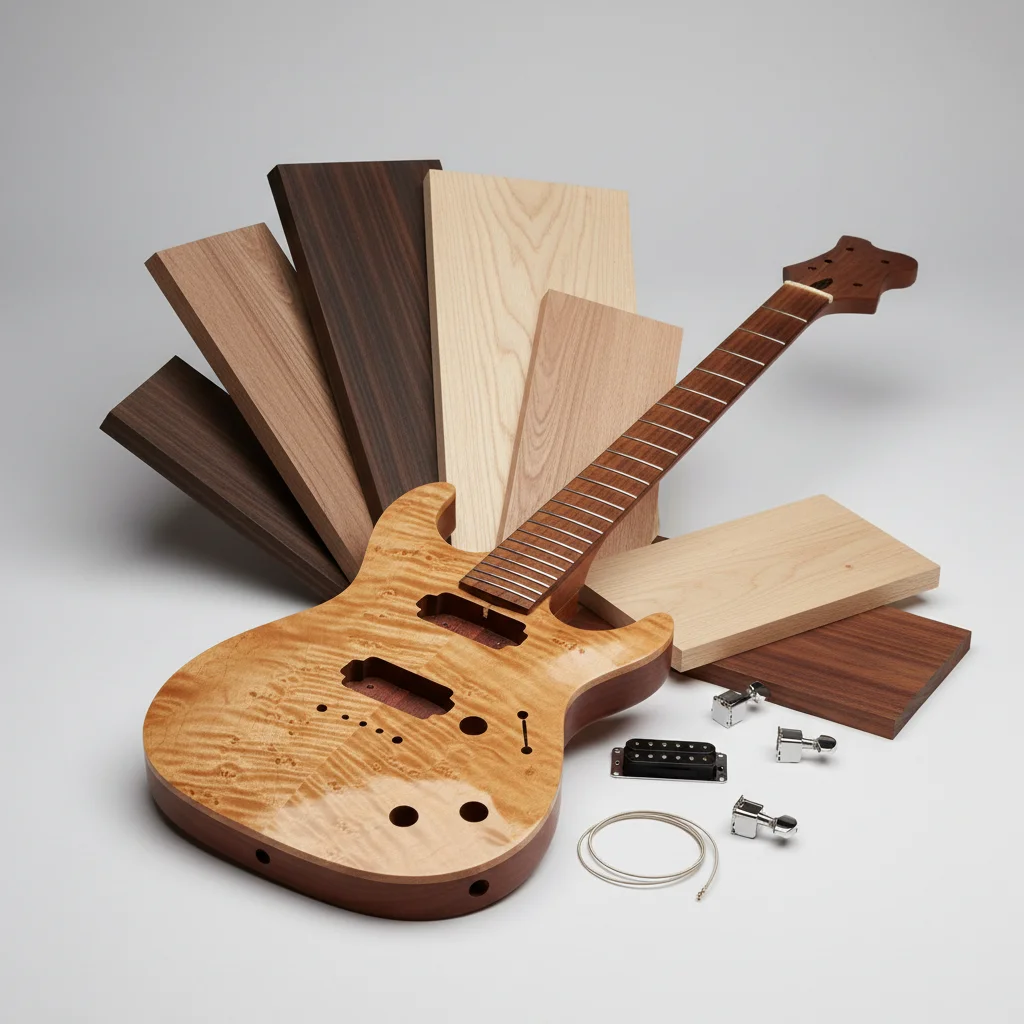
The tonewoods used in an electric guitar’s construction significantly influence its sonic characteristics, contributing to the instrument’s sustain, resonance, and overall tonal profile. Different woods offer distinct qualities, from the bright snap of maple to the warm, full-bodied sound of mahogany. Understanding these differences is crucial for any guitarist looking to fine-tune their sound or make an informed purchasing decision.
Understanding Tonewood Basics
Tonewood refers to specific types of wood chosen for musical instruments due to their acoustic properties. For electric guitars, the body, neck, and fretboard are typically made from different woods, each contributing to the final sound. The density, grain, and cellular structure of the wood all play a role in how vibrations are transmitted and sustained, ultimately shaping the guitar’s tone. While pickups convert string vibrations into an electrical signal, the wood provides the initial acoustic foundation.
Common Body Woods and Their Tonal Impact
Mahogany is a popular choice for guitar bodies, known for its warm, rich, and resonant tone with excellent sustain and a strong mid-range presence. It’s often found in guitars designed for rock and blues. Ash, particularly swamp ash, offers a balanced tone with clear highs, scooped mids, and firm lows, making it versatile for various genres. Alder is another widely used body wood, providing a balanced and resonant tone with good sustain, slightly scooped mids, and clear highs, often associated with classic Fender sounds. Basswood, a lighter wood, produces a balanced and neutral tone, making it a good canvas for different pickup configurations.
- Mahogany: Warm, rich, excellent sustain, strong mid-range.
- Ash (Swamp Ash): Balanced, clear highs, scooped mids, firm lows.
- Alder: Balanced, resonant, good sustain, slightly scooped mids, clear highs.
- Basswood: Balanced, neutral, good for diverse pickup setups.
- Maple: Bright, articulate, often used as a cap for other body woods.
Neck Woods and Fretboard Materials
|
Our Picks for the Best Electric Guitar in 2026
As an Amazon Associate I earn from qualifying purchases.
|
||
| Num | Product | Action |
|---|---|---|
| 1 | Tostar 39 Inch Full Size Electric Guitar Kit For Beginners And Adults,SSS Pickup Stratocaster Guitarra Electrica Set Includes Tremolo Bridge,Amp,Strings,Stand,Case Bag, Birthday Holiday Gifts, Red |

|
| 2 | WINZZ EGM100 30 Inches Real Kids Electric Guitar with Beginner Kit, Right Handed (Gradient Pink) |
|
| 3 | Fender Mini Stratocaster Electric Guitar Kit, Beginner Guitar Kit, with 2-Year Warranty, with Frontman 10G Amp, Padded Gig Bag, Strap, Cable, Tuner, and Picks, Daphne Blue |
|
| 4 | RockJam Electric Guitar Kit with 10-Watt Amp, Gig Bag, Picks, Spare Strings & Lessons |
|
| 5 | STRICH Electric Guitar Beginner Kit, Solid Body 39" Full Size Electric Guitar HSS Pick Up for Starter, with 10W Amp, Bag, Digital Tuner, Capo, Strap, String,Cable, Picks, SST-S20 Sapphire Blue |
|
| 6 | Ibanez GRG131DX - Black Flat |
|
| 7 | 16inch Mini Guitar Toy for Kids and Beginners, Electric Guitar with Strap for Toddlers and Boys and Girls Instrument Toys |
|
| 8 | Jackson Dinky Minion JS1X Electric Guitar - Black |
|
| 9 | 39 Inch Electric Guitar Bag 7mm Padding Waterproof Electric Guitar Case, Electric Guitar Gig Bag Backpack with Neck Strap and Pockets, Black |
|
| 10 | LyxPro 39 inch Electric Guitar Kit Bundle with 20w Amplifier, All Accessories, Digital Clip On Tuner, Six Strings, Two Picks, Tremolo Bar, Shoulder Strap, Case Bag Starter kit Full Size - Blue |
|
Maple is the most common wood for electric guitar necks due to its stability, brightness, and snappy attack. It contributes to a clear, articulate tone. Mahogany necks, while less common than maple, offer a warmer, thicker tone and increased sustain. For fretboards, rosewood is highly favored for its warm, smooth feel and slightly scooped mid-range, adding a touch of sweetness to the tone. Maple fretboards, on the other hand, provide a brighter, snappier attack and a more immediate response. Ebony is a dense, dark wood often used for high-end instruments, offering a very bright, articulate tone with excellent sustain and a smooth playing surface.
How Tonewoods Influence Sustain and Resonance
The density and hardness of a tonewood directly impact a guitar’s sustain and resonance. Denser woods like mahogany and ebony tend to offer longer sustain because they absorb less vibrational energy from the strings. Lighter woods might have a quicker decay but can offer a more open and airy resonance. The way the body, neck, and fretboard woods interact also plays a crucial role. A guitar with a mahogany body and neck, for instance, will generally have more sustain and a warmer tone than one with an alder body and maple neck.
Considering the Whole Package
While tonewoods are a significant factor, it’s important to remember that they are just one component of an electric guitar’s overall sound. Pickups, bridge type, scale length, and even the finish can all influence the final tone. A guitar with premium tonewoods but subpar electronics may not sound as good as a guitar with more modest woods but excellent pickups. Therefore, when evaluating an electric guitar, consider the instrument as a complete system rather than focusing solely on one aspect.
