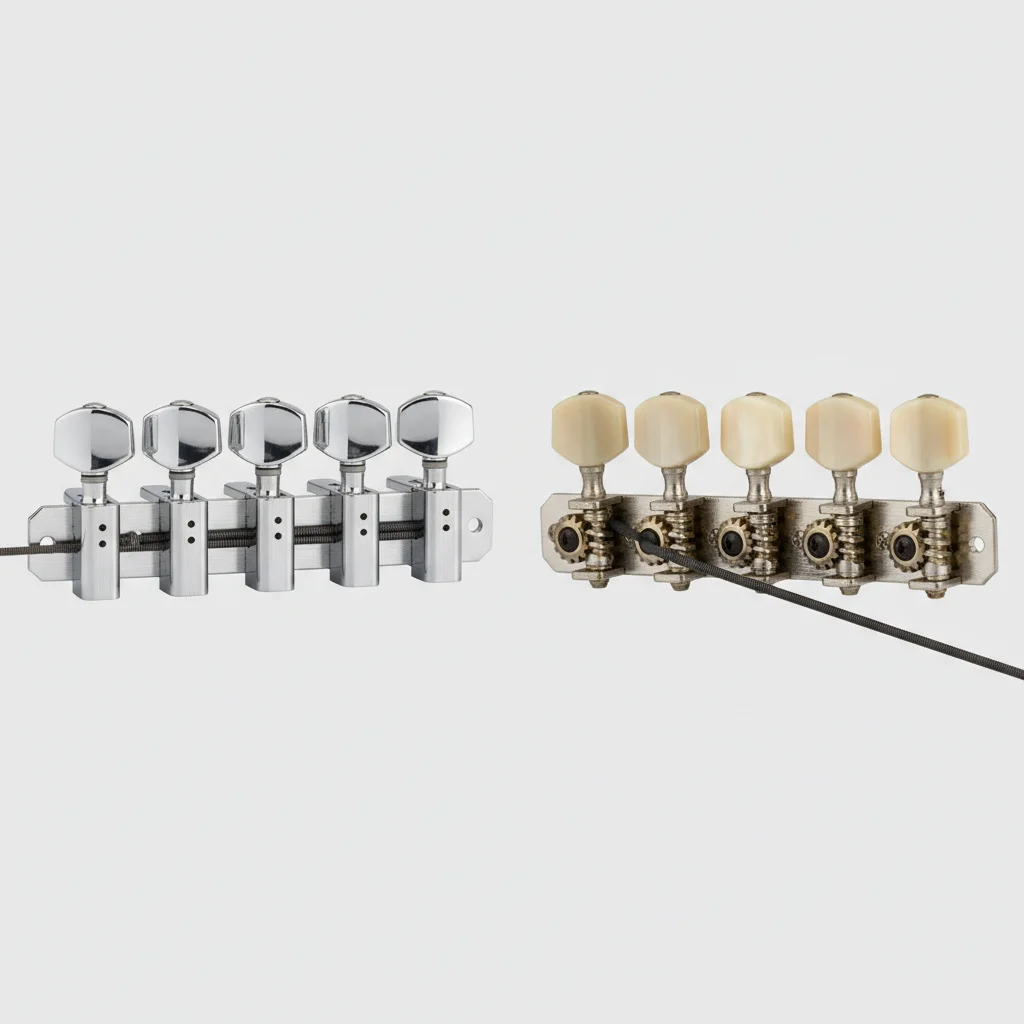
Electric guitar tuning pegs are a critical component for maintaining pitch stability, and the choice between locking and non-locking mechanisms significantly impacts your playing experience. While both types serve the fundamental purpose of holding strings in tune, locking tuners offer superior stability, especially for players who use tremolo systems or bend strings frequently. This enhanced stability comes from a mechanism that clamps the string securely, preventing slippage at the post.
Understanding Non-Locking Tuning Pegs
Non-locking tuning pegs are the traditional and most common type found on electric guitars. They operate by winding the string around a post, relying on friction and the tension of the string itself to hold it in place. Proper string winding technique is crucial for non-locking tuners to perform optimally; typically, three to five wraps around the post are recommended to create enough friction. While effective for many players, especially those with fixed bridges or who play with a lighter touch, they can be more susceptible to tuning instability if strings are not wound correctly or if the guitar is subjected to aggressive playing styles. For expert electric guitar reviews on this site.
The Mechanics of Locking Tuning Pegs
Locking tuning pegs incorporate a small clamp or screw mechanism that secures the string directly at the tuner post. This eliminates the need for multiple string wraps, as the string is simply threaded through the post, pulled taut, and then locked into place. The primary benefit of this design is a dramatic reduction in string slippage, which is a common cause of tuning issues. By minimizing the amount of string that can move at the post, locking tuners provide exceptional tuning stability, making them a favorite among performers and those who demand consistent pitch.
Benefits of Locking Tuners for Performance
|
Our Picks for the Best Electric Guitar in 2026
As an Amazon Associate I earn from qualifying purchases.
|
||
| Num | Product | Action |
|---|---|---|
| 1 | RockJam Electric Guitar Kit with 10-Watt Amp, Gig Bag, Picks, Spare Strings & Lessons |

|
| 2 | WINZZ EGM100 30 Inches Real Kids Electric Guitar with Beginner Kit, Right Handed (Gradient Pink) |
|
| 3 | STRICH Electric Guitar Beginner Kit, Solid Body 39" Full Size Electric Guitar HSS Pick Up for Starter, with 10W Amp, Bag, Digital Tuner, Capo, Strap, String,Cable, Picks, SST-S20 Sapphire Blue |
|
| 4 | Tostar 39 Inch Full Size Electric Guitar Kit For Beginners And Adults,SSS Pickup Stratocaster Guitarra Electrica Set Includes Tremolo Bridge,Amp,Strings,Stand,Case Bag, Birthday Holiday Gifts, Red |
|
| 5 | Jackson Dinky Minion JS1X Electric Guitar - Black |
|
| 6 | 16inch Mini Guitar Toy for Kids and Beginners, Electric Guitar with Strap for Toddlers and Boys and Girls Instrument Toys |
|
| 7 | Fender Mini Stratocaster Electric Guitar Kit, Beginner Guitar Kit, with 2-Year Warranty, with Frontman 10G Amp, Padded Gig Bag, Strap, Cable, Tuner, and Picks, Daphne Blue |
|
| 8 | LyxPro 39 inch Electric Guitar Kit Bundle with 20w Amplifier, All Accessories, Digital Clip On Tuner, Six Strings, Two Picks, Tremolo Bar, Shoulder Strap, Case Bag Starter kit Full Size - Blue |
|
| 9 | Ibanez GRG131DX - Black Flat |
|
| 10 | 39 Inch Electric Guitar Bag 7mm Padding Waterproof Electric Guitar Case, Electric Guitar Gig Bag Backpack with Neck Strap and Pockets, Black |
|
For guitarists who frequently use tremolo bars, perform aggressive string bends, or play in environments with fluctuating temperatures, locking tuners offer a significant advantage. The enhanced stability means less time spent re-tuning between songs or during a set, allowing for a more seamless and enjoyable playing experience. They also simplify string changes, as there’s no need for precise winding; simply thread, pull, and lock. This can be a real time-saver, particularly for touring musicians or those who change strings often.
- Reduced string slippage for superior tuning stability.
- Faster and easier string changes.
- Improved performance with tremolo systems and aggressive bending.
- Less susceptible to environmental changes affecting tuning.
- A more consistent and reliable playing experience.
When Non-Locking Tuners Are Sufficient
Despite the advantages of locking tuners, non-locking pegs remain a perfectly viable and often preferred option for many guitarists. If you primarily play with a fixed bridge, rarely use a tremolo, or have a playing style that doesn’t involve extreme string bending, the traditional tuners can provide excellent stability when strung correctly. They are also typically more affordable, making them a common choice for budget-friendly guitars. For players who appreciate the classic aesthetic and don’t require the absolute maximum in tuning stability, non-locking tuners are a perfectly good choice.
Making Your Choice: Locking vs. Non-Locking
The decision between locking and non-locking tuning pegs ultimately depends on your playing style, your guitar’s setup, and your personal preferences. If you prioritize maximum tuning stability, especially with a tremolo, or value quick string changes, locking tuners are an excellent upgrade. Consider thefor a reliable locking tuner option. However, if you’re content with traditional stringing methods and your playing doesn’t demand extreme stability, non-locking tuners will serve you well. For those looking for quality non-locking options, theoffers great performance.

This really hit home for me. I was always frustrated with my tuning slipping, especially when bending strings. Switched to locking tuners on my Ibanez and it’s like a different guitar. The secure clamping mechanism really works, no more constant adjustments between songs. Highly recommend for any serious player.
Good breakdown of the differences. I’ve always used non-locking tuners and never had major issues, but I’m pretty meticulous about my string winding technique, usually getting those 3-5 wraps just right. I can see how locking ones would be better for someone who’s not as careful or plays more aggressively.
I finally upgraded to locking tuners on my Strat, and it’s made a huge difference. I use my tremolo arm a lot, and before, I was constantly re-tuning. Now, even after some dive bombs, it stays perfectly in tune. Wish I’d done this years ago, it’s a game changer for stability.
I tried a set of locking tuners on my Les Paul, hoping for better tuning stability, but honestly, I didn’t notice a huge improvement. Maybe it’s because I don’t use a tremolo system at all. They were a bit of a pain to install too, and I’m not sure the extra cost was really worth it for my playing style.