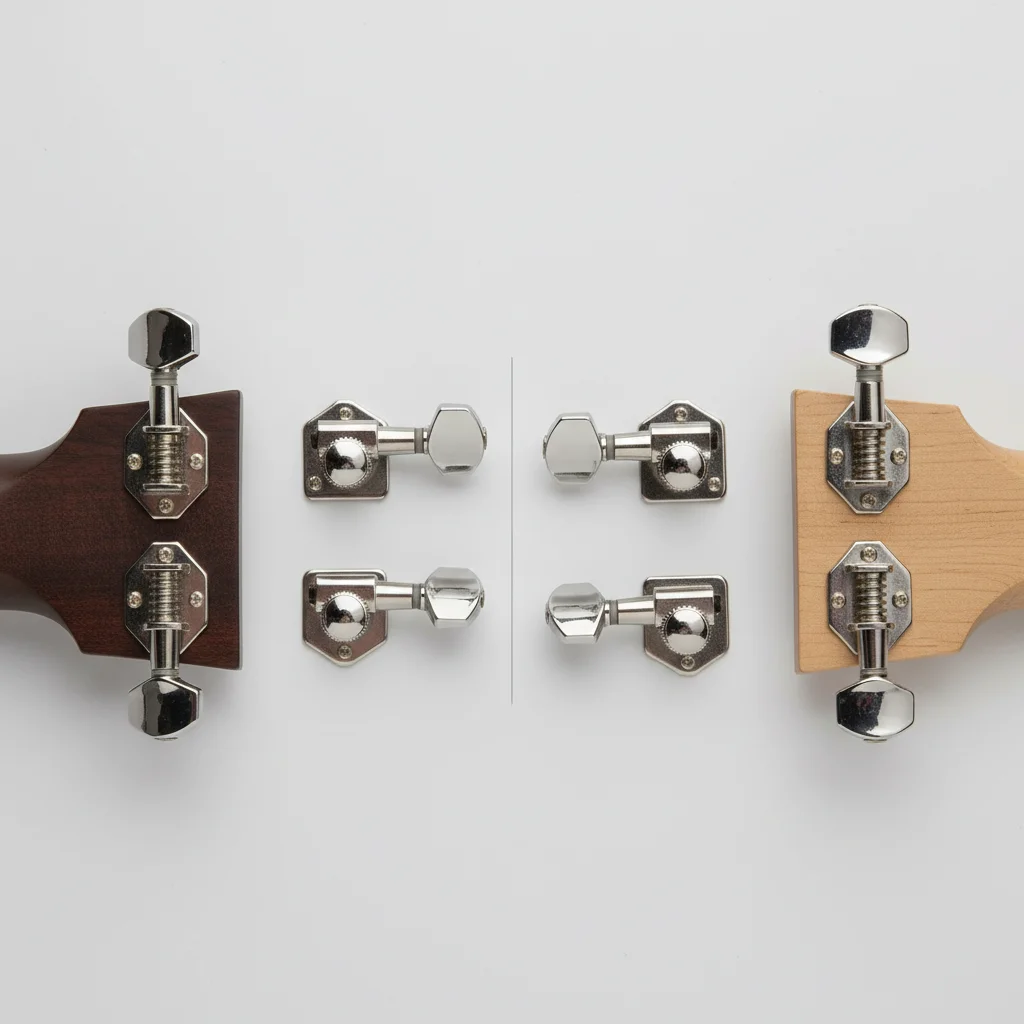
Choosing the right tuners for your electric guitar is crucial for maintaining tuning stability and enhancing your playing experience. The primary debate often centers around locking versus non-locking tuners. While both serve the fundamental purpose of holding your strings at pitch, locking tuners generally offer superior stability, especially for players who use tremolo systems or bend strings frequently. This enhanced stability comes from a mechanism that clamps the string in place, minimizing slippage at the post.
Understanding Non-Locking Tuners
Non-locking tuners are the traditional standard found on most electric guitars. They rely on string tension and proper winding technique to keep the string in place. When installing strings with non-locking tuners, it’s essential to wrap the string around the post several times, ensuring each wrap is tight and neat. This creates friction that helps hold the string. While effective for many players, especially those with fixed bridges or who play with a lighter touch, they can be more susceptible to tuning drift if strings are not wound perfectly or if aggressive playing styles are employed. For explore our electric guitar reviews on this site.
Proper string winding is key to getting the best performance from non-locking tuners. Aim for three to five wraps around the post, ensuring the string goes under the previous wraps to create a secure grip. This technique, combined with stretching new strings thoroughly, can significantly improve tuning stability on guitars equipped with standard tuners.
The Advantages of Locking Tuners
Locking tuners, as their name suggests, feature a mechanism that locks the string securely to the tuning post. This eliminates the need for multiple string wraps, as the string is simply threaded through a hole and then clamped down. The primary benefit of this design is vastly improved tuning stability. By minimizing the amount of string that can slip or stretch around the post, locking tuners reduce tuning issues, particularly after heavy tremolo use or aggressive bends. They also make string changes much faster and simpler, as there’s no need for meticulous winding.
Many guitarists find that locking tuners are a worthwhile upgrade, especially for guitars with floating tremolo systems like a Floyd Rose or a two-point synchronized tremolo. The reduced friction and slippage at the tuning post work in conjunction with the tremolo system to bring the guitar back to pitch more reliably after dives and pulls.
Installation and Compatibility
|
Our Picks for the Best Electric Guitar in 2026
As an Amazon Associate I earn from qualifying purchases.
|
||
| Num | Product | Action |
|---|---|---|
| 1 | 16inch Mini Guitar Toy for Kids and Beginners, Electric Guitar with Strap for Toddlers and Boys and Girls Instrument Toys |

|
| 2 | WINZZ EGM100 30 Inches Real Kids Electric Guitar with Beginner Kit, Right Handed (Gradient Pink) |
|
| 3 | 39 Inch Electric Guitar Bag 7mm Padding Waterproof Electric Guitar Case, Electric Guitar Gig Bag Backpack with Neck Strap and Pockets, Black |
|
| 4 | Ibanez GRG131DX - Black Flat |
|
| 5 | RockJam Electric Guitar Kit with 10-Watt Amp, Gig Bag, Picks, Spare Strings & Lessons |
|
| 6 | STRICH Electric Guitar Beginner Kit, Solid Body 39" Full Size Electric Guitar HSS Pick Up for Starter, with 10W Amp, Bag, Digital Tuner, Capo, Strap, String,Cable, Picks, SST-S20 Sapphire Blue |
|
| 7 | LyxPro 39 inch Electric Guitar Kit Bundle with 20w Amplifier, All Accessories, Digital Clip On Tuner, Six Strings, Two Picks, Tremolo Bar, Shoulder Strap, Case Bag Starter kit Full Size - Blue |
|
| 8 | Fender Mini Stratocaster Electric Guitar Kit, Beginner Guitar Kit, with 2-Year Warranty, with Frontman 10G Amp, Padded Gig Bag, Strap, Cable, Tuner, and Picks, Daphne Blue |
|
| 9 | Tostar 39 Inch Full Size Electric Guitar Kit For Beginners And Adults,SSS Pickup Stratocaster Guitarra Electrica Set Includes Tremolo Bridge,Amp,Strings,Stand,Case Bag, Birthday Holiday Gifts, Red |
|
| 10 | Jackson Dinky Minion JS1X Electric Guitar - Black |
|
Installing new tuners, whether locking or non-locking, typically involves removing the old tuners and securing the new ones. Most tuners are held in place by a nut on the front of the headstock and a screw on the back. While many tuners share similar dimensions, it’s crucial to check the post diameter and mounting screw pattern to ensure compatibility with your guitar’s headstock. Some locking tuners are designed as direct drop-in replacements, making the upgrade process straightforward, while others might require minor drilling for new screw holes.
If you’re considering an upgrade, measure your existing tuner’s post hole diameter and the spacing of any mounting screws. This will help you select a set of tuners that fit without permanent modification to your guitar. Many manufacturers offer detailed specifications for their tuner models, making it easier to find a compatible set.
Maintenance and Longevity
Both locking and non-locking tuners benefit from occasional maintenance to ensure smooth operation and longevity. This includes:
- Regular Cleaning: Wipe down tuners during string changes to remove grime and sweat.
- Lubrication: A tiny drop of light machine oil on the gears (for open-gear tuners) or inside the sealed housing (if accessible) can prevent stiffness.
- Tightening Screws: Periodically check and gently tighten any mounting screws or nuts to prevent wobbling.
- Stringing Technique: Even with locking tuners, proper stringing (trimming excess string) is important for a clean look and preventing snags.
- Inspection: Look for any signs of wear, such as bent posts or stripped gears, which might indicate a need for replacement.
Proper care can significantly extend the life of your tuners, regardless of their type.
Which Tuners Are Right for You?
The choice between locking and non-locking tuners ultimately depends on your playing style, guitar setup, and personal preference. If you frequently use a tremolo, perform aggressive string bends, or simply value quick and hassle-free string changes, locking tuners offer a clear advantage in tuning stability and convenience. For players with fixed bridges, those who prefer a more traditional feel, or those on a tighter budget, high-quality non-locking tuners, combined with proper stringing technique, can still provide excellent performance. Consider your priorities and how much you value absolute tuning precision versus the classic approach.

I finally upgraded to locking tuners on my Strat, and it’s made a huge difference. I use my tremolo arm a lot, and before, I was constantly re-tuning. Now, even after some dive bombs, it stays perfectly in pitch. The post mentioned how they minimize slippage, and that’s exactly what I’ve experienced. Definitely worth the investment for any serious player.
I tried a set of locking tuners on my Les Paul, hoping for a miracle. While they did improve stability a bit, I still found myself having to tune up more often than I’d like, especially after some heavy bending. Maybe my expectations were too high, or perhaps it’s just my guitar’s setup. They’re good, but not a complete game-changer for me personally.
I’ve always stuck with non-locking tuners, and with good winding technique, they’ve been fine for me. The part about proper winding really resonated; it’s key to getting good stability without the extra cost. I don’t use a tremolo much, so the traditional setup works well. My only minor gripe is string changes can be a bit more fiddly.
This was super helpful in deciding to go with locking tuners for my new build. The explanation of how they clamp the string in place really clarified the mechanism for me. I wanted maximum stability for recording, and these have delivered. No more worrying about my guitar going out of tune mid-take. Highly recommend them for anyone serious about their tone.