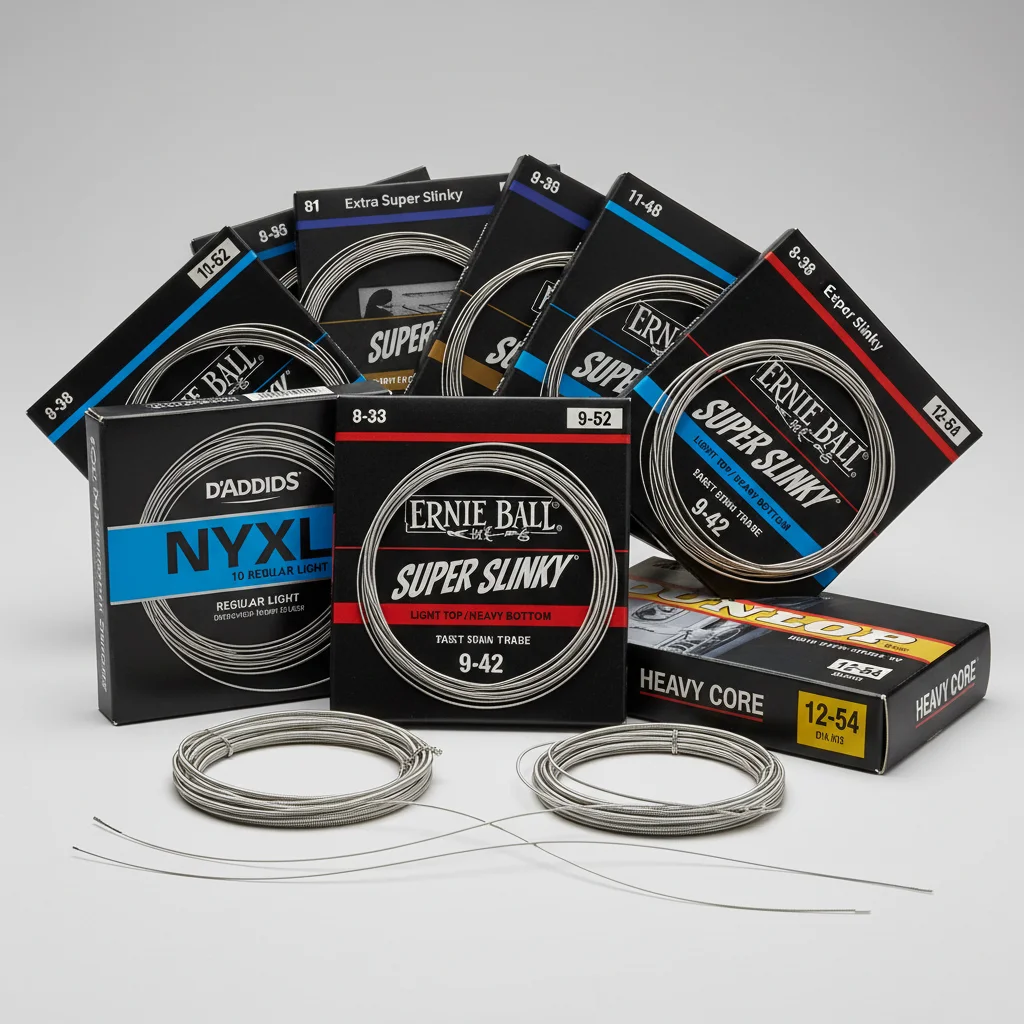
Choosing the right electric guitar strings can significantly impact your playing experience and tone. The gauge, or thickness, of your strings directly affects playability, sustain, and even intonation. Generally, lighter gauge strings (like .009s) are easier to bend and fret, making them popular among beginners and lead guitarists, while heavier gauges (like .011s or .012s) offer more sustain and a fuller tone, often favored by jazz or rhythm players. Understanding the nuances of different gauges will help you make an informed decision for your specific style and guitar.
Understanding String Gauge Numbers
Electric guitar string gauges are typically measured in thousandths of an inch, with a set often described by the gauge of its thinnest string. For example, a ‘9-42’ set means the high E string is .009 inches thick and the low E string is .042 inches thick. Common light gauges include .009-.042, medium gauges are often .010-.046, and heavy gauges can range from .011-.049 to .012-.052 or even thicker. The choice of gauge influences string tension, which in turn affects how much pressure is needed to fret notes and bend strings.
Different manufacturers may have slight variations in their gauge sets, but these general categories hold true. It’s important to note that changing string gauge can sometimes require minor adjustments to your guitar’s setup, such as truss rod adjustments or intonation, to ensure optimal playability and prevent fret buzz.
Light Gauge Strings: Ease and Articulation
Light gauge electric guitar strings, typically .009-.042 or .009-.046, are an excellent choice for players who prioritize ease of playability. Their lower tension makes bending notes and performing vibrato much less strenuous, which is particularly beneficial for beginners or guitarists with smaller hands. Lead guitarists who rely on fast runs and intricate solos often prefer lighter gauges for their responsiveness and the ability to articulate notes with less effort. While they might produce a slightly thinner tone compared to heavier strings, modern manufacturing techniques have greatly improved their sustain and tonal richness.
Medium Gauge Strings: The Versatile Standard
Medium gauge electric guitar strings, commonly .010-.046, are often considered the industry standard and offer a balanced compromise between playability and tone. They provide a good amount of sustain and a fuller sound than lighter gauges, while still being relatively comfortable to play. This versatility makes them a popular choice for a wide range of genres and playing styles, from rock and blues to country. If you’re unsure where to start, a medium gauge set is often a safe and effective choice to experiment with.
Many guitars come factory-equipped with medium gauge strings, making them a familiar starting point for many players. They offer enough tension to feel substantial under the fingers without being overly stiff, allowing for both expressive bends and solid rhythm playing.
Heavy Gauge Strings: Power and Sustain
Heavy gauge electric guitar strings, such as .011-.049 or .012-.052, are favored by players seeking maximum sustain, a robust tone, and increased volume. The higher tension of these strings results in a more powerful sound, making them ideal for genres like jazz, metal, or any style where a thick, resonant tone is paramount. While they require more finger strength to fret and bend, the sonic rewards can be significant, offering a rich harmonic content and a strong fundamental note.
- Increased sustain and fuller tone
- Greater resistance for aggressive strumming
- Less prone to fret buzz on some setups
- Requires more finger strength and hand endurance
- May necessitate guitar setup adjustments
Factors to Consider When Choosing
When selecting your electric guitar string gauge, several factors should influence your decision. Your playing style is paramount: if you’re a lead player focused on bends and speed, lighter strings might be better. If you’re a rhythm player or prefer a thicker, jazzier tone, heavier strings could be more suitable. The type of guitar you play also matters; some guitars are designed to perform optimally with specific string tensions. For instance, guitars with shorter scale lengths might feel better with slightly heavier strings to maintain tension, while longer scale lengths can handle lighter gauges without feeling too ‘slinky’.
Finally, personal comfort and preference are key. There’s no single ‘right’ answer, and experimentation is encouraged. Try different gauges to see what feels best under your fingers and produces the sound you desire. Remember that a change in string gauge might require a minor setup adjustment to your guitar to ensure optimal playability and intonation. Consulting a guitar technician can be beneficial if you’re making a significant change in string thickness.
Experimenting with Hybrid Sets
|
Our Picks for the Best Electric Guitar in 2026
As an Amazon Associate I earn from qualifying purchases.
|
||
| Num | Product | Action |
|---|---|---|
| 1 | Fender Mini Stratocaster Electric Guitar Kit, Beginner Guitar Kit, with 2-Year Warranty, with Frontman 10G Amp, Padded Gig Bag, Strap, Cable, Tuner, and Picks, Daphne Blue |

|
| 2 | Ibanez GRG131DX - Black Flat |
|
| 3 | Tostar 39 Inch Full Size Electric Guitar Kit For Beginners And Adults,SSS Pickup Stratocaster Guitarra Electrica Set Includes Tremolo Bridge,Amp,Strings,Stand,Case Bag, Birthday Holiday Gifts, Red |
|
| 4 | WINZZ EGM100 30 Inches Real Kids Electric Guitar with Beginner Kit, Right Handed (Gradient Pink) |
|
| 5 | LyxPro 39 inch Electric Guitar Kit Bundle with 20w Amplifier, All Accessories, Digital Clip On Tuner, Six Strings, Two Picks, Tremolo Bar, Shoulder Strap, Case Bag Starter kit Full Size - Blue |
|
| 6 | 39 Inch Electric Guitar Bag 7mm Padding Waterproof Electric Guitar Case, Electric Guitar Gig Bag Backpack with Neck Strap and Pockets, Black |
|
| 7 | RockJam Electric Guitar Kit with 10-Watt Amp, Gig Bag, Picks, Spare Strings & Lessons |
|
| 8 | Jackson Dinky Minion JS1X Electric Guitar - Black |
|
| 9 | 16inch Mini Guitar Toy for Kids and Beginners, Electric Guitar with Strap for Toddlers and Boys and Girls Instrument Toys |
|
| 10 | STRICH Electric Guitar Beginner Kit, Solid Body 39" Full Size Electric Guitar HSS Pick Up for Starter, with 10W Amp, Bag, Digital Tuner, Capo, Strap, String,Cable, Picks, SST-S20 Sapphire Blue |
|
For players who want the best of both worlds, hybrid string sets offer a unique solution. These sets combine lighter strings for the treble side (high E, B, G) with heavier strings for the bass side (low E, A, D). For example, a common hybrid set might feature .009s on the high end and .046s on the low end. This allows for easier bending on the higher strings while retaining a fuller, more powerful tone on the lower strings, catering to a diverse range of playing styles and preferences.
