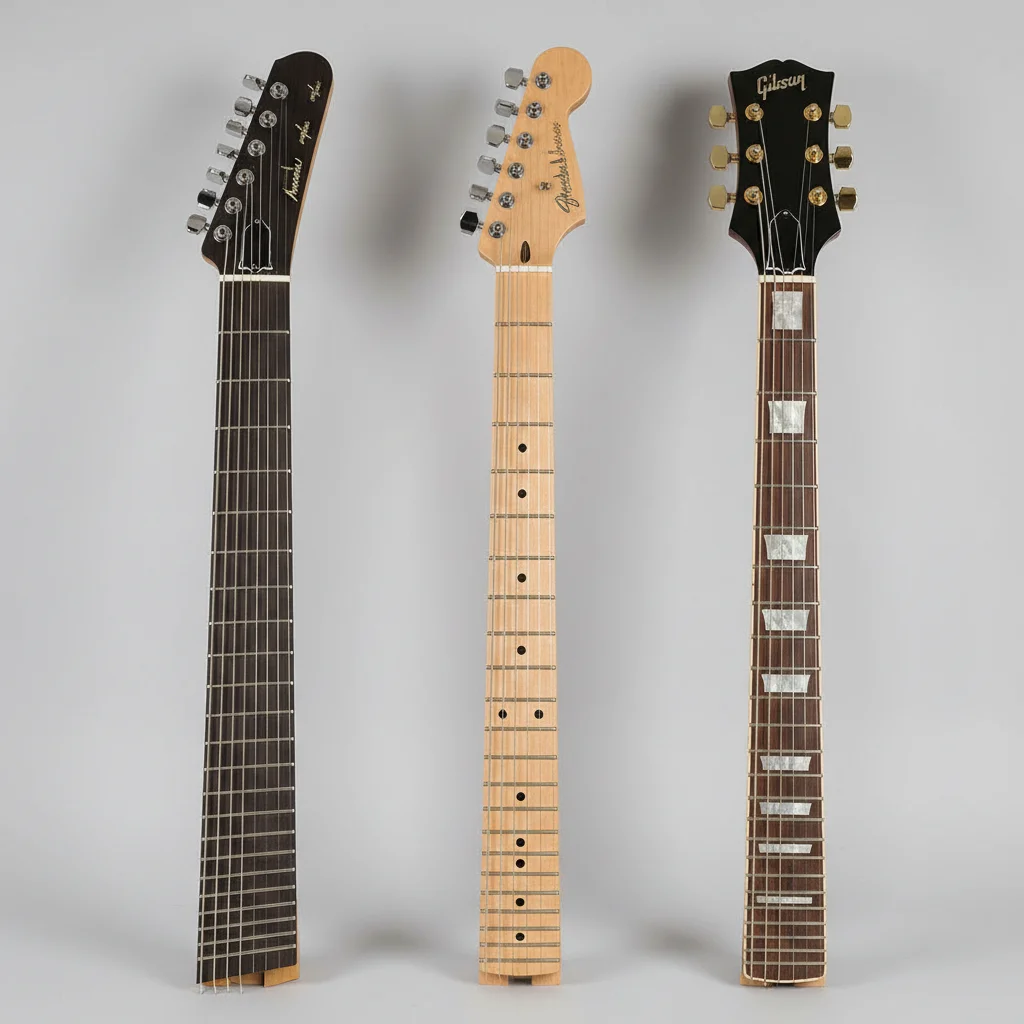
Electric guitar scale length significantly impacts tone, playability, and string tension. There are three primary scale lengths: 24.75 inches (Gibson-style), 25.5 inches (Fender-style), and extended range lengths (26.5 inches and up). Each offers distinct sonic characteristics and feel, influencing everything from sustain to fret spacing.
Understanding Standard Scale Lengths
The two most common electric guitar scale lengths are 24.75 inches, often associated with Gibson guitars like the Les Paul, and 25.5 inches, typical of Fender instruments such as the Stratocaster and Telecaster. The shorter 24.75-inch scale results in lower string tension at the same pitch, making bends easier and producing a warmer, thicker tone with more pronounced midrange. Conversely, the longer 25.5-inch scale provides higher string tension, leading to a brighter, snappier tone with greater clarity and sustain, often favored for its articulate response.
Impact on Tone and Sustain
Scale length directly influences the harmonic content and sustain of an electric guitar. A shorter scale length tends to emphasize fundamental frequencies, contributing to a fatter, more compressed sound with quicker decay. This can be desirable for blues and rock where a rich, vocal-like tone is sought. Longer scale lengths, however, allow for more overtone presence, resulting in a more open, resonant sound with extended sustain and better note separation, which is often preferred for clean tones, country, and intricate lead playing.
- Shorter scale (24.75″): Warmer tone, easier bends, less string tension.
- Longer scale (25.5″): Brighter tone, greater clarity, more sustain, higher string tension.
- Extended scale (26.5″+): Tighter low end, ideal for down-tuning, increased fret spacing.
- Multi-scale: Combines benefits, optimized tension across strings.
Playability and String Tension Considerations
|
Our Picks for the Best Electric Guitar in 2026
As an Amazon Associate I earn from qualifying purchases.
|
||
| Num | Product | Action |
|---|---|---|
| 1 | LyxPro 39 inch Electric Guitar Kit Bundle with 20w Amplifier, All Accessories, Digital Clip On Tuner, Six Strings, Two Picks, Tremolo Bar, Shoulder Strap, Case Bag Starter kit Full Size - Blue |

|
| 2 | STRICH Electric Guitar Beginner Kit, Solid Body 39" Full Size Electric Guitar HSS Pick Up for Starter, with 10W Amp, Bag, Digital Tuner, Capo, Strap, String,Cable, Picks, SST-S20 Sapphire Blue |
|
| 3 | 16inch Mini Guitar Toy for Kids and Beginners, Electric Guitar with Strap for Toddlers and Boys and Girls Instrument Toys |
|
| 4 | RockJam Electric Guitar Kit with 10-Watt Amp, Gig Bag, Picks, Spare Strings & Lessons |
|
| 5 | Tostar 39 Inch Full Size Electric Guitar Kit For Beginners And Adults,SSS Pickup Stratocaster Guitarra Electrica Set Includes Tremolo Bridge,Amp,Strings,Stand,Case Bag, Birthday Holiday Gifts, Red |
|
| 6 | Fender Mini Stratocaster Electric Guitar Kit, Beginner Guitar Kit, with 2-Year Warranty, with Frontman 10G Amp, Padded Gig Bag, Strap, Cable, Tuner, and Picks, Daphne Blue |
|
| 7 | WINZZ EGM100 30 Inches Real Kids Electric Guitar with Beginner Kit, Right Handed (Gradient Pink) |
|
| 8 | Ibanez GRG131DX - Black Flat |
|
| 9 | Jackson Dinky Minion JS1X Electric Guitar - Black |
|
| 10 | 39 Inch Electric Guitar Bag 7mm Padding Waterproof Electric Guitar Case, Electric Guitar Gig Bag Backpack with Neck Strap and Pockets, Black |
|
Beyond tone, scale length profoundly affects playability. Shorter scale lengths mean frets are closer together, which can be more comfortable for players with smaller hands or those who prefer less of a stretch. The reduced string tension also makes vibrato and string bending less physically demanding. For players who prefer a tighter feel, precise articulation, or frequently use heavier gauge strings, the increased tension of a longer scale length can be advantageous. Extended scale lengths, common on 7-string and 8-string guitars, provide the necessary tension for lower tunings, preventing muddiness and maintaining clarity in the bass registers.
When choosing an electric guitar, considering the scale length is crucial for matching your playing style and tonal preferences. Experimenting with different scale lengths can reveal which feels most natural and produces the sound you desire. Many players find a preference after trying both common types.
Extended Range and Multi-Scale Guitars
For guitarists venturing into extended range instruments or specific tunings, scale length becomes even more critical. Guitars with scale lengths of 26.5 inches or more are designed to maintain string tension and clarity when tuned down to B, F#, or even lower. Multi-scale or fanned-fret guitars offer a unique solution, where each string has its own optimal scale length, resulting in consistent tension and intonation across the fretboard. This design can take some getting used to but provides significant benefits for players who utilize a wide range of tunings and string gauges.

Super helpful explanation of how scale length affects playability. I’ve been considering an extended range guitar for some heavier tunings, and knowing that 26.5 inches and up will give me that tighter string tension and clarity is exactly what I needed to hear. It’s a big investment, so I appreciate the detailed breakdown.
I found the comparison between Gibson and Fender styles useful, especially about the 25.5-inch scale giving a brighter tone. My only minor complaint is that I wish there were more examples of specific guitar models for each scale length beyond just the Les Paul and Stratocaster. Still, it clarified a lot about string tension.
This article really cleared up the sustain differences I’ve noticed between my guitars. I always thought it was just the pickups, but the higher string tension from the 25.5-inch scale on my Telecaster definitely contributes to that snappier, longer sustain. It’s cool to understand the physics behind it all.
I’ve always wondered why my Les Paul felt so different from my Strat. This really broke down the impact of the 24.75-inch scale length on the warmer tone and easier bends. It totally makes sense now why I gravitate towards it for bluesy stuff. Great info for understanding my gear better!