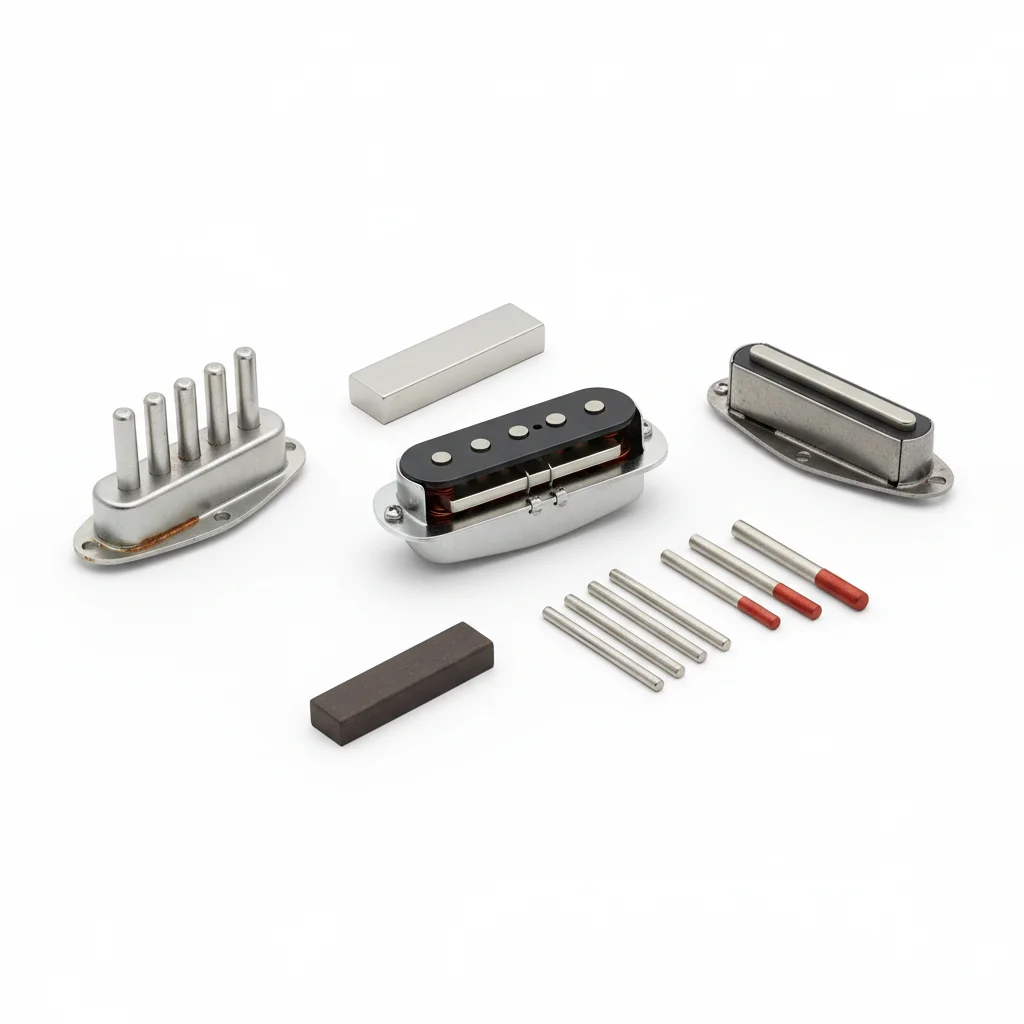
The magnet type in your electric guitar pickups significantly shapes the overall tone and output. There are primarily three common magnet types used in electric guitar pickups: Alnico (various grades), Ceramic, and Neodymium. Each offers distinct sonic characteristics, influencing everything from warmth and clarity to aggression and sustain.
Alnico Magnets: Vintage Warmth and Dynamic Response
Alnico magnets, an alloy of aluminum, nickel, and cobalt, are highly favored for their warm, articulate, and dynamic response. Different grades of Alnico (II, III, IV, V, VIII) offer subtle but noticeable variations. Alnico II, for instance, provides a softer attack and sweet, singing sustain, often found in vintage-style humbuckers. Alnico V, on the other hand, is stronger, offering more output, tighter bass, and brighter highs, making it popular for rock and blues.
Pickups with Alnico magnets are known for their excellent string separation and ability to clean up well when the guitar’s volume knob is rolled back. They are a go-to choice for players seeking classic tones and expressive dynamics.
- Alnico II: Sweet, warm, singing sustain, softer attack.
- Alnico III: Lower output, very clear, bright, and dynamic.
- Alnico IV: Balanced, good clarity, moderate output.
- Alnico V: Stronger output, tighter bass, brighter highs, aggressive.
- Alnico VIII: High output, strong mids, good for heavier genres.
Ceramic Magnets: Modern Power and Aggression
Ceramic magnets are generally stronger and more cost-effective than Alnico. They are known for their higher output, brighter top end, and tighter bass response, making them a popular choice for modern rock, metal, and other high-gain genres. Ceramic pickups tend to have a more aggressive and focused sound, often with a pronounced mid-range punch.
While some perceive ceramic pickups as less nuanced or ‘colder’ than Alnico, their power and clarity make them excellent for driving amplifiers into saturation and cutting through a dense mix. They are particularly effective in bridge positions where a strong, articulate attack is desired.
Neodymium Magnets: High Output and Unique Voicing
|
Our Picks for the Best Electric Guitar in 2026
As an Amazon Associate I earn from qualifying purchases.
|
||
| Num | Product | Action |
|---|---|---|
| 1 | Tostar 39 Inch Full Size Electric Guitar Kit For Beginners And Adults,SSS Pickup Stratocaster Guitarra Electrica Set Includes Tremolo Bridge,Amp,Strings,Stand,Case Bag, Birthday Holiday Gifts, Red |

|
| 2 | Ibanez GRG131DX - Black Flat |
|
| 3 | LyxPro 39 inch Electric Guitar Kit Bundle with 20w Amplifier, All Accessories, Digital Clip On Tuner, Six Strings, Two Picks, Tremolo Bar, Shoulder Strap, Case Bag Starter kit Full Size - Blue |
|
| 4 | RockJam Electric Guitar Kit with 10-Watt Amp, Gig Bag, Picks, Spare Strings & Lessons |
|
| 5 | Fender Mini Stratocaster Electric Guitar Kit, Beginner Guitar Kit, with 2-Year Warranty, with Frontman 10G Amp, Padded Gig Bag, Strap, Cable, Tuner, and Picks, Daphne Blue |
|
| 6 | STRICH Electric Guitar Beginner Kit, Solid Body 39" Full Size Electric Guitar HSS Pick Up for Starter, with 10W Amp, Bag, Digital Tuner, Capo, Strap, String,Cable, Picks, SST-S20 Sapphire Blue |
|
| 7 | WINZZ EGM100 30 Inches Real Kids Electric Guitar with Beginner Kit, Right Handed (Gradient Pink) |
|
| 8 | 16inch Mini Guitar Toy for Kids and Beginners, Electric Guitar with Strap for Toddlers and Boys and Girls Instrument Toys |
|
| 9 | 39 Inch Electric Guitar Bag 7mm Padding Waterproof Electric Guitar Case, Electric Guitar Gig Bag Backpack with Neck Strap and Pockets, Black |
|
| 10 | Jackson Dinky Minion JS1X Electric Guitar - Black |
|
Neodymium magnets are the strongest permanent magnets available, offering extremely high output and a unique tonal character. While less common in traditional guitar pickups, they are gaining traction in some modern designs, particularly those aiming for extended frequency response and powerful, clear tones. Neodymium pickups can provide a very wide dynamic range and exceptional clarity, even at high gain settings.
Their strong magnetic field can sometimes lead to a slightly different string vibration and feel, which some players find appealing for its modern voicing. They are often found in active pickup systems or specialized passive designs where maximum output and fidelity are key.
Matching Magnet Type to Your Style
Choosing the right magnet type for your electric guitar pickups depends heavily on your desired tone and playing style. If you’re chasing vintage warmth, dynamic cleans, and expressive blues or classic rock tones, Alnico is likely your best bet. For aggressive, high-gain sounds, tight rhythms, and cutting leads, ceramic magnets will deliver the power you need. If you’re exploring modern tones with extreme clarity and output, Neodymium might offer an intriguing option.
Many guitarists experiment with different magnet types in their neck and bridge positions to achieve a balanced and versatile tonal palette. For example, an Alnico neck pickup for warm leads paired with a ceramic bridge pickup for powerful riffs is a common and effective combination. Consider what sonic characteristics are most important for your music.
Considerations Beyond Magnet Type
While magnet type is crucial, it’s important to remember that it’s just one component influencing a pickup’s sound. Other factors like coil winding, wire gauge, pole piece material, and overall construction also play significant roles. The interaction of these elements creates the final sonic signature of a pickup. Therefore, when evaluating pickups, consider the entire design rather than just focusing on one aspect.
Ultimately, the best way to determine which magnet type suits you is to listen to various pickups, read reviews, and if possible, try them out in your own guitar. Your ears are the final judge.
