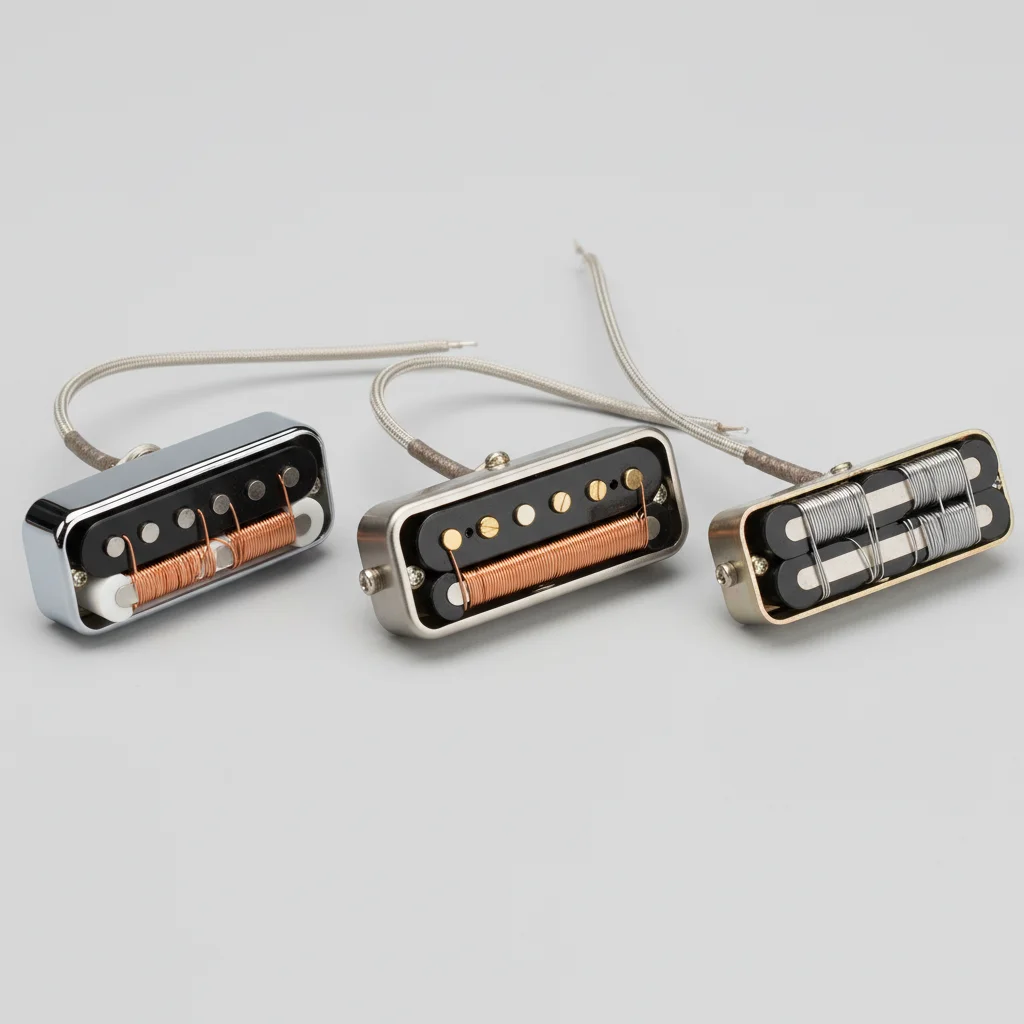
The coil material in electric guitar pickups significantly influences the resulting tone, primarily through its electrical resistance and magnetic properties. While copper is the most common material, variations in its purity and winding techniques can subtly alter the pickup’s output and frequency response. Understanding these nuances helps guitarists fine-tune their sound.
The Role of Copper in Pickup Coils
Copper wire is almost universally used for pickup coils due to its excellent electrical conductivity and malleability, allowing for precise winding. The gauge of the copper wire (AWG) and the number of turns directly impact the pickup’s DC resistance, which in turn affects its output level and tonal characteristics. Thicker wire and fewer turns generally result in a lower resistance and brighter tone, while thinner wire with more turns yields higher resistance and a warmer, often darker sound.
Insulation and Winding Techniques
Beyond the copper itself, the insulation material coating the wire plays a role in the overall capacitance of the coil, which can subtly shape the high-frequency response. Common insulation types include enamel, poly, and formvar. Furthermore, the winding technique—whether it’s machine-wound, hand-wound, or scatter-wound—introduces variations in the coil’s consistency and inductance. Scatter winding, for instance, can reduce parasitic capacitance, leading to a more open and articulate tone compared to tightly machine-wound coils.
Impact on Output and Frequency Response
|
Our Picks for the Best Electric Guitar in 2026
As an Amazon Associate I earn from qualifying purchases.
|
||
| Num | Product | Action |
|---|---|---|
| 1 | 16inch Mini Guitar Toy for Kids and Beginners, Electric Guitar with Strap for Toddlers and Boys and Girls Instrument Toys |

|
| 2 | RockJam Electric Guitar Kit with 10-Watt Amp, Gig Bag, Picks, Spare Strings & Lessons |
|
| 3 | LyxPro 39 inch Electric Guitar Kit Bundle with 20w Amplifier, All Accessories, Digital Clip On Tuner, Six Strings, Two Picks, Tremolo Bar, Shoulder Strap, Case Bag Starter kit Full Size - Blue |
|
| 4 | 39 Inch Electric Guitar Bag 7mm Padding Waterproof Electric Guitar Case, Electric Guitar Gig Bag Backpack with Neck Strap and Pockets, Black |
|
| 5 | Fender Mini Stratocaster Electric Guitar Kit, Beginner Guitar Kit, with 2-Year Warranty, with Frontman 10G Amp, Padded Gig Bag, Strap, Cable, Tuner, and Picks, Daphne Blue |
|
| 6 | WINZZ EGM100 30 Inches Real Kids Electric Guitar with Beginner Kit, Right Handed (Gradient Pink) |
|
| 7 | Jackson Dinky Minion JS1X Electric Guitar - Black |
|
| 8 | STRICH Electric Guitar Beginner Kit, Solid Body 39" Full Size Electric Guitar HSS Pick Up for Starter, with 10W Amp, Bag, Digital Tuner, Capo, Strap, String,Cable, Picks, SST-S20 Sapphire Blue |
|
| 9 | Ibanez GRG131DX - Black Flat |
|
| 10 | Tostar 39 Inch Full Size Electric Guitar Kit For Beginners And Adults,SSS Pickup Stratocaster Guitarra Electrica Set Includes Tremolo Bridge,Amp,Strings,Stand,Case Bag, Birthday Holiday Gifts, Red |
|
The cumulative effect of coil material (primarily copper purity and gauge), insulation, and winding technique directly translates to the pickup’s output and frequency response. Pickups with higher DC resistance, often achieved with more turns of finer wire, tend to have a higher output and a more pronounced mid-range, making them suitable for rock and blues. Conversely, lower resistance pickups, with fewer turns of thicker wire, typically offer a cleaner, brighter sound with a wider frequency range, favored in genres like country and jazz.
- Higher DC resistance often means higher output and warmer tone.
- Lower DC resistance typically results in lower output and brighter tone.
- Thicker wire gauges can lead to a more transparent sound.
- Thinner wire gauges contribute to a more compressed and focused tone.
- Winding consistency affects clarity and harmonic content.
Beyond Standard Copper: Niche Materials
While rare, some boutique pickup manufacturers experiment with alternative coil materials or specialized copper alloys to achieve unique tonal qualities. These can include silver-plated copper for enhanced conductivity or specific copper alloys designed to alter the magnetic field interaction. However, these are exceptions, and the vast majority of pickups rely on standard copper wire, with tonal variations achieved through the aforementioned factors of gauge, turns, and winding methods.
Maintaining Your Pickup Coils
The coil itself is generally a sealed unit within the pickup, requiring little direct maintenance. However, protecting your pickups from physical damage and extreme environmental conditions is crucial. Excessive moisture or extreme temperature fluctuations can degrade the insulation over time, potentially leading to shorts or tonal degradation. Regular cleaning of the pickup covers and ensuring proper shielding can help maintain the integrity and performance of your pickup coils for years to come.
