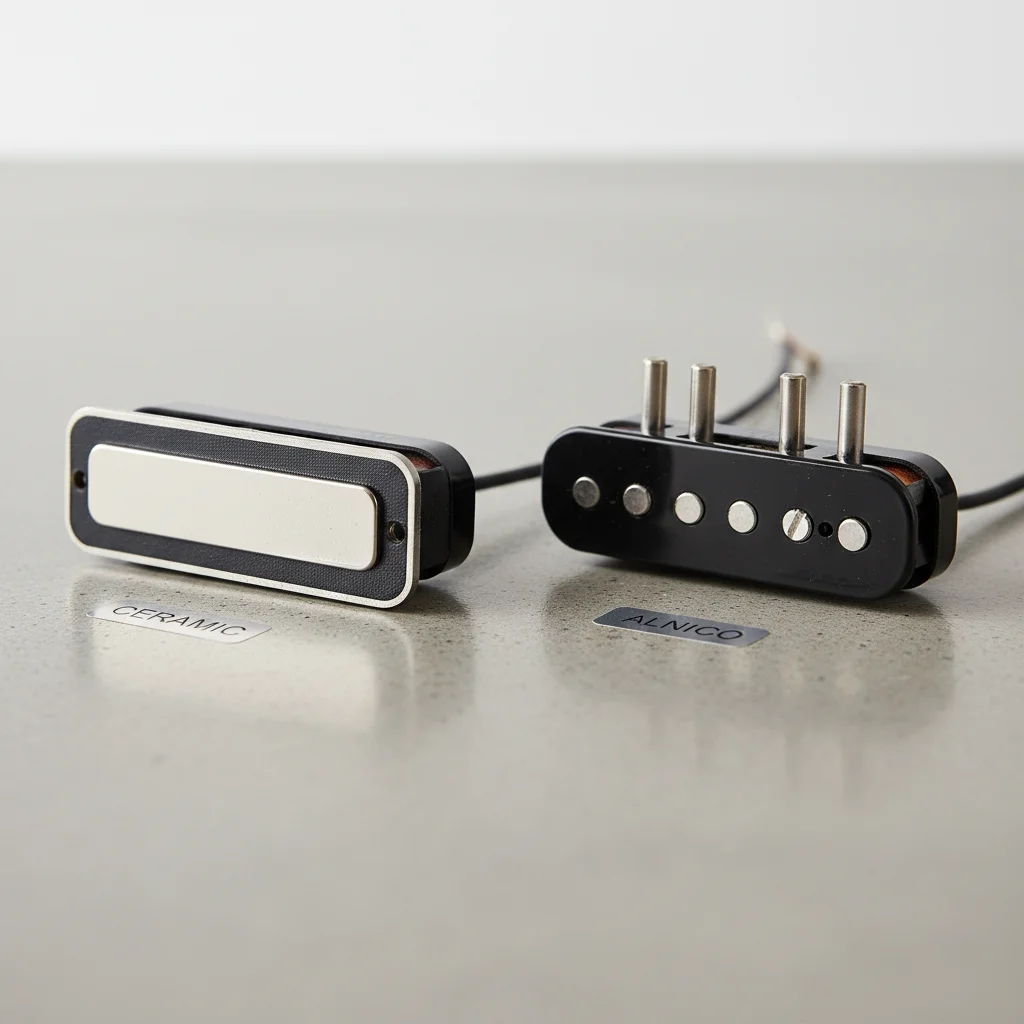
When choosing electric guitar pickups, the magnet type significantly influences your instrument’s tone and output. The two primary magnet materials are ceramic and alnico, each offering distinct sonic characteristics. Ceramic magnets generally provide a higher output and a brighter, more aggressive tone, while alnico magnets are known for their warmer, more vintage sound with a smoother response. Understanding these differences is crucial for selecting the right pickups to achieve your desired sound.
Ceramic Magnets: High Output and Aggression
Ceramic magnets are synthetic and are often found in modern, high-output pickups. They are known for their strong magnetic field, which translates to a louder signal and a more pronounced attack. This makes them popular among players of hard rock, metal, and other genres requiring a powerful, cutting tone. Ceramic pickups tend to have a tighter bass response and a brighter top end, allowing notes to cut through a dense mix. They can sometimes be perceived as less nuanced than alnico, but their raw power is undeniable.
The manufacturing process for ceramic magnets allows for greater consistency and lower production costs, making them a common choice for entry-level and mid-range guitars, as well as specialized high-gain pickups. Their strong magnetic pull can also lead to less string vibration sustain compared to alnico, though this is often a trade-off many high-gain players are willing to make for the increased output and clarity under heavy distortion.
Alnico Magnets: Warmth, Dynamics, and Vintage Tone
Alnico magnets, an alloy of aluminum, nickel, and cobalt, are celebrated for their rich, warm, and dynamic tonal qualities. They come in various grades (Alnico II, III, IV, V, and VIII), with each grade offering subtle variations in magnetic strength and tonal characteristics. Alnico II and III are typically found in vintage-style pickups, providing a softer attack, rounder highs, and a more pronounced mid-range. Alnico V is the most common and offers a balanced sound with good output and clarity, while Alnico VIII provides a hotter output than other alnicos but still retains the characteristic warmth.
Alnico pickups are favored by blues, jazz, classic rock, and country players who appreciate their touch sensitivity and ability to clean up nicely when the guitar’s volume knob is rolled back. They offer a more organic and expressive feel, allowing for a wider range of dynamics based on picking attack. The slightly weaker magnetic pull of alnico magnets also allows for greater string vibration, contributing to longer sustain.
Key Differences in Tone and Application
The fundamental difference between ceramic and alnico magnets lies in their magnetic strength and how that translates to the pickup’s output and frequency response. Ceramic magnets, with their stronger field, drive amplifiers harder and produce a more aggressive, often brighter sound with a tighter low end. This makes them ideal for genres where clarity and power under high gain are paramount. Alnico magnets, conversely, offer a more nuanced and articulate response, with a warmer, more rounded tone that excels in cleaner and moderately overdriven settings. They provide a more vintage feel and greater dynamic range.
Consider your primary musical style and desired tonal characteristics when making your choice. If you’re chasing a modern, high-gain sound, ceramic might be your preference. If you prefer classic tones, warmth, and dynamic responsiveness, alnico is likely the better fit. Many guitarists even mix and match, using a ceramic bridge pickup for aggressive leads and an alnico neck pickup for smoother, warmer rhythm tones.
Choosing the Right Magnet for Your Sound
Ultimately, the choice between ceramic and alnico magnets depends on your personal taste and the sound you’re trying to achieve. There’s no universally
