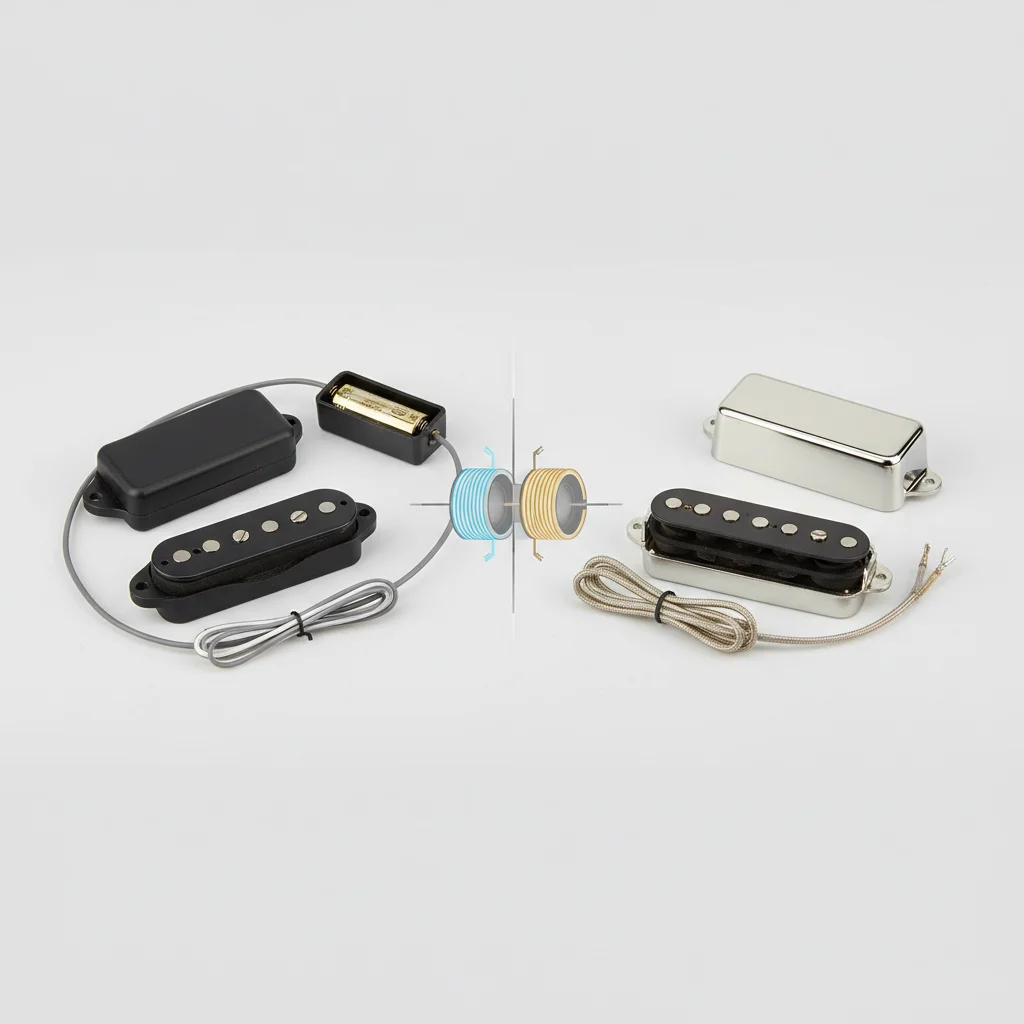
Choosing between active and passive electric guitar pickups significantly impacts your instrument’s tone, output, and dynamic response. The main difference lies in their power source and how they amplify the signal. Active pickups require a battery to power an onboard preamp, resulting in a higher output and a more consistent, often compressed sound. Passive pickups, on the other hand, rely solely on the magnetic field generated by their coils, offering a more organic, dynamic, and often warmer tone. Understanding these fundamental distinctions is crucial for selecting the right pickups to achieve your desired sound.
Understanding Passive Electric Guitar Pickups
Passive pickups are the traditional choice, found in the vast majority of electric guitars throughout history. They consist of magnets wrapped with copper wire, creating a magnetic field. When a string vibrates within this field, it disrupts the magnetic lines of flux, inducing a small electrical current in the coil. This current is then sent to your amplifier. The tone of passive pickups is highly influenced by the type of magnets (Alnico, Ceramic), the number of wire turns, and the winding pattern. They are known for their natural dynamic range, allowing for subtle nuances in playing to come through. Many players appreciate the touch-sensitivity and the way passive pickups interact with an amplifier’s natural overdrive. However, they can be susceptible to noise and hum, especially single-coil designs, and their output is generally lower than active counterparts. For more electric guitar guides on this site.
Exploring Active Electric Guitar Pickups
Active pickups incorporate a small, battery-powered preamp directly into the pickup itself. This preamp boosts the signal before it leaves the guitar, resulting in a much higher output and a stronger, clearer signal. The primary benefit of active pickups is their ability to produce a very consistent and powerful tone, often with less noise and hum compared to passive pickups. They are particularly popular in genres like metal and hard rock, where high gain and tight, articulate tones are desired. The onboard preamp also allows for different tonal voicings and often provides a wider frequency response. While they offer a powerful and consistent sound, some players find active pickups to be less dynamic and responsive to subtle playing variations, sometimes described as having a more ‘sterile’ or ‘compressed’ sound. The need for a 9V battery is also a consideration, as it will need occasional replacement.
Key Differences in Tone and Performance
|
Our Picks for the Best Electric Guitar in 2026
As an Amazon Associate I earn from qualifying purchases.
|
||
| Num | Product | Action |
|---|---|---|
| 1 | Fender Mini Stratocaster Electric Guitar Kit, Beginner Guitar Kit, with 2-Year Warranty, with Frontman 10G Amp, Padded Gig Bag, Strap, Cable, Tuner, and Picks, Daphne Blue |

|
| 2 | WINZZ EGM100 30 Inches Real Kids Electric Guitar with Beginner Kit, Right Handed (Gradient Pink) |
|
| 3 | Tostar 39 Inch Full Size Electric Guitar Kit For Beginners And Adults,SSS Pickup Stratocaster Guitarra Electrica Set Includes Tremolo Bridge,Amp,Strings,Stand,Case Bag, Birthday Holiday Gifts, Red |
|
| 4 | 16inch Mini Guitar Toy for Kids and Beginners, Electric Guitar with Strap for Toddlers and Boys and Girls Instrument Toys |
|
| 5 | Jackson Dinky Minion JS1X Electric Guitar - Black |
|
| 6 | STRICH Electric Guitar Beginner Kit, Solid Body 39" Full Size Electric Guitar HSS Pick Up for Starter, with 10W Amp, Bag, Digital Tuner, Capo, Strap, String,Cable, Picks, SST-S20 Sapphire Blue |
|
| 7 | Ibanez GRG131DX - Black Flat |
|
| 8 | RockJam Electric Guitar Kit with 10-Watt Amp, Gig Bag, Picks, Spare Strings & Lessons |
|
| 9 | 39 Inch Electric Guitar Bag 7mm Padding Waterproof Electric Guitar Case, Electric Guitar Gig Bag Backpack with Neck Strap and Pockets, Black |
|
| 10 | LyxPro 39 inch Electric Guitar Kit Bundle with 20w Amplifier, All Accessories, Digital Clip On Tuner, Six Strings, Two Picks, Tremolo Bar, Shoulder Strap, Case Bag Starter kit Full Size - Blue |
|
The tonal characteristics between active and passive pickups are quite distinct. Passive pickups typically offer a warmer, more open, and dynamic sound. They respond well to changes in picking attack and volume knob adjustments, allowing for a wide range of tones from clean to overdriven. Their natural compression is minimal, letting the amplifier do most of the work. Active pickups, conversely, deliver a more focused, high-output, and often brighter tone with a tighter low end. The built-in preamp provides a significant signal boost, which can drive amplifiers harder and result in more sustain and clarity, especially under high-gain settings. The compression inherent in active designs can make them feel more consistent across different playing dynamics, which can be advantageous for fast, technical playing.
- Output Level: Active pickups have significantly higher output, driving amps harder.
- Dynamic Range: Passive pickups offer a wider, more natural dynamic response.
- Noise/Hum: Active pickups generally have lower noise and hum due to their buffered output.
- Power Source: Active pickups require a 9V battery; passive pickups do not.
- Tonal Character: Passive are often described as organic and warm; active as powerful and articulate.
Which Pickups Are Right for Your Style?
The choice between active and passive pickups ultimately depends on your musical style and desired sound. If you primarily play genres that demand high gain, tight articulation, and minimal noise, such as metal, hard rock, or progressive rock, active pickups like those from EMG or Fishman Fluence might be an excellent choice. They provide the power and clarity needed to cut through a dense mix.If your style leans towards blues, classic rock, jazz, or country, where dynamic range, warmth, and the natural interaction with your amplifier are paramount, passive pickups from brands like Seymour Duncan, DiMarzio, or Fender are often preferred. They offer a more traditional feel and a broader spectrum of tonal nuances.
Installation and Maintenance Considerations
Installing active pickups can be slightly more complex than passive ones due to the need for a battery compartment and wiring for the preamp. Many guitars are not pre-routed for a battery, which might require minor modifications. Passive pickups are generally simpler to install, often being a direct swap for existing passive units. In terms of maintenance, active pickups require periodic battery replacement, typically every few months to a year depending on usage. A dead battery will result in no sound from your guitar. Passive pickups require virtually no maintenance beyond ensuring the wiring connections are secure. Both types benefit from keeping the pickup covers clean and free of debris to maintain optimal performance.

I tried active pickups in my Ibanez for a while, hoping for that higher output. While the sound was powerful, I found myself constantly worrying about the battery. It died on me once during a gig, which was a nightmare. I appreciate the consistent sound, but the battery requirement is a real drawback for me. I’m probably going back to passive.
Finally, a clear explanation of active vs. passive! I always just went with whatever came stock. My current guitar has a really muddy sound, and I think it’s because the passive pickups aren’t quite right for the style I play. I’m now seriously considering a set of active pickups to get that clearer, more defined tone I’m looking for.
This really helped me understand the core differences. I’ve always loved the warmer tone of my vintage Strat, which makes sense now knowing it has passive pickups. I’m thinking about upgrading the pickups in my Les Paul, and the info here about dynamic response has me leaning towards a high-output passive set to keep that organic feel but get a bit more punch.
I’ve been playing for years and always stuck with passive pickups, but after reading about the consistent, compressed sound of actives, I decided to give them a try. I put a set of EMGs in my shred guitar, and wow, the difference in output is insane! My solos cut through the mix like never before. Definitely a game-changer for high-gain stuff.