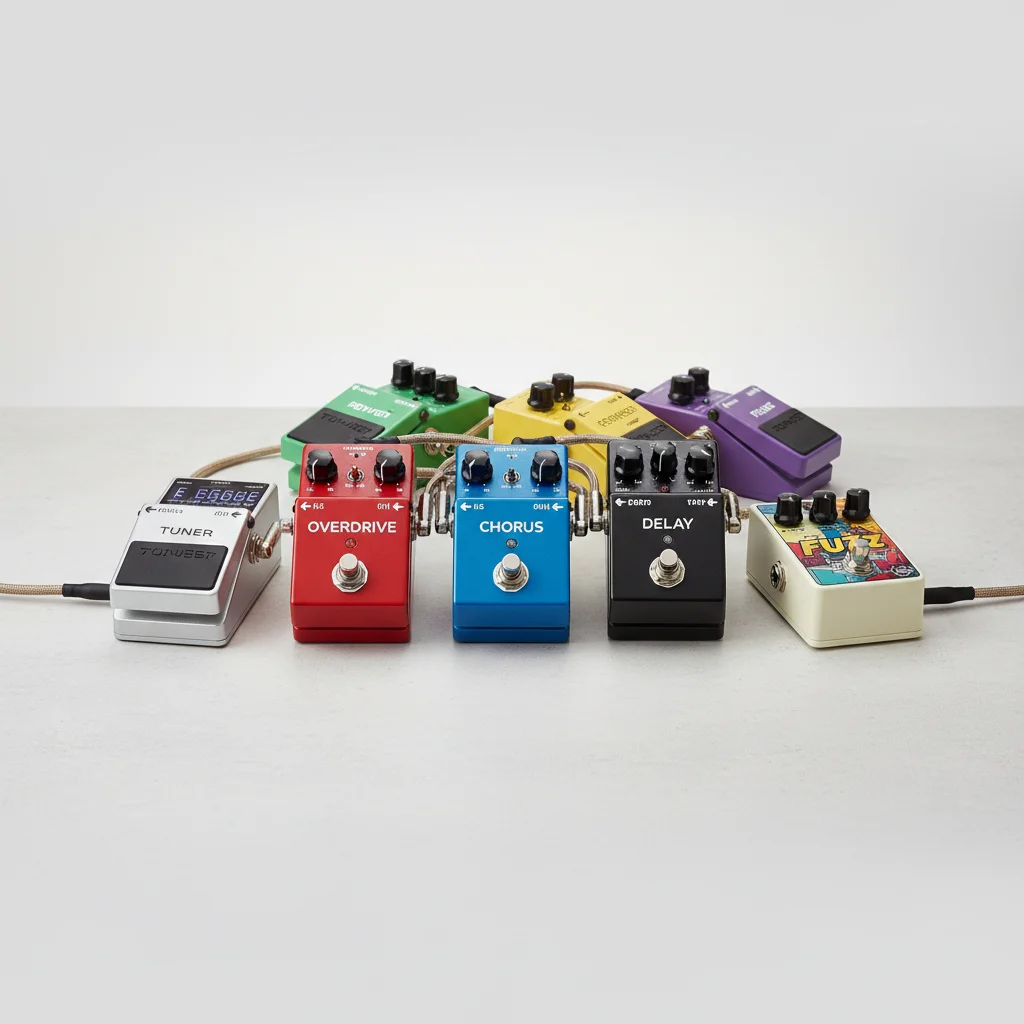
Choosing the right electric guitar pedals can significantly shape your sound, and for most guitarists, a core setup of three to five essential pedals provides a versatile foundation. These typically include a tuner, an overdrive or distortion, a delay, and often a modulation effect like chorus or phaser. The specific pedals you need will depend on your musical style and desired sonic palette, but starting with these fundamental types allows for a wide range of expression.
The Indispensable Tuner Pedal
A tuner pedal is arguably the most crucial pedal for any electric guitarist. While many amps have built-in tuners, a dedicated pedal offers accuracy and convenience, allowing you to quickly and silently tune between songs or during practice. Look for a pedal with a clear display and true bypass to ensure your signal remains unaffected when the pedal is disengaged. Brands like Boss, TC Electronic, and Korg offer reliable and widely used tuner pedals that are staples on many pedalboards.
Overdrive and Distortion: Shaping Your Tone
Overdrive and distortion pedals are fundamental for adding grit, sustain, and power to your electric guitar sound. An overdrive pedal typically provides a warmer, more natural breakup, mimicking the sound of a tube amp pushed to its limits. Distortion pedals, on the other hand, offer a more aggressive, saturated tone, often used in rock and metal genres. Many guitarists use both, stacking them for different levels of gain or using them independently for distinct sounds. Experimenting with different types will help you find the character that best suits your playing style.
Adding Depth with Delay and Reverb
|
Our Picks for the Best Electric Guitar in 2026
As an Amazon Associate I earn from qualifying purchases.
|
||
| Num | Product | Action |
|---|---|---|
| 1 | Fender Mini Stratocaster Electric Guitar Kit, Beginner Guitar Kit, with 2-Year Warranty, with Frontman 10G Amp, Padded Gig Bag, Strap, Cable, Tuner, and Picks, Daphne Blue |

|
| 2 | RockJam Electric Guitar Kit with 10-Watt Amp, Gig Bag, Picks, Spare Strings & Lessons |
|
| 3 | WINZZ EGM100 30 Inches Real Kids Electric Guitar with Beginner Kit, Right Handed (Gradient Pink) |
|
| 4 | 39 Inch Electric Guitar Bag 7mm Padding Waterproof Electric Guitar Case, Electric Guitar Gig Bag Backpack with Neck Strap and Pockets, Black |
|
| 5 | 16inch Mini Guitar Toy for Kids and Beginners, Electric Guitar with Strap for Toddlers and Boys and Girls Instrument Toys |
|
| 6 | Ibanez GRG131DX - Black Flat |
|
| 7 | Jackson Dinky Minion JS1X Electric Guitar - Black |
|
| 8 | LyxPro 39 inch Electric Guitar Kit Bundle with 20w Amplifier, All Accessories, Digital Clip On Tuner, Six Strings, Two Picks, Tremolo Bar, Shoulder Strap, Case Bag Starter kit Full Size - Blue |
|
| 9 | STRICH Electric Guitar Beginner Kit, Solid Body 39" Full Size Electric Guitar HSS Pick Up for Starter, with 10W Amp, Bag, Digital Tuner, Capo, Strap, String,Cable, Picks, SST-S20 Sapphire Blue |
|
| 10 | Tostar 39 Inch Full Size Electric Guitar Kit For Beginners And Adults,SSS Pickup Stratocaster Guitarra Electrica Set Includes Tremolo Bridge,Amp,Strings,Stand,Case Bag, Birthday Holiday Gifts, Red |
|
Delay and reverb pedals are essential for adding space, depth, and atmosphere to your guitar tone. A delay pedal creates echoes of your original signal, ranging from subtle slapback effects to long, ethereal repeats. Reverb simulates the natural reflections of sound in a physical space, from a small room to a vast hall. While many amplifiers include built-in reverb, a dedicated pedal often offers more control and a wider variety of reverb types. Combining these effects can create lush soundscapes and add a professional polish to your playing.
- Tuner: Ensures your guitar is always in tune.
- Overdrive/Distortion: Adds grit, sustain, and power.
- Delay: Creates echoes and adds spatial depth.
- Modulation (Chorus/Phaser): Adds movement and texture.
- Wah: Provides expressive tonal sweeps.
Modulation and Other Expressive Pedals
Modulation pedals introduce movement and texture to your sound. Common types include chorus, which creates a shimmering, doubling effect; flanger, which produces a swirling, jet-plane-like sound; and phaser, which offers a sweeping, whooshing effect. These pedals can add character and interest to your riffs and solos. Beyond these, other expressive pedals like wah pedals, compressors, and equalizers can further refine and personalize your sound, allowing for endless sonic exploration.Consider your musical genre and the specific sounds you want to achieve when exploring these options.
Building Your Pedalboard: Practical Considerations
When assembling your pedalboard, consider the order of your pedals, as this can significantly impact your sound. A common signal chain starts with tuners and compressors, followed by gain pedals (overdrive, distortion), then modulation effects, and finally time-based effects (delay, reverb). Powering your pedals reliably is also crucial; a dedicated power supply with isolated outputs will prevent noise and ensure consistent performance.Start with a few essential pedals and gradually expand your collection as your needs and preferences evolve.
