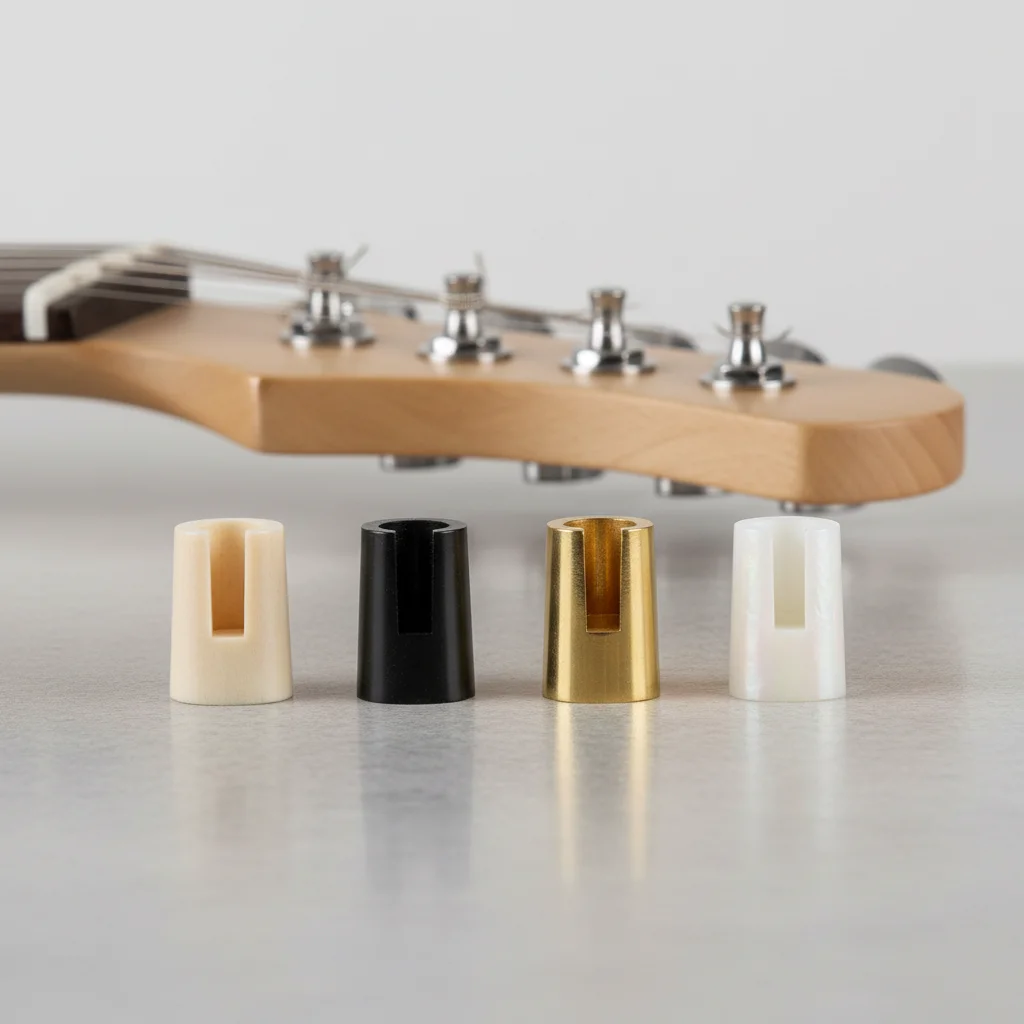
The material of your electric guitar’s nut significantly impacts sustain, tuning stability, and tone. While often overlooked, the nut is a critical contact point for your strings, influencing how vibrations transfer to the neck and body. Different materials offer distinct sonic characteristics and practical benefits, with bone, TUSQ, and brass being among the most popular choices for their proven performance.
Bone Nuts: Classic Tone and Sustain
Bone has been a traditional choice for guitar nuts for centuries, prized for its natural density and excellent vibrational transfer. A well-cut bone nut provides a balanced tone with good sustain and clarity. Its natural porosity can absorb some string vibration, contributing to a warm, organic sound. However, bone nuts can be inconsistent in density and may require more precise shaping and finishing compared to synthetic alternatives. For best electric guitar roundups on this site.
TUSQ Nuts: Consistent Performance and Brightness
Graph Tech’s TUSQ is a proprietary synthetic material engineered to mimic the tonal properties of bone while offering superior consistency. TUSQ nuts are self-lubricating, which helps improve tuning stability by reducing friction at the string slots. They tend to produce a brighter, more articulate tone with enhanced sustain compared to many other materials. This consistency makes them a popular upgrade for many guitarists seeking reliable performance.
Brass Nuts: Increased Sustain and Brightness
Brass nuts are known for their ability to significantly increase sustain and add a distinct brightness to the guitar’s tone. The high density and hardness of brass allow for excellent vibrational transfer, making notes ring out longer. While some players appreciate the added brilliance, others might find it too bright or metallic for their taste. Brass nuts are also very durable and resistant to wear.
Other Nut Materials and Their Characteristics
|
Our Picks for the Best Electric Guitar in 2026
As an Amazon Associate I earn from qualifying purchases.
|
||
| Num | Product | Action |
|---|---|---|
| 1 | RockJam Electric Guitar Kit with 10-Watt Amp, Gig Bag, Picks, Spare Strings & Lessons |

|
| 2 | Tostar 39 Inch Full Size Electric Guitar Kit For Beginners And Adults,SSS Pickup Stratocaster Guitarra Electrica Set Includes Tremolo Bridge,Amp,Strings,Stand,Case Bag, Birthday Holiday Gifts, Red |
|
| 3 | Ibanez GRG131DX - Black Flat |
|
| 4 | STRICH Electric Guitar Beginner Kit, Solid Body 39" Full Size Electric Guitar HSS Pick Up for Starter, with 10W Amp, Bag, Digital Tuner, Capo, Strap, String,Cable, Picks, SST-S20 Sapphire Blue |
|
| 5 | 16inch Mini Guitar Toy for Kids and Beginners, Electric Guitar with Strap for Toddlers and Boys and Girls Instrument Toys |
|
| 6 | Fender Mini Stratocaster Electric Guitar Kit, Beginner Guitar Kit, with 2-Year Warranty, with Frontman 10G Amp, Padded Gig Bag, Strap, Cable, Tuner, and Picks, Daphne Blue |
|
| 7 | Jackson Dinky Minion JS1X Electric Guitar - Black |
|
| 8 | 39 Inch Electric Guitar Bag 7mm Padding Waterproof Electric Guitar Case, Electric Guitar Gig Bag Backpack with Neck Strap and Pockets, Black |
|
| 9 | LyxPro 39 inch Electric Guitar Kit Bundle with 20w Amplifier, All Accessories, Digital Clip On Tuner, Six Strings, Two Picks, Tremolo Bar, Shoulder Strap, Case Bag Starter kit Full Size - Blue |
|
| 10 | WINZZ EGM100 30 Inches Real Kids Electric Guitar with Beginner Kit, Right Handed (Gradient Pink) |
|
Beyond the primary three, several other materials are used for electric guitar nuts, each with unique properties. Plastic nuts, often found on entry-level guitars, are inexpensive but offer poor vibrational transfer and can dampen sustain. Graphite nuts, similar to TUSQ, are self-lubricating and provide good tuning stability, often resulting in a slightly darker tone than TUSQ. Stainless steel nuts are extremely durable and offer a very bright, resonant tone, though they can be challenging to work with.
- Plastic: Inexpensive, poor sustain, common on budget guitars.
- Graphite: Self-lubricating, good tuning stability, slightly darker tone.
- Stainless Steel: Extremely durable, very bright and resonant tone.
- Corian: Synthetic, consistent, offers a balanced tone similar to bone.
- Micarta: Phenolic resin, durable, provides a warm, smooth tone.
Choosing the Right Nut Material for Your Guitar
The best nut material for your electric guitar depends on your desired tone, playing style, and budget. If you’re looking for a classic, warm tone with good sustain, bone is an excellent choice. For consistent performance, improved tuning stability, and a brighter sound, TUSQ is a strong contender. If maximum sustain and a very bright attack are your priorities, consider brass. Upgrading your guitar’s nut can be a relatively inexpensive modification that yields noticeable improvements in playability and tone. Always ensure the nut is properly cut and fitted for optimal performance.
For a wide selection of high-quality guitar nuts and related accessories, check out. You’ll find options for various guitar models and materials to suit your specific needs. If you’re considering a professional installation or custom nut, consult with a reputable luthier in your area. They can provide expert advice and ensure your new nut is perfectly fitted for your instrument, maximizing its potential. For tools and supplies to maintain your guitar’s nut and other components, visit.
