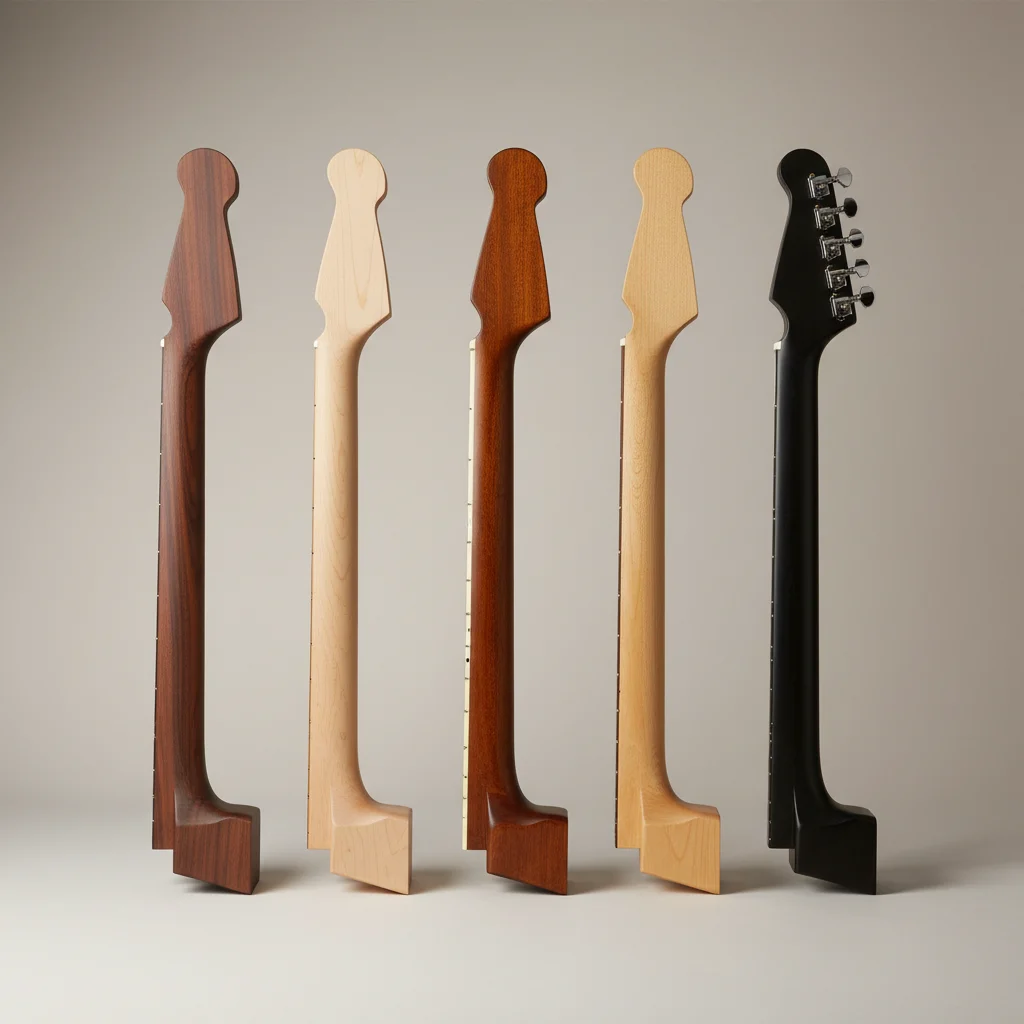
Choosing the right electric guitar neck profile is crucial for comfort and playability, directly impacting your technique and endurance. There are typically five main neck profiles to consider: C-shape, D-shape, V-shape, U-shape, and asymmetrical profiles, each offering a distinct feel in your fretting hand.
Understanding Common Neck Profiles
The ‘C’ shape is the most common and often considered the most comfortable for a wide range of players. It features a rounded back that fits naturally into the palm. The ‘D’ shape, sometimes called a ‘modern flat oval,’ has a flatter back, which can be preferred by players with larger hands or those who play with their thumb over the top of the neck. The ‘V’ shape, particularly the ‘soft V,’ offers a more pointed feel, providing a good anchor point for the thumb, often favored by blues and vintage guitar enthusiasts.
The U-Shape and Asymmetrical Options
The ‘U’ shape is generally thicker and rounder than the ‘C’ shape, providing a substantial feel that can be ideal for players with larger hands or those who prefer a more robust grip. This profile is often found on vintage-style guitars. Asymmetrical neck profiles, on the other hand, are designed to be thicker on the bass side and thinner on the treble side, conforming more ergonomically to the natural curve of the hand. This design aims to reduce fatigue and improve playability across the fretboard.
Factors Influencing Your Choice
When selecting a neck profile, consider your hand size, playing style, and the type of music you play. Players who frequently perform complex chords or fast lead lines might benefit from a thinner profile that allows for quicker hand movement. Conversely, those who primarily play rhythm or prefer a strong grip might find a thicker profile more comfortable. It’s also important to consider the fretboard radius and fret size, as these elements interact with the neck profile to define the overall feel.
- Hand Size: Smaller hands may prefer thinner profiles (e.g., modern C), while larger hands might enjoy thicker ones (e.g., U-shape).
- Playing Style: Shredders often favor flatter, faster necks; blues players might prefer vintage V-shapes.
- Comfort: The most critical factor is how the neck feels in your hand during extended playing sessions.
- Fretboard Radius: A flatter radius (e.g., 12-16 inches) often pairs well with thinner necks for lead playing.
- Fret Size: Jumbo frets can make a neck feel faster, regardless of profile.
Testing and Personal Preference
|
Our Picks for the Best Electric Guitar in 2026
As an Amazon Associate I earn from qualifying purchases.
|
||
| Num | Product | Action |
|---|---|---|
| 1 | Jackson Dinky Minion JS1X Electric Guitar - Black |

|
| 2 | 39 Inch Electric Guitar Bag 7mm Padding Waterproof Electric Guitar Case, Electric Guitar Gig Bag Backpack with Neck Strap and Pockets, Black |
|
| 3 | LyxPro 39 inch Electric Guitar Kit Bundle with 20w Amplifier, All Accessories, Digital Clip On Tuner, Six Strings, Two Picks, Tremolo Bar, Shoulder Strap, Case Bag Starter kit Full Size - Blue |
|
| 4 | Ibanez GRG131DX - Black Flat |
|
| 5 | 16inch Mini Guitar Toy for Kids and Beginners, Electric Guitar with Strap for Toddlers and Boys and Girls Instrument Toys |
|
| 6 | WINZZ EGM100 30 Inches Real Kids Electric Guitar with Beginner Kit, Right Handed (Gradient Pink) |
|
| 7 | Tostar 39 Inch Full Size Electric Guitar Kit For Beginners And Adults,SSS Pickup Stratocaster Guitarra Electrica Set Includes Tremolo Bridge,Amp,Strings,Stand,Case Bag, Birthday Holiday Gifts, Red |
|
| 8 | Fender Mini Stratocaster Electric Guitar Kit, Beginner Guitar Kit, with 2-Year Warranty, with Frontman 10G Amp, Padded Gig Bag, Strap, Cable, Tuner, and Picks, Daphne Blue |
|
| 9 | STRICH Electric Guitar Beginner Kit, Solid Body 39" Full Size Electric Guitar HSS Pick Up for Starter, with 10W Amp, Bag, Digital Tuner, Capo, Strap, String,Cable, Picks, SST-S20 Sapphire Blue |
|
| 10 | RockJam Electric Guitar Kit with 10-Watt Amp, Gig Bag, Picks, Spare Strings & Lessons |
|
The best way to determine which electric guitar neck profile is right for you is to try out as many different guitars as possible. Visit local music stores and spend time playing various models with different neck shapes. Pay attention to how your hand feels after several minutes of playing. Does it cramp? Is it comfortable? Does it allow you to reach all the frets easily? Don’t rush the decision; comfort is paramount for long-term enjoyment and skill development. Many manufacturers offer detailed specifications on their neck profiles, so research is key.
For those looking to explore a wide range of neck profiles on quality instruments, consider checking out the selection at. They often have detailed descriptions and customer reviews that can help guide your decision. Remember, a comfortable neck can significantly enhance your playing experience and help prevent strain.
Maintenance and Longevity of Your Guitar Neck
Regardless of the profile you choose, proper maintenance of your electric guitar neck is essential. This includes regularly cleaning the fretboard, conditioning it to prevent drying and cracking, and checking the truss rod for proper relief. Humidity control is also vital, especially for necks made from natural wood, to prevent warping or cracking. A well-maintained neck will not only feel better but also contribute to the overall longevity and playability of your instrument. For essential neck care products and tools, visit.
