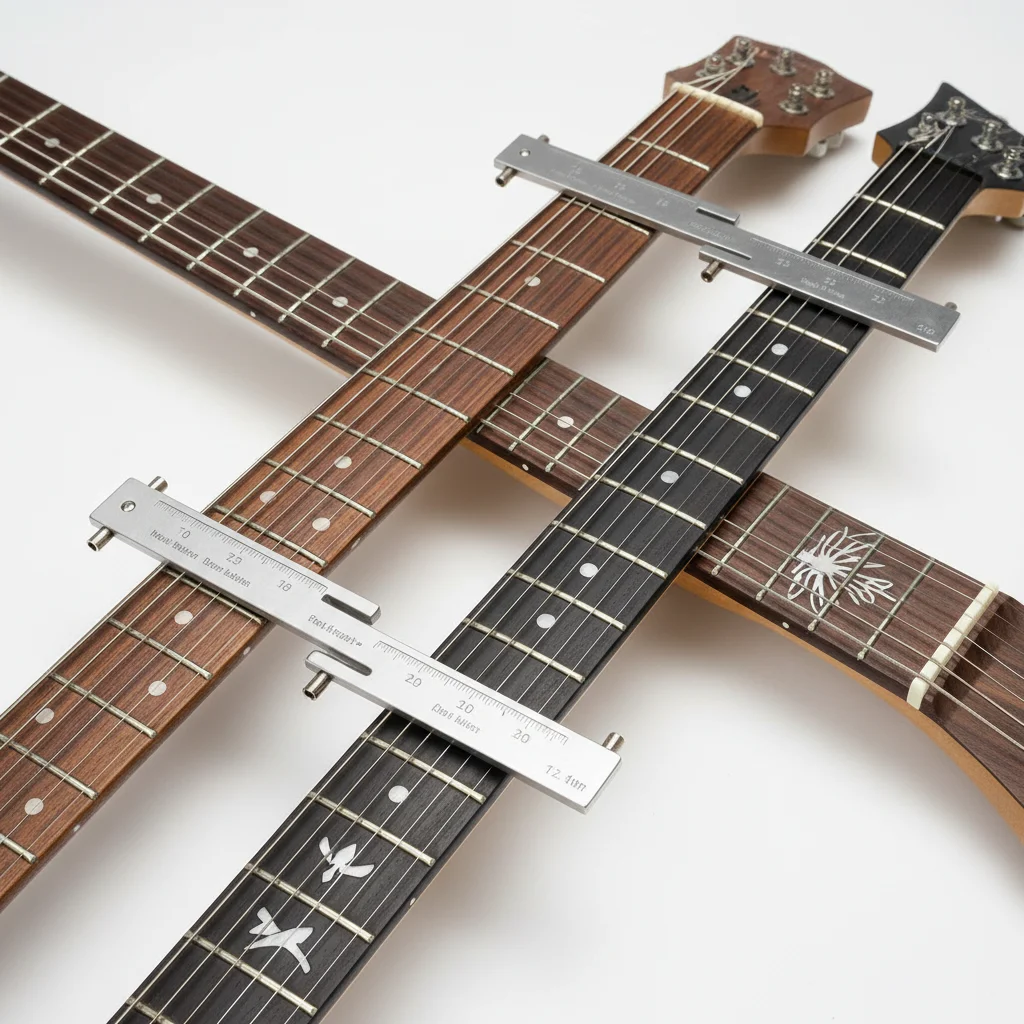
The electric guitar fretboard radius significantly affects playability, particularly for different playing styles. It dictates the curvature of the fretboard, influencing how comfortable chords feel and how easily strings can be bent without fretting out. Generally, a smaller radius (more curved) is preferred by rhythm players for chording, while a larger radius (flatter) suits lead guitarists for bending and faster runs.
Understanding Fretboard Radius Measurements
Fretboard radius is measured in inches, representing the radius of a circle from which the fretboard’s curve is cut. Common radii include 7.25″, 9.5″, 10″, 12″, 14″, 16″, and even compound radii. A 7.25″ radius, often found on vintage-style guitars, is quite round and can feel very comfortable for open chords. However, extreme string bending on these can sometimes lead to ‘fretting out,’ where the string chokes against a higher fret.
Conversely, a 16″ radius is very flat, making it ideal for low action and wide bends without fretting out. This flatness can make barre chords feel less natural for some players, as the fingers need to flatten more across the strings. The choice often comes down to a trade-off between chording comfort and lead playing efficiency.
How Radius Impacts Chording and Lead Playing
For rhythm guitarists who spend a lot of time playing chords, especially barre chords, a smaller radius can feel more ergonomic. The natural curve of the fretboard matches the slight curve of the fingers, allowing for a more relaxed hand position. This is why many classic rock and blues players favor guitars with a 7.25″ or 9.5″ radius.
Lead guitarists, particularly those who employ fast legato, tapping, and wide string bends, often find a flatter radius more conducive to their style. The reduced curvature minimizes the chance of strings choking out during aggressive bends, allowing for lower action and a smoother feel across the entire fretboard. Guitars designed for shredding or technical playing frequently feature a 12″ or 14″ radius, or even flatter.
Compound Radius Fretboards Explained
|
Our Picks for the Best Electric Guitar in 2026
As an Amazon Associate I earn from qualifying purchases.
|
||
| Num | Product | Action |
|---|---|---|
| 1 | Ibanez GRG131DX - Black Flat |

|
| 2 | RockJam Electric Guitar Kit with 10-Watt Amp, Gig Bag, Picks, Spare Strings & Lessons |
|
| 3 | Jackson Dinky Minion JS1X Electric Guitar - Black |
|
| 4 | 39 Inch Electric Guitar Bag 7mm Padding Waterproof Electric Guitar Case, Electric Guitar Gig Bag Backpack with Neck Strap and Pockets, Black |
|
| 5 | Tostar 39 Inch Full Size Electric Guitar Kit For Beginners And Adults,SSS Pickup Stratocaster Guitarra Electrica Set Includes Tremolo Bridge,Amp,Strings,Stand,Case Bag, Birthday Holiday Gifts, Red |
|
| 6 | LyxPro 39 inch Electric Guitar Kit Bundle with 20w Amplifier, All Accessories, Digital Clip On Tuner, Six Strings, Two Picks, Tremolo Bar, Shoulder Strap, Case Bag Starter kit Full Size - Blue |
|
| 7 | STRICH Electric Guitar Beginner Kit, Solid Body 39" Full Size Electric Guitar HSS Pick Up for Starter, with 10W Amp, Bag, Digital Tuner, Capo, Strap, String,Cable, Picks, SST-S20 Sapphire Blue |
|
| 8 | Fender Mini Stratocaster Electric Guitar Kit, Beginner Guitar Kit, with 2-Year Warranty, with Frontman 10G Amp, Padded Gig Bag, Strap, Cable, Tuner, and Picks, Daphne Blue |
|
| 9 | WINZZ EGM100 30 Inches Real Kids Electric Guitar with Beginner Kit, Right Handed (Gradient Pink) |
|
| 10 | 16inch Mini Guitar Toy for Kids and Beginners, Electric Guitar with Strap for Toddlers and Boys and Girls Instrument Toys |
|
A compound radius fretboard offers a compromise, starting with a smaller radius at the nut (e.g., 10″) and gradually flattening out towards the higher frets (e.g., 14″ or 16″). This design aims to provide the best of both worlds: a comfortable feel for chording in the lower positions and a flatter surface for effortless bending and soloing in the upper registers. Many modern guitars, especially those catering to versatile players, incorporate this feature.
- Comfortable chording in lower frets.
- Reduced fretting out during bends in higher frets.
- Smoother transition for lead playing.
- Versatility for various musical genres.
- Often found on premium and custom instruments.
Choosing the Right Fretboard Radius for You
The ‘best’ fretboard radius is highly subjective and depends entirely on your personal playing style and preferences. If you primarily play rhythm guitar, strumming chords and focusing on open positions, a rounder radius like 7.25″ or 9.5″ might feel most natural. If you’re a lead player who frequently bends strings and plays fast solos, a flatter radius of 12″ or 14″ could be more beneficial.
For players who engage in both rhythm and lead playing, or those who are unsure, a compound radius or a standard 9.5″ to 12″ radius offers a good balance. The most effective way to determine your ideal fretboard radius is to try out different guitars with varying radii. Visit a local music store and spend time playing different models to see what feels most comfortable and responsive to your hands and playing technique.
