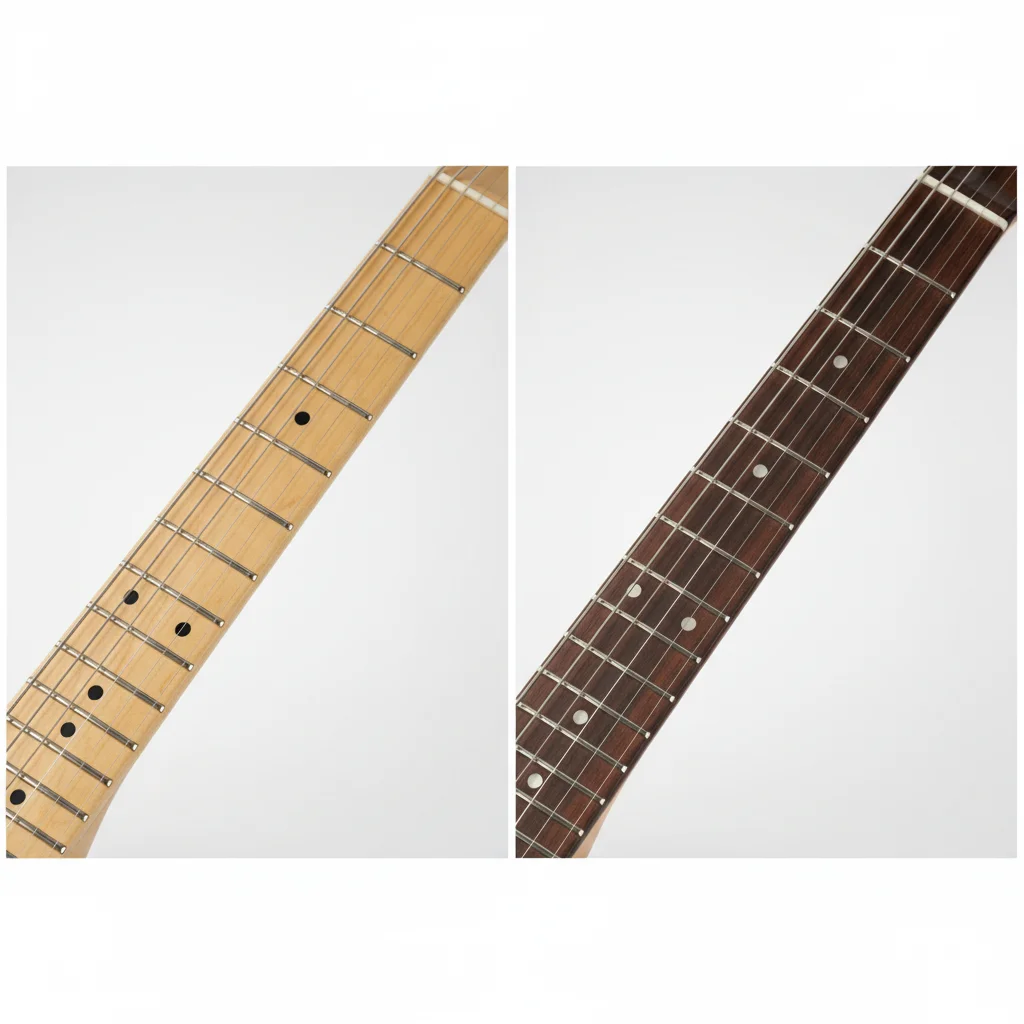
Choosing the right electric guitar fretboard material significantly impacts both playability and tone. The two most common materials are maple and rosewood, each offering distinct characteristics that cater to different playing styles and sonic preferences. While maple provides a brighter, snappier attack and a smoother feel, rosewood delivers a warmer, more rounded tone with a slightly more porous texture. Understanding these differences is crucial for selecting the fretboard that best suits your individual needs.
Maple Fretboards: Brightness and Snap
Maple fretboards are known for their bright, articulate tone and a snappy attack. This wood is denser and often finished with a clear lacquer, which contributes to its slick feel and enhanced sustain. Guitars with maple fretboards tend to have a more immediate response and a clearer high-end, making them popular among players who favor genres like funk, country, and certain rock styles where note clarity and punch are paramount. The smooth, sealed surface of a maple fretboard can also make fast runs and bends feel effortless. For complete electric guitar library on this site.
However, the lacquered finish on maple fretboards can show wear more prominently over time, especially with heavy playing. Finger oils and dirt can accumulate on the finish, requiring more frequent cleaning to maintain its pristine appearance. Despite this, many players appreciate the visual appeal of maple, often paired with a matching maple neck for a cohesive aesthetic.
Rosewood Fretboards: Warmth and Smoothness
Rosewood fretboards, in contrast, are celebrated for their warm, rich tone and a smoother, more natural feel. This wood is more porous and typically left unfinished, allowing for a slightly softer attack and a more complex mid-range. Rosewood tends to absorb some of the string’s vibration, contributing to a fatter, more rounded sound with excellent sustain. It’s a favorite among blues, jazz, and classic rock guitarists who value a more mellow and organic tone.
The open-pore nature of rosewood means it can feel more ‘woody’ under the fingers, providing a different tactile experience compared to the slickness of maple. While it doesn’t show wear as readily as lacquered maple, rosewood does benefit from occasional conditioning to prevent drying out and cracking. Its darker appearance also tends to hide grime better, making it a lower-maintenance option for some players.
Ebony Fretboards: The Premium Alternative
|
Our Picks for the Best Electric Guitar in 2026
As an Amazon Associate I earn from qualifying purchases.
|
||
| Num | Product | Action |
|---|---|---|
| 1 | STRICH Electric Guitar Beginner Kit, Solid Body 39" Full Size Electric Guitar HSS Pick Up for Starter, with 10W Amp, Bag, Digital Tuner, Capo, Strap, String,Cable, Picks, SST-S20 Sapphire Blue |

|
| 2 | Fender Mini Stratocaster Electric Guitar Kit, Beginner Guitar Kit, with 2-Year Warranty, with Frontman 10G Amp, Padded Gig Bag, Strap, Cable, Tuner, and Picks, Daphne Blue |
|
| 3 | WINZZ EGM100 30 Inches Real Kids Electric Guitar with Beginner Kit, Right Handed (Gradient Pink) |
|
| 4 | Jackson Dinky Minion JS1X Electric Guitar - Black |
|
| 5 | LyxPro 39 inch Electric Guitar Kit Bundle with 20w Amplifier, All Accessories, Digital Clip On Tuner, Six Strings, Two Picks, Tremolo Bar, Shoulder Strap, Case Bag Starter kit Full Size - Blue |
|
| 6 | 39 Inch Electric Guitar Bag 7mm Padding Waterproof Electric Guitar Case, Electric Guitar Gig Bag Backpack with Neck Strap and Pockets, Black |
|
| 7 | 16inch Mini Guitar Toy for Kids and Beginners, Electric Guitar with Strap for Toddlers and Boys and Girls Instrument Toys |
|
| 8 | RockJam Electric Guitar Kit with 10-Watt Amp, Gig Bag, Picks, Spare Strings & Lessons |
|
| 9 | Tostar 39 Inch Full Size Electric Guitar Kit For Beginners And Adults,SSS Pickup Stratocaster Guitarra Electrica Set Includes Tremolo Bridge,Amp,Strings,Stand,Case Bag, Birthday Holiday Gifts, Red |
|
| 10 | Ibanez GRG131DX - Black Flat |
|
While maple and rosewood dominate the market, ebony is another premium fretboard material worth considering. Known for its extremely dense and smooth texture, ebony offers a very bright, articulate tone with exceptional sustain and a fast, slick feel. It’s often found on high-end instruments and is favored by shredders and players who demand ultimate precision and clarity. Ebony is also very durable and resistant to wear, making it a long-lasting choice.
- Maple: Bright, snappy tone; smooth, lacquered feel; clear high-end.
- Rosewood: Warm, rich tone; natural, porous feel; complex mid-range.
- Ebony: Very bright, articulate tone; extremely smooth, dense feel; exceptional sustain.
- Pau Ferro: Similar to rosewood in tone and feel, often used as an alternative.
- Richlite: Synthetic material, consistent feel, dark appearance, good sustain.
Maintenance and Longevity
The maintenance requirements for electric guitar fretboards vary depending on the wood. Lacquered maple fretboards should be cleaned regularly with a soft cloth and a mild cleaner to remove finger oils and dirt. Unfinished rosewood and ebony fretboards benefit from occasional conditioning with a specialized fretboard oil to prevent them from drying out and cracking. Regardless of the material, keeping your fretboard clean and properly maintained will ensure its longevity and optimal playability.
Consider the tonal characteristics you desire and the feel you prefer under your fingers. If you’re looking for a bright, articulate sound with a fast, slick feel, maple might be your best bet. For a warmer, more rounded tone with a natural, woody feel, rosewood is an excellent choice. For premium clarity and speed, ebony stands out.Experimenting with different guitars will help you discover which fretboard material truly resonates with your playing style.
Which Fretboard Suits Your Style?
Ultimately, the best electric guitar fretboard material is a matter of personal preference. Your playing style, desired tone, and even the aesthetic appeal of the wood all play a role in this decision. Many guitarists own instruments with both maple and rosewood fretboards to cover a wider range of sonic possibilities. Don’t be afraid to try out different guitars and see which one feels and sounds best to you.The right fretboard can significantly enhance your playing experience and help you achieve your desired musical expression.

I’ve always leaned towards rosewood for the warmth, but after reading about the maple’s snappy attack, I decided to try a guitar with a maple fretboard. It’s been a game-changer for my funk playing! The brighter tone really makes my riffs pop, and the slick feel is surprisingly comfortable for fast runs. Definitely glad I gave it a shot.
I’ve been playing for years and mostly stuck with rosewood because of the classic feel. The point about rosewood’s porous texture and warmer tone really resonated with me. I still love that rounded sound, especially for blues, but I’m now considering adding a maple neck guitar to my collection for when I want something a bit brighter. Good breakdown of the differences.
This really helped me understand why my favorite guitar, which has a rosewood fretboard, feels so good for my style. The warmer, more rounded tone is exactly what I look for when playing jazz and softer rock. I appreciate knowing the ‘why’ behind the feel and sound, it makes me appreciate my instrument even more.
I picked up a guitar with a maple fretboard hoping for that super bright, articulate tone. While it definitely has a clear high-end, I found the lacquered finish a little too slick for my taste. It feels a bit less natural under my fingers compared to my unfinished rosewood neck. Still a decent guitar, but I might stick to rosewood for my next purchase.