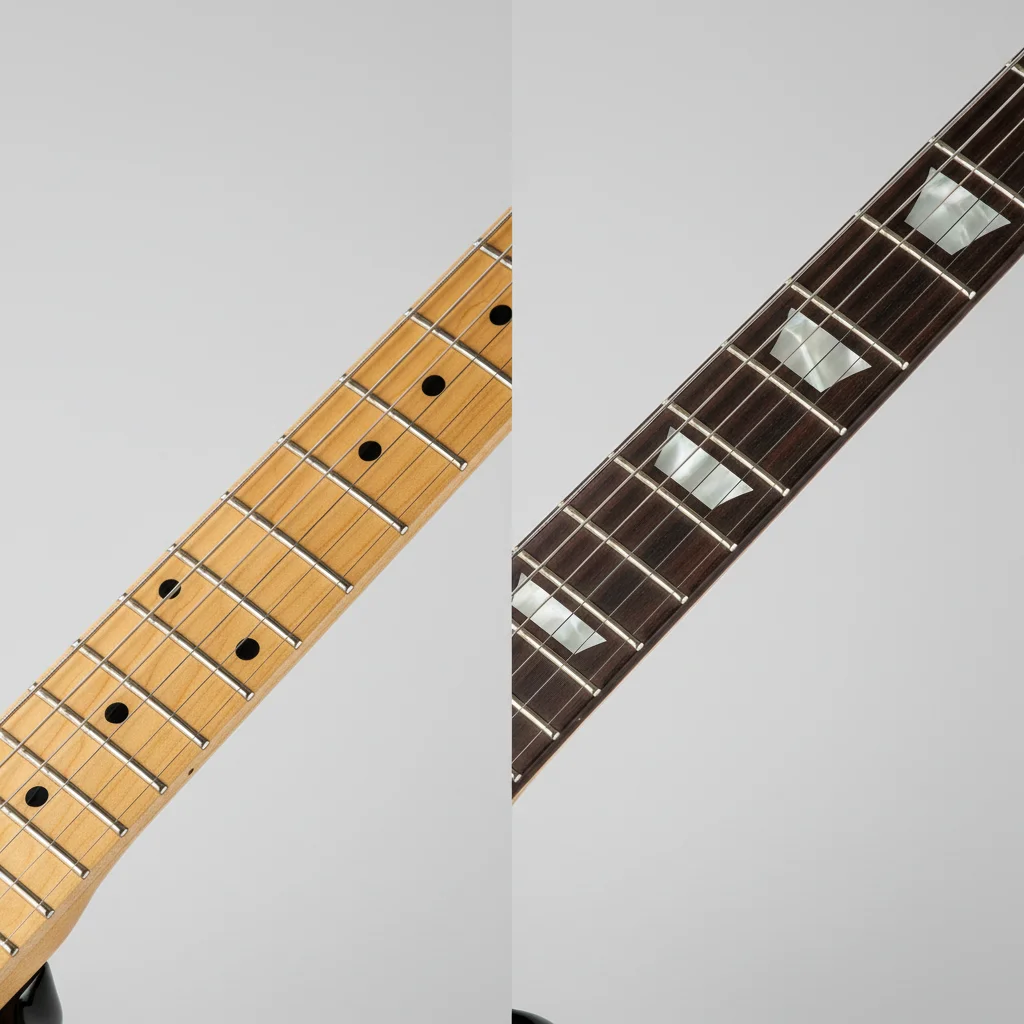
When choosing an electric guitar, the fretboard material significantly impacts both the feel and subtle tonal characteristics. The two most common options are maple and rosewood, each offering distinct playing experiences. Maple fretboards are known for their bright, snappy attack and smooth, fast feel, while rosewood provides a warmer tone, a softer touch, and a more open-pore texture.
Maple Fretboards: Brightness and Speed
Maple fretboards are typically found on Fender-style guitars and are often lacquered, creating a very smooth and slick playing surface. This finish contributes to a brighter, more articulate tone with a quicker attack and longer sustain. Players who prefer a fast fretboard for shredding or intricate lead work often gravitate towards maple due to its low friction. The sealed surface also makes maple fretboards less susceptible to changes in humidity and easier to clean, requiring less frequent conditioning.
However, the lacquered finish can show wear over time, especially in high-traffic areas, leading to a ‘relic’ look that some players appreciate. The brightness of maple might not suit every player’s tonal preference, particularly those seeking a darker, more mellow sound.
Rosewood Fretboards: Warmth and Comfort
Rosewood fretboards are a staple on many Gibson-style guitars and are characterized by their darker appearance and open-pore texture. This material tends to absorb more of the string’s vibration, resulting in a warmer, rounder tone with a slightly softer attack and shorter sustain compared to maple. The natural feel of rosewood is often described as more ‘organic’ or ‘woody’, providing a comfortable grip for bending and vibrato.
Because rosewood is an open-pore wood, it requires more regular conditioning to prevent drying and cracking, especially in arid climates. It also tends to show less visible wear than lacquered maple, as the natural oils from your hands can help to condition the wood over time. For players prioritizing a vintage feel and a rich, complex tone, rosewood is often the preferred choice.
Ebony Fretboards: The Premium Alternative
|
Our Picks for the Best Electric Guitar in 2026
As an Amazon Associate I earn from qualifying purchases.
|
||
| Num | Product | Action |
|---|---|---|
| 1 | Tostar 39 Inch Full Size Electric Guitar Kit For Beginners And Adults,SSS Pickup Stratocaster Guitarra Electrica Set Includes Tremolo Bridge,Amp,Strings,Stand,Case Bag, Birthday Holiday Gifts, Red |

|
| 2 | STRICH Electric Guitar Beginner Kit, Solid Body 39" Full Size Electric Guitar HSS Pick Up for Starter, with 10W Amp, Bag, Digital Tuner, Capo, Strap, String,Cable, Picks, SST-S20 Sapphire Blue |
|
| 3 | Fender Mini Stratocaster Electric Guitar Kit, Beginner Guitar Kit, with 2-Year Warranty, with Frontman 10G Amp, Padded Gig Bag, Strap, Cable, Tuner, and Picks, Daphne Blue |
|
| 4 | RockJam Electric Guitar Kit with 10-Watt Amp, Gig Bag, Picks, Spare Strings & Lessons |
|
| 5 | WINZZ EGM100 30 Inches Real Kids Electric Guitar with Beginner Kit, Right Handed (Gradient Pink) |
|
| 6 | 16inch Mini Guitar Toy for Kids and Beginners, Electric Guitar with Strap for Toddlers and Boys and Girls Instrument Toys |
|
| 7 | 39 Inch Electric Guitar Bag 7mm Padding Waterproof Electric Guitar Case, Electric Guitar Gig Bag Backpack with Neck Strap and Pockets, Black |
|
| 8 | Jackson Dinky Minion JS1X Electric Guitar - Black |
|
| 9 | Ibanez GRG131DX - Black Flat |
|
| 10 | LyxPro 39 inch Electric Guitar Kit Bundle with 20w Amplifier, All Accessories, Digital Clip On Tuner, Six Strings, Two Picks, Tremolo Bar, Shoulder Strap, Case Bag Starter kit Full Size - Blue |
|
While maple and rosewood dominate the market, ebony is another premium fretboard material, often found on high-end instruments. Ebony is extremely dense and hard, offering a very bright, articulate tone with exceptional sustain, similar to maple but often with an even faster, slicker feel. Its dark, uniform appearance is also highly prized. The density of ebony makes it incredibly stable and resistant to wear, though it can be more brittle than rosewood. It also requires less conditioning than rosewood due to its natural oil content.
- Maple: Bright, snappy tone; fast, slick feel; easy to clean.
- Rosewood: Warm, round tone; softer, organic feel; requires conditioning.
- Ebony: Very bright, articulate tone; extremely fast and smooth; highly durable.
Maintenance Considerations for Different Fretboards
Maintaining your fretboard properly is crucial for its longevity and playability. For lacquered maple fretboards, a simple wipe-down with a damp cloth is usually sufficient. Avoid harsh chemicals that could damage the finish. For rosewood and ebony, which are typically unfinished, regular conditioning with a specialized fretboard oil is recommended to prevent drying and cracking. This should be done every few months, or more frequently in dry environments. Always remove strings before cleaning and conditioning to ensure thorough access to the fretboard surface.
The choice between maple and rosewood ultimately comes down to personal preference in feel and desired tonal characteristics. Many guitarists own instruments with both types of fretboards to cover a wider range of sounds and playing experiences. Consider trying out guitars with different fretboard materials to see which one resonates best with your playing style and sonic vision.Experimentation is key to finding your perfect match.

I appreciate the breakdown of maple vs. rosewood. I’ve got a guitar with a maple fretboard, and while I like the quick attack, I sometimes find the lacquered surface a bit too slick. It can feel a little less natural under my fingers compared to the more open-pore texture of rosewood. Still, it’s a solid choice for certain styles.
I’ve always been a fan of maple fretboards, and this really hit the nail on the head. The bright, snappy attack is exactly what I look for in my lead playing. My Fender Strat with its lacquered maple neck just feels so fast and smooth, perfect for those quick runs. It’s also super easy to keep clean, which is a huge plus for me.
This was super helpful! I’ve always wondered about the real difference beyond just looks. I prefer the softer touch and warmer tone that rosewood provides. It just feels more comfortable for my playing style, and I don’t have to worry as much about humidity changes with the sealed surface of maple.
I’ve mostly played guitars with rosewood fretboards because I like the warmer tone, but I’ve been considering trying a maple one. The description of the ‘fast fretboard for shredding’ really caught my eye. I’m thinking about picking up a new guitar soon, and I might just go for a maple neck to see how it changes my playing style.