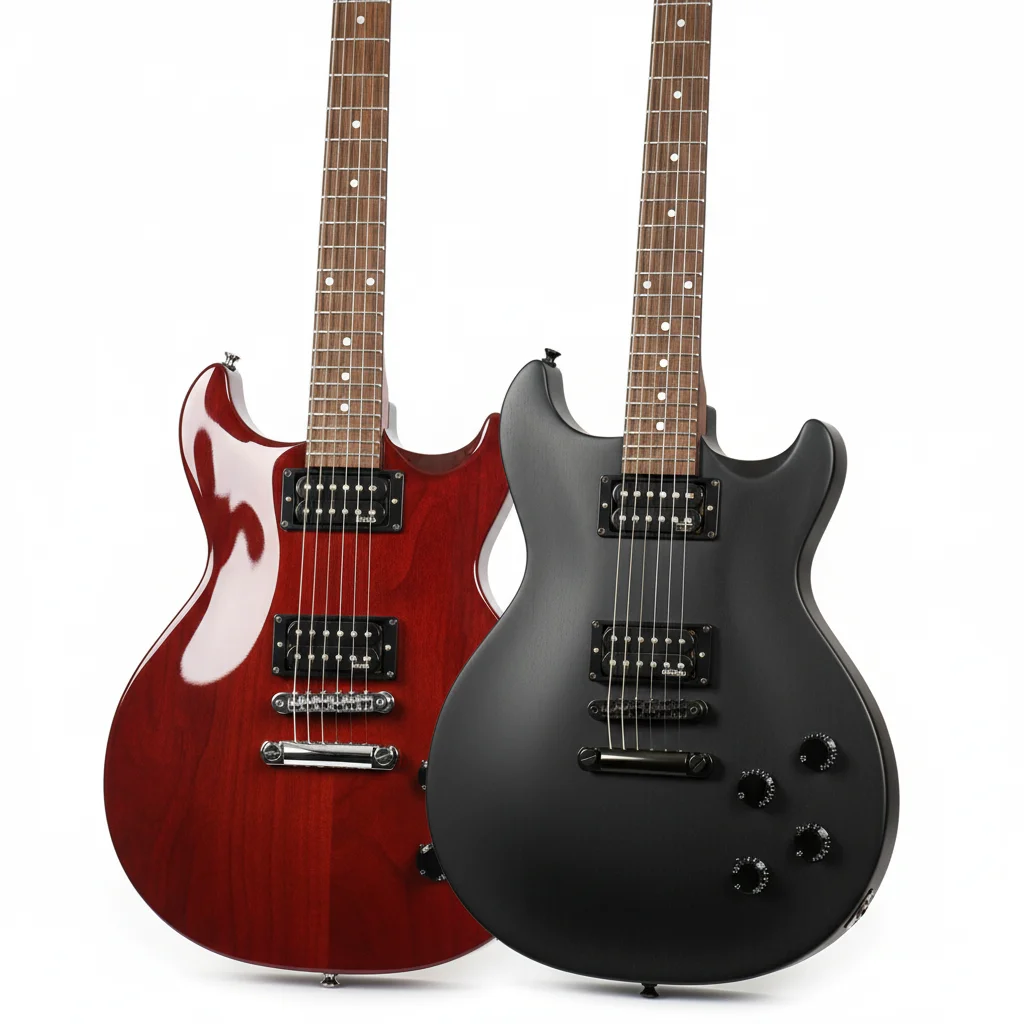
Choosing the right electric guitar finish can significantly impact your playing experience, with gloss and satin being the two primary options. While both offer aesthetic appeal, their tactile differences affect playability, maintenance, and even perceived tone. This guide explores the five key distinctions between gloss and satin finishes to help you decide which is best for your style.
Understanding Gloss Finishes on Electric Guitars
Gloss finishes, often made from polyurethane or nitrocellulose lacquer, are characterized by their high-sheen, reflective surface. This classic look is achieved through multiple layers of clear coat, meticulously sanded and buffed to a mirror-like shine. Guitars with a gloss finish tend to feel smooth and slick, which some players find enhances the speed and fluidity of their fretboard navigation. However, the very smoothness that appeals to some can be a point of contention for others, particularly on the neck, where it can feel ‘sticky’ or slow down hand movement, especially in humid conditions or during extended playing sessions. For more electric guitar guides on this site.
Beyond playability, gloss finishes are generally more durable against minor scratches and dings due to their thicker protective layer. They also tend to be easier to clean, as their non-porous surface resists grime and fingerprints more effectively. The visual depth and vibrancy of the wood grain are often accentuated by a gloss finish, making the instrument’s natural beauty pop.
Exploring Satin Finishes on Electric Guitars
Satin finishes, also known as matte or semi-gloss, offer a more subdued, non-reflective appearance. These finishes are applied in a similar manner to gloss but are not buffed to a high shine, resulting in a slightly textured, ‘open-pore’ feel. Many players prefer satin necks for their fast, non-sticky feel, which allows for effortless hand glides up and down the fretboard. This tactile advantage is particularly beneficial for players who prioritize speed and comfort, as the satin surface reduces friction and prevents the hand from sticking, even when sweating.
While satin finishes excel in playability, they can be more susceptible to showing wear and tear, such as ‘gloss spots’ where friction from playing polishes the matte surface over time. Cleaning can also be slightly more involved, as the micro-texture can trap dirt and oils. However, the natural, organic feel of a satin finish often resonates with players who appreciate a more direct connection to the wood of their instrument.
Playability: Speed and Comfort
|
Our Picks for the Best Electric Guitar in 2026
As an Amazon Associate I earn from qualifying purchases.
|
||
| Num | Product | Action |
|---|---|---|
| 1 | Ibanez GRG131DX - Black Flat |

|
| 2 | Jackson Dinky Minion JS1X Electric Guitar - Black |
|
| 3 | 16inch Mini Guitar Toy for Kids and Beginners, Electric Guitar with Strap for Toddlers and Boys and Girls Instrument Toys |
|
| 4 | Tostar 39 Inch Full Size Electric Guitar Kit For Beginners And Adults,SSS Pickup Stratocaster Guitarra Electrica Set Includes Tremolo Bridge,Amp,Strings,Stand,Case Bag, Birthday Holiday Gifts, Red |
|
| 5 | WINZZ EGM100 30 Inches Real Kids Electric Guitar with Beginner Kit, Right Handed (Gradient Pink) |
|
| 6 | RockJam Electric Guitar Kit with 10-Watt Amp, Gig Bag, Picks, Spare Strings & Lessons |
|
| 7 | Fender Mini Stratocaster Electric Guitar Kit, Beginner Guitar Kit, with 2-Year Warranty, with Frontman 10G Amp, Padded Gig Bag, Strap, Cable, Tuner, and Picks, Daphne Blue |
|
| 8 | LyxPro 39 inch Electric Guitar Kit Bundle with 20w Amplifier, All Accessories, Digital Clip On Tuner, Six Strings, Two Picks, Tremolo Bar, Shoulder Strap, Case Bag Starter kit Full Size - Blue |
|
| 9 | 39 Inch Electric Guitar Bag 7mm Padding Waterproof Electric Guitar Case, Electric Guitar Gig Bag Backpack with Neck Strap and Pockets, Black |
|
| 10 | STRICH Electric Guitar Beginner Kit, Solid Body 39" Full Size Electric Guitar HSS Pick Up for Starter, with 10W Amp, Bag, Digital Tuner, Capo, Strap, String,Cable, Picks, SST-S20 Sapphire Blue |
|
The most significant difference between gloss and satin finishes lies in their impact on playability. A gloss neck, while visually appealing, can sometimes create a sensation of drag or stickiness, especially for players with sweaty hands. This can hinder rapid position shifts and overall comfort during long practice sessions or performances. In contrast, a satin neck provides a consistently smooth and low-friction surface, allowing the hand to glide effortlessly. This makes satin a popular choice for shredders, technical players, and anyone seeking maximum comfort and speed.
Maintenance and Durability Considerations
When it comes to maintenance, gloss finishes generally have an edge in terms of ease of cleaning and resistance to minor abrasions. Their smooth, sealed surface can be wiped down quickly, and they are less prone to absorbing oils or dirt. Satin finishes, while durable, can be more challenging to clean thoroughly due to their slightly porous nature. They also tend to show fingerprints and smudges more readily. However, minor scratches on a satin finish are often less noticeable than on a highly reflective gloss surface. Regular cleaning with a microfiber cloth is recommended for both, but satin may require more frequent attention to maintain its matte appearance.
Aesthetic Appeal and Resale Value
The aesthetic appeal of gloss versus satin is entirely subjective. Gloss finishes offer a classic, luxurious look that many associate with premium instruments, often enhancing the visual depth of the wood grain. Satin finishes provide a more modern, understated, and often ‘raw’ aesthetic that appeals to those who prefer a less flashy appearance. From a resale perspective, both can hold their value well, but the condition of the finish plays a crucial role. A well-maintained gloss finish will always be desirable, while a satin finish that has developed significant ‘gloss spots’ might be less appealing to some buyers.
- Gloss Finish: High-sheen, reflective, classic look, durable, easy to clean.
- Satin Finish: Matte, non-reflective, modern feel, fast neck, comfortable.
- Playability: Gloss can feel sticky; satin offers smooth, fast movement.
- Maintenance: Gloss is easier to clean; satin may show wear more.
- Aesthetic: Gloss enhances wood grain; satin offers a natural, understated look.

I’ve always leaned towards gloss finishes for the classic look, but I never really thought about how much it impacts my playing. The point about gloss feeling slick and enhancing speed really resonated with me. I play a lot of fast solos, and I’ve definitely noticed how effortlessly my hand glides on my Strat’s neck. Great breakdown of the differences!
I appreciate the detailed comparison, especially about the maintenance aspect. I have a satin finish guitar, and while I love the feel, it does seem to show fingerprints and smudges a bit more easily than my gloss one. It’s not a dealbreaker, but it means I’m cleaning it more often to keep it looking good. Still, the playability is worth it.
This was super helpful! I’ve been debating between a new guitar with a satin neck or sticking with gloss. The explanation of how satin can feel more ‘woody’ and provide better grip is exactly what I needed to hear. I tend to get sweaty hands during longer gigs, so that extra bit of traction could make a big difference for me.
I used to think finish was purely aesthetic, but this really opened my eyes. My old guitar has a thick polyurethane gloss, and sometimes my hand would ‘stick’ a little, especially when it was humid. Now I understand why some players prefer nitrocellulose lacquer or even satin for a less sticky feel. Definitely considering a satin neck for my next purchase!