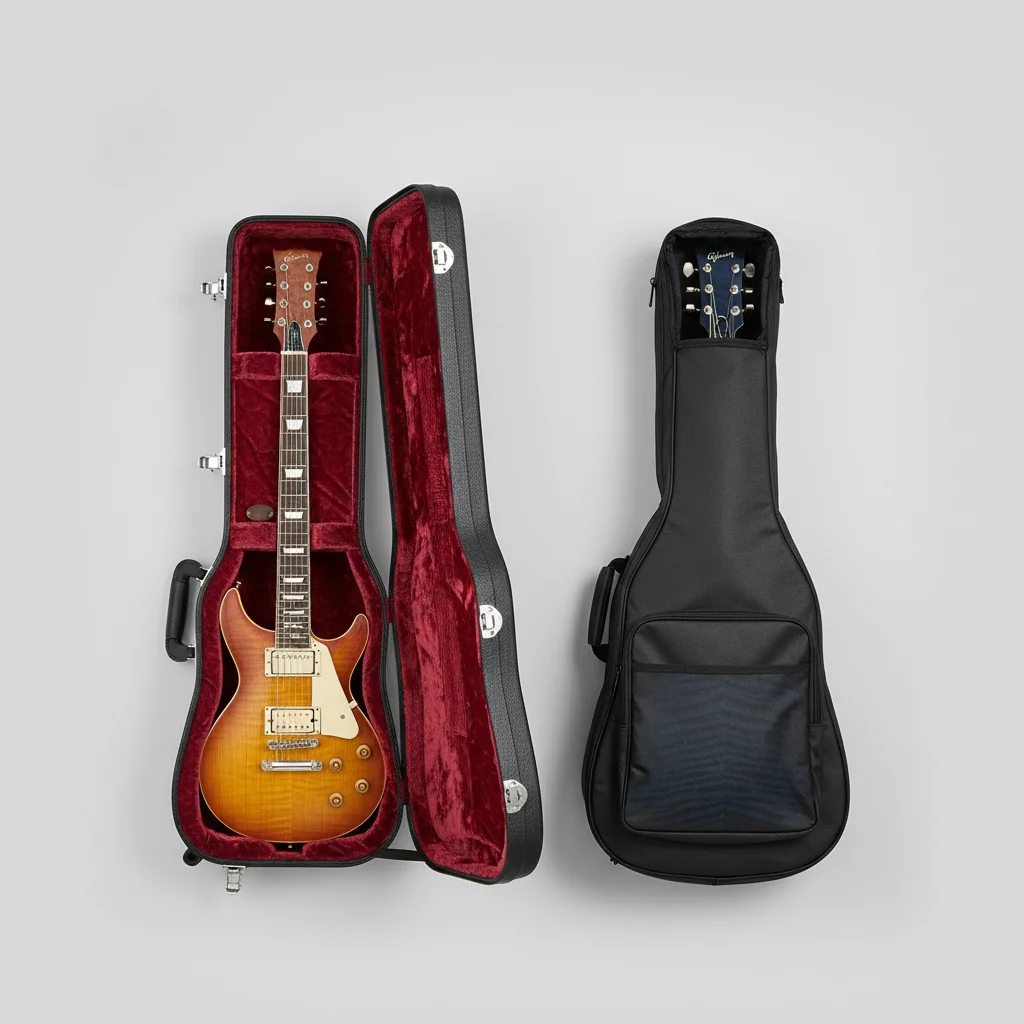
Choosing the right protection for your electric guitar is crucial, and it primarily comes down to two main types: hard shell cases and gig bags. While both offer a degree of protection, a hard shell case provides superior safeguarding against impacts, temperature fluctuations, and humidity changes, making it the preferred choice for serious musicians and frequent travelers. Gig bags, on the other hand, offer portability and convenience for lighter use.
Hard Shell Cases: Maximum Protection and Durability
Hard shell cases are constructed from rigid materials like wood, ABS plastic, or fiberglass, often with a plush interior lining. This robust construction offers the highest level of protection against physical damage, such as drops, bumps, and crushing forces. They are ideal for touring musicians, those who frequently transport their guitars in vehicles, or anyone needing to store their instrument in less controlled environments. The sealed nature of many hard cases also provides better insulation against extreme temperatures and humidity, which can be detrimental to a guitar’s wood and electronics.
While hard shell cases are heavier and bulkier than gig bags, their protective benefits often outweigh these drawbacks for valuable instruments. Many feature lockable latches for added security and internal compartments for accessories like strings, picks, and tuners.
Gig Bags: Portability and Convenience
Gig bags are soft-sided cases typically made from durable fabric like nylon or polyester, often with varying degrees of padding. Their primary advantage is their lightweight design and ease of transport. They are perfect for musicians who walk or use public transportation to rehearsals, lessons, or local gigs. Many gig bags come with backpack straps, making them comfortable to carry for extended periods.
While gig bags offer some protection against minor bumps and scratches, they do not provide the same level of impact resistance as hard shell cases. The amount of padding varies significantly between models, with some offering substantial foam protection and others being quite thin. They are generally less effective at protecting against temperature and humidity changes.
Key Differences in Protection and Use
|
Our Picks for the Best Electric Guitar in 2026
As an Amazon Associate I earn from qualifying purchases.
|
||
| Num | Product | Action |
|---|---|---|
| 1 | STRICH Electric Guitar Beginner Kit, Solid Body 39" Full Size Electric Guitar HSS Pick Up for Starter, with 10W Amp, Bag, Digital Tuner, Capo, Strap, String,Cable, Picks, SST-S20 Sapphire Blue |

|
| 2 | RockJam Electric Guitar Kit with 10-Watt Amp, Gig Bag, Picks, Spare Strings & Lessons |
|
| 3 | 16inch Mini Guitar Toy for Kids and Beginners, Electric Guitar with Strap for Toddlers and Boys and Girls Instrument Toys |
|
| 4 | Fender Mini Stratocaster Electric Guitar Kit, Beginner Guitar Kit, with 2-Year Warranty, with Frontman 10G Amp, Padded Gig Bag, Strap, Cable, Tuner, and Picks, Daphne Blue |
|
| 5 | Tostar 39 Inch Full Size Electric Guitar Kit For Beginners And Adults,SSS Pickup Stratocaster Guitarra Electrica Set Includes Tremolo Bridge,Amp,Strings,Stand,Case Bag, Birthday Holiday Gifts, Red |
|
| 6 | WINZZ EGM100 30 Inches Real Kids Electric Guitar with Beginner Kit, Right Handed (Gradient Pink) |
|
| 7 | LyxPro 39 inch Electric Guitar Kit Bundle with 20w Amplifier, All Accessories, Digital Clip On Tuner, Six Strings, Two Picks, Tremolo Bar, Shoulder Strap, Case Bag Starter kit Full Size - Blue |
|
| 8 | 39 Inch Electric Guitar Bag 7mm Padding Waterproof Electric Guitar Case, Electric Guitar Gig Bag Backpack with Neck Strap and Pockets, Black |
|
| 9 | Jackson Dinky Minion JS1X Electric Guitar - Black |
|
| 10 | Ibanez GRG131DX - Black Flat |
|
The fundamental difference lies in the level of protection. Hard shell cases are designed for maximum safety, especially against significant impacts and environmental factors. Gig bags prioritize portability and convenience for less demanding transport scenarios. Consider your typical usage and the value of your instrument when making your choice.
- Impact Resistance: Hard shell cases offer superior protection against drops and crushing.
- Environmental Shielding: Hard cases provide better insulation against temperature and humidity.
- Portability: Gig bags are lighter and easier to carry, often with backpack straps.
- Storage: Hard cases often have more secure internal compartments.
- Cost: Gig bags are generally more affordable than hard shell cases.
When to Choose a Hard Shell Case
Opt for a hard shell case if you frequently travel with your guitar, especially by air or in a vehicle where it might be exposed to impacts. It’s also the best choice for expensive or vintage instruments that require the highest level of protection. If you store your guitar in an area with fluctuating temperatures or humidity, a hard case will offer better stability.
When to Choose a Gig Bag
A gig bag is suitable for local travel to rehearsals, lessons, or casual gigs where your guitar is less likely to encounter significant impacts. It’s a great option for practice guitars or instruments where portability is a higher priority than extreme protection. For musicians on a budget, gig bags offer an accessible way to transport their instrument safely.
