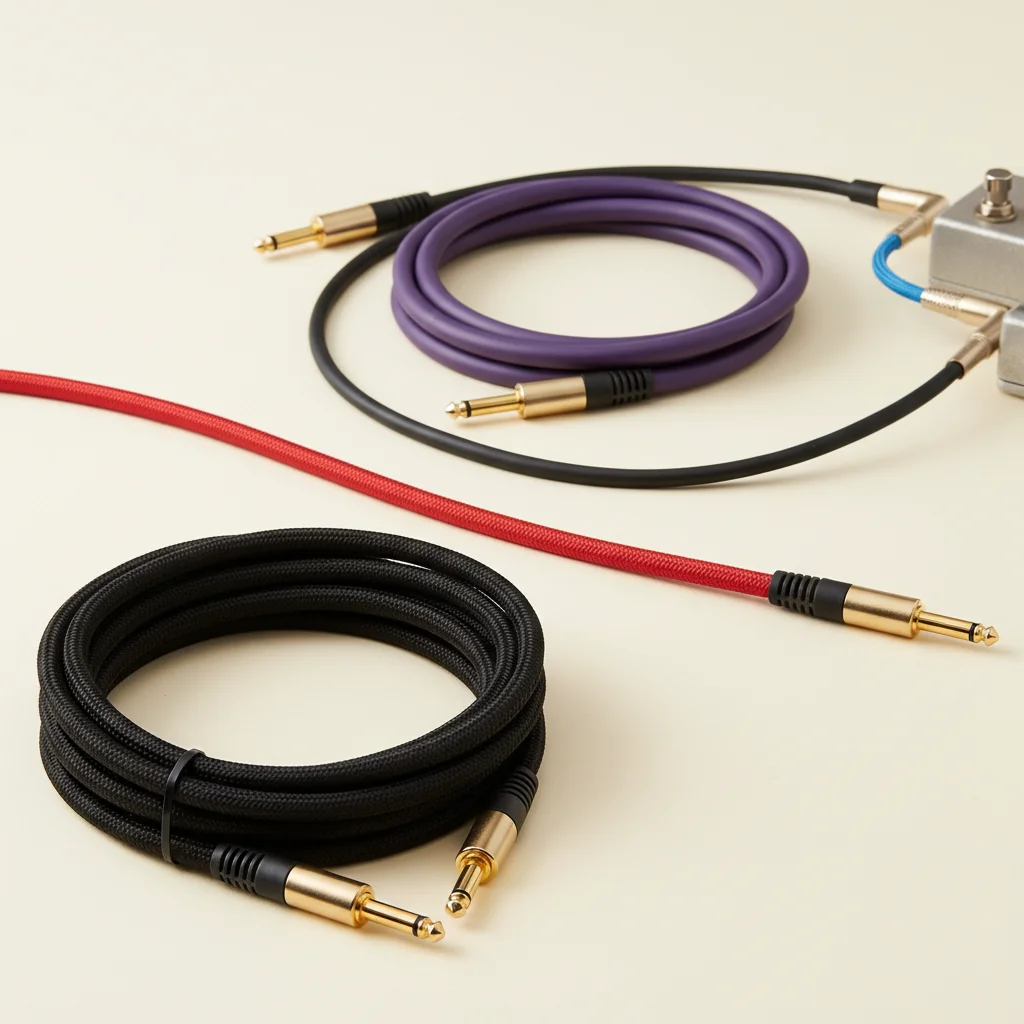
Choosing the correct length for your electric guitar cables is crucial for both sound quality and practical use. For most home players and small studio setups, a 10-foot to 15-foot cable is ideal, offering enough slack without introducing excessive signal degradation. Longer cables, while convenient for larger stages, can lead to tone loss and increased noise if not properly shielded and constructed.
Understanding Cable Length and Signal Integrity
The length of an electric guitar cable directly impacts the integrity of your signal. As the cable gets longer, it acts as a capacitor, subtly rolling off high frequencies and potentially introducing more noise. This effect, known as capacitance, is more pronounced with lower quality cables. For this reason, it’s generally recommended to use the shortest cable length that comfortably meets your needs. A 10-foot cable is often sufficient for practicing in a bedroom or small rehearsal space, keeping your signal clear and strong.
Optimal Lengths for Different Scenarios
The best cable length depends heavily on your specific playing environment. For home practice or recording, a 10-foot (3-meter) cable is usually perfect. It provides enough room to move around your amp without excess cable clutter. For small to medium-sized stages, a 15-foot (4.5-meter) to 20-foot (6-meter) cable offers a good balance between freedom of movement and signal preservation. If you’re playing on very large stages or need to move extensively, a 25-foot (7.5-meter) cable might be necessary, but be prepared for potential tone compromises unless you invest in high-quality, low-capacitance options. Anything longer than 25 feet should generally be avoided unless you are using a buffer pedal to maintain signal strength.
- Home Practice/Recording: 10-15 feet (3-4.5 meters)
- Small to Medium Stages: 15-20 feet (4.5-6 meters)
- Large Stages/Extensive Movement: 25 feet (7.5 meters) with buffering
- Pedalboard Connections: 6 inches to 1 foot (15-30 cm) patch cables
- Amp Head to Cabinet: 2-3 feet (0.6-0.9 meters) speaker cables
The Role of Cable Quality and Construction
|
Our Picks for the Best Electric Guitar in 2026
As an Amazon Associate I earn from qualifying purchases.
|
||
| Num | Product | Action |
|---|---|---|
| 1 | 16inch Mini Guitar Toy for Kids and Beginners, Electric Guitar with Strap for Toddlers and Boys and Girls Instrument Toys |

|
| 2 | LyxPro 39 inch Electric Guitar Kit Bundle with 20w Amplifier, All Accessories, Digital Clip On Tuner, Six Strings, Two Picks, Tremolo Bar, Shoulder Strap, Case Bag Starter kit Full Size - Blue |
|
| 3 | Ibanez GRG131DX - Black Flat |
|
| 4 | Jackson Dinky Minion JS1X Electric Guitar - Black |
|
| 5 | RockJam Electric Guitar Kit with 10-Watt Amp, Gig Bag, Picks, Spare Strings & Lessons |
|
| 6 | 39 Inch Electric Guitar Bag 7mm Padding Waterproof Electric Guitar Case, Electric Guitar Gig Bag Backpack with Neck Strap and Pockets, Black |
|
| 7 | Fender Mini Stratocaster Electric Guitar Kit, Beginner Guitar Kit, with 2-Year Warranty, with Frontman 10G Amp, Padded Gig Bag, Strap, Cable, Tuner, and Picks, Daphne Blue |
|
| 8 | Tostar 39 Inch Full Size Electric Guitar Kit For Beginners And Adults,SSS Pickup Stratocaster Guitarra Electrica Set Includes Tremolo Bridge,Amp,Strings,Stand,Case Bag, Birthday Holiday Gifts, Red |
|
| 9 | STRICH Electric Guitar Beginner Kit, Solid Body 39" Full Size Electric Guitar HSS Pick Up for Starter, with 10W Amp, Bag, Digital Tuner, Capo, Strap, String,Cable, Picks, SST-S20 Sapphire Blue |
|
| 10 | WINZZ EGM100 30 Inches Real Kids Electric Guitar with Beginner Kit, Right Handed (Gradient Pink) |
|
Beyond length, the quality of your electric guitar cable plays a significant role in its performance. High-quality cables feature better shielding, which helps to prevent electromagnetic interference (EMI) and radio frequency interference (RFI) from entering your signal. They also use better conductors, often oxygen-free copper, which improves signal transfer. Connectors are another critical component; durable, well-soldered connectors ensure a reliable connection and prevent signal drops. Investing in a good quality cable, even for shorter lengths, can make a noticeable difference in your tone and reduce unwanted noise.
When to Consider a Buffer Pedal
If you find yourself needing to use longer cables, especially those exceeding 20 feet, or if you have a large pedalboard with many true-bypass pedals, a buffer pedal can be an invaluable tool. A buffer pedal is an active circuit that converts your guitar’s high-impedance signal into a low-impedance signal. This makes the signal less susceptible to capacitance and tone loss over long cable runs. Placing a buffer at the beginning of your signal chain (after your guitar and before any long cables or extensive pedal chains) can help preserve your tone and clarity, even with longer cable lengths.
Speaker Cables vs. Instrument Cables: A Critical Distinction
It’s crucial to understand the difference between instrument cables and speaker cables. Instrument cables are designed to carry a low-level, high-impedance signal from your guitar to your amplifier or pedals. They have a central conductor and a braided or foil shield. Speaker cables, on the other hand, are designed to carry a high-power, low-impedance signal from your amplifier’s output to your speaker cabinet. They typically have two thicker conductors and no shielding. Using an instrument cable as a speaker cable can damage your amplifier, and using a speaker cable as an instrument cable will result in a noisy, poor-sounding signal. Always use the correct type of cable for its intended purpose.
Conclusion
Selecting the right electric guitar cable length is a balance between practicality and preserving your tone. For most players, a 10-foot to 15-foot cable will provide excellent performance. For larger stages, consider a 20-foot to 25-foot cable, potentially paired with a buffer pedal to maintain signal integrity. Always prioritize high-quality construction and remember the critical distinction between instrument and speaker cables to ensure the best sound and protect your equipment.
