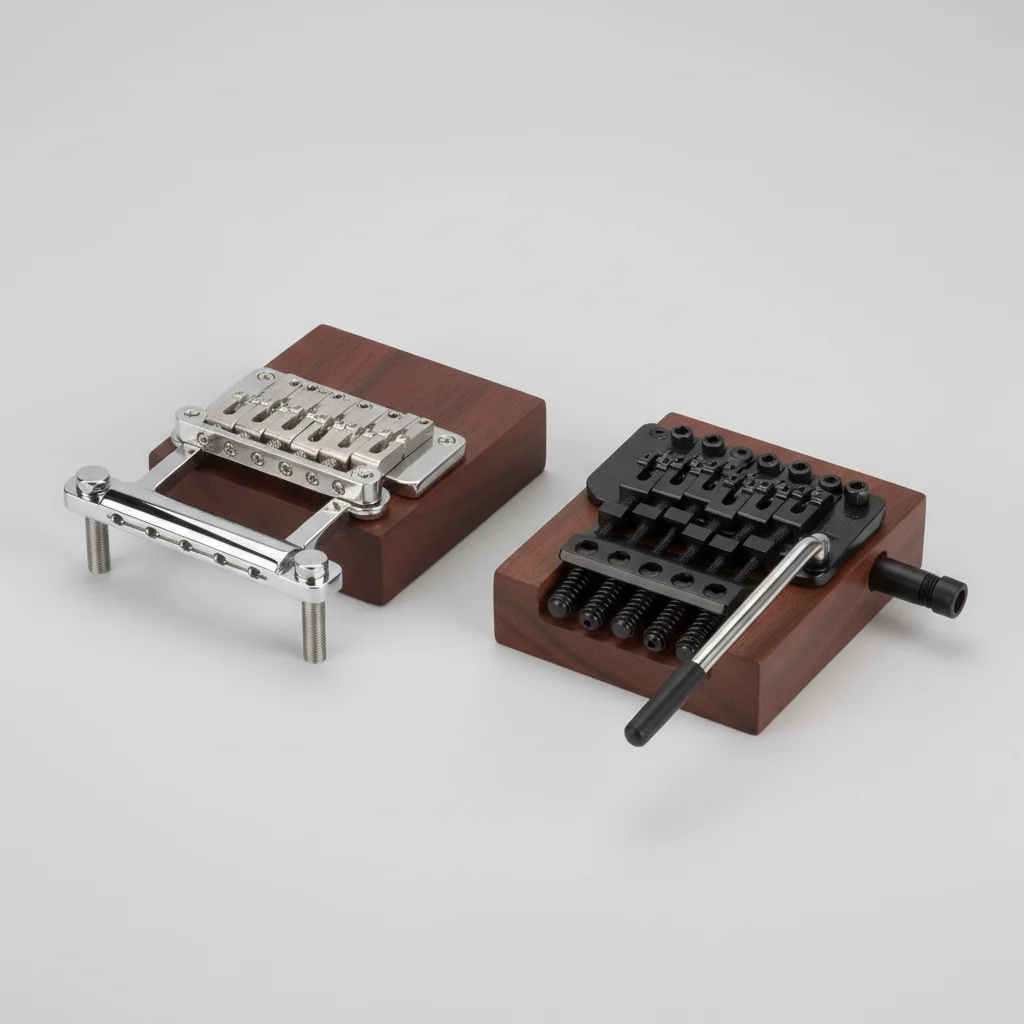
Choosing the right electric guitar bridge is crucial for both playability and sound, with the primary options being fixed or tremolo designs. Each type offers distinct advantages and disadvantages regarding tuning stability, sustain, and expressive capabilities. Understanding these differences will help you select the bridge that best suits your playing style and musical needs.
Fixed Bridges: Unwavering Stability and Sustain
Fixed bridges, such as tune-o-matic or hardtail designs, are renowned for their exceptional tuning stability and enhanced sustain. By eliminating moving parts, these bridges create a direct connection between the strings and the guitar body, maximizing vibrational transfer. This design is particularly favored by rhythm guitarists and players who prioritize rock-solid tuning and a rich, resonant tone. Maintenance is generally simpler with fixed bridges, as there are fewer components to adjust or wear out over time. They are also less susceptible to tuning issues when a string breaks, making them reliable for live performances.
- Superior tuning stability for consistent performance.
- Increased sustain due to direct string-to-body contact.
- Simpler setup and maintenance compared to tremolo systems.
- Ideal for genres requiring stable tuning and rich tone.
- Less prone to tuning shifts from string breaks.
Tremolo Bridges: Expressive Pitch Modulation
Tremolo bridges, often called whammy bars, introduce the ability to modulate pitch, creating vibrato, dive bombs, and other expressive effects. Popular types include synchronized tremolos (like the Fender Stratocaster’s) and locking tremolos (such as Floyd Rose systems). While offering immense creative potential, tremolo bridges can be more complex to set up and maintain, and they generally require more attention to tuning stability. Locking tremolos, in particular, provide excellent stability once set up, but string changes can be more involved. The choice often comes down to whether the expressive capabilities outweigh the potential for increased maintenance.
For players who frequently incorporate pitch bends and vibrato into their playing, a tremolo system is indispensable. However, it’s important to invest in a quality tremolo and understand its proper setup to avoid frustrating tuning issues. Many modern tremolo systems incorporate design improvements to enhance stability, making them more reliable than their predecessors. Consider the type of music you play and the sonic textures you wish to achieve when evaluating a tremolo bridge.
Hybrid Designs and Specialized Bridges
|
Our Picks for the Best Electric Guitar in 2026
As an Amazon Associate I earn from qualifying purchases.
|
||
| Num | Product | Action |
|---|---|---|
| 1 | STRICH Electric Guitar Beginner Kit, Solid Body 39" Full Size Electric Guitar HSS Pick Up for Starter, with 10W Amp, Bag, Digital Tuner, Capo, Strap, String,Cable, Picks, SST-S20 Sapphire Blue |

|
| 2 | Ibanez GRG131DX - Black Flat |
|
| 3 | LyxPro 39 inch Electric Guitar Kit Bundle with 20w Amplifier, All Accessories, Digital Clip On Tuner, Six Strings, Two Picks, Tremolo Bar, Shoulder Strap, Case Bag Starter kit Full Size - Blue |
|
| 4 | Jackson Dinky Minion JS1X Electric Guitar - Black |
|
| 5 | WINZZ EGM100 30 Inches Real Kids Electric Guitar with Beginner Kit, Right Handed (Gradient Pink) |
|
| 6 | 16inch Mini Guitar Toy for Kids and Beginners, Electric Guitar with Strap for Toddlers and Boys and Girls Instrument Toys |
|
| 7 | 39 Inch Electric Guitar Bag 7mm Padding Waterproof Electric Guitar Case, Electric Guitar Gig Bag Backpack with Neck Strap and Pockets, Black |
|
| 8 | RockJam Electric Guitar Kit with 10-Watt Amp, Gig Bag, Picks, Spare Strings & Lessons |
|
| 9 | Tostar 39 Inch Full Size Electric Guitar Kit For Beginners And Adults,SSS Pickup Stratocaster Guitarra Electrica Set Includes Tremolo Bridge,Amp,Strings,Stand,Case Bag, Birthday Holiday Gifts, Red |
|
| 10 | Fender Mini Stratocaster Electric Guitar Kit, Beginner Guitar Kit, with 2-Year Warranty, with Frontman 10G Amp, Padded Gig Bag, Strap, Cable, Tuner, and Picks, Daphne Blue |
|
Beyond the fundamental fixed and tremolo categories, various hybrid and specialized bridge designs exist, each offering unique characteristics. Some bridges combine elements of both, aiming to provide a balance of stability and subtle pitch modulation. For instance, certain Bigsby-style tremolos offer a more gentle vibrato effect without the extreme pitch shifts of a Floyd Rose. Other specialized bridges might focus on individual string intonation or unique string-through-body designs to further enhance sustain. Researching these niche options can reveal a bridge perfectly tailored to a very specific playing style or tonal preference.
Impact on Playability and Tone
The type of bridge significantly impacts both the playability and the overall tone of an electric guitar. Fixed bridges often contribute to a brighter, more direct tone with excellent note separation, while tremolo systems can sometimes introduce a slight softening of attack or a more resonant, less direct feel. The mass and material of the bridge also play a role in the guitar’s acoustic properties. Heavier bridges tend to increase sustain and can add to the overall resonance. Furthermore, the string spacing and saddle design of a bridge affect comfort and ease of playing, particularly for techniques like palm muting or hybrid picking.
Making Your Choice: What Matters Most?
When deciding between a fixed or tremolo bridge, consider your primary musical goals. If you prioritize unwavering tuning, maximum sustain, and a straightforward setup, a fixed bridge is likely your best option. If expressive pitch modulation, dive bombs, and vibrato are essential to your sound, a tremolo system, despite its potential complexities, will be necessary. For beginners, a fixed bridge often provides a more forgiving learning experience, allowing them to focus on technique without battling tuning issues. Experienced players, however, might find the creative freedom of a tremolo system indispensable. Ultimately, the best bridge is the one that empowers your musical expression and fits seamlessly into your playing style.

My Strat has a two-point tremolo, and I’ve learned to manage it pretty well. The key is proper setup, as highlighted here. I love being able to add subtle vibrato to my leads without completely wrecking my tuning. For players who want that expressive capability without going full Floyd Rose, a good two-point system is a fantastic compromise.
I’ve always leaned towards fixed bridges for my rhythm playing, and this really solidified why. The tune-o-matic on my Les Paul gives me such incredible sustain and I rarely have to retune, even after a long session. It’s great to have that rock-solid stability when you’re really digging into chords. Definitely the way to go for consistent tone.
I’ve been debating whether to get a guitar with a tremolo system for a while now, mostly for those expressive dive bombs. This helped me understand the trade-offs. While I love the idea of adding vibrato, I’m a bit worried about the tuning stability issues mentioned. I think I’ll stick with my hardtail for now, but maybe I’ll try a cheaper guitar with a basic trem just to experiment.
I recently got a guitar with a floating tremolo, hoping to get some cool sounds. While it’s fun for certain effects, I’m finding the maintenance a bit more involved than I expected. Changing strings is a bit of a pain, and it does go out of tune more often than my old fixed bridge guitar. It’s not terrible, but definitely something to consider if you’re not into constant adjustments.