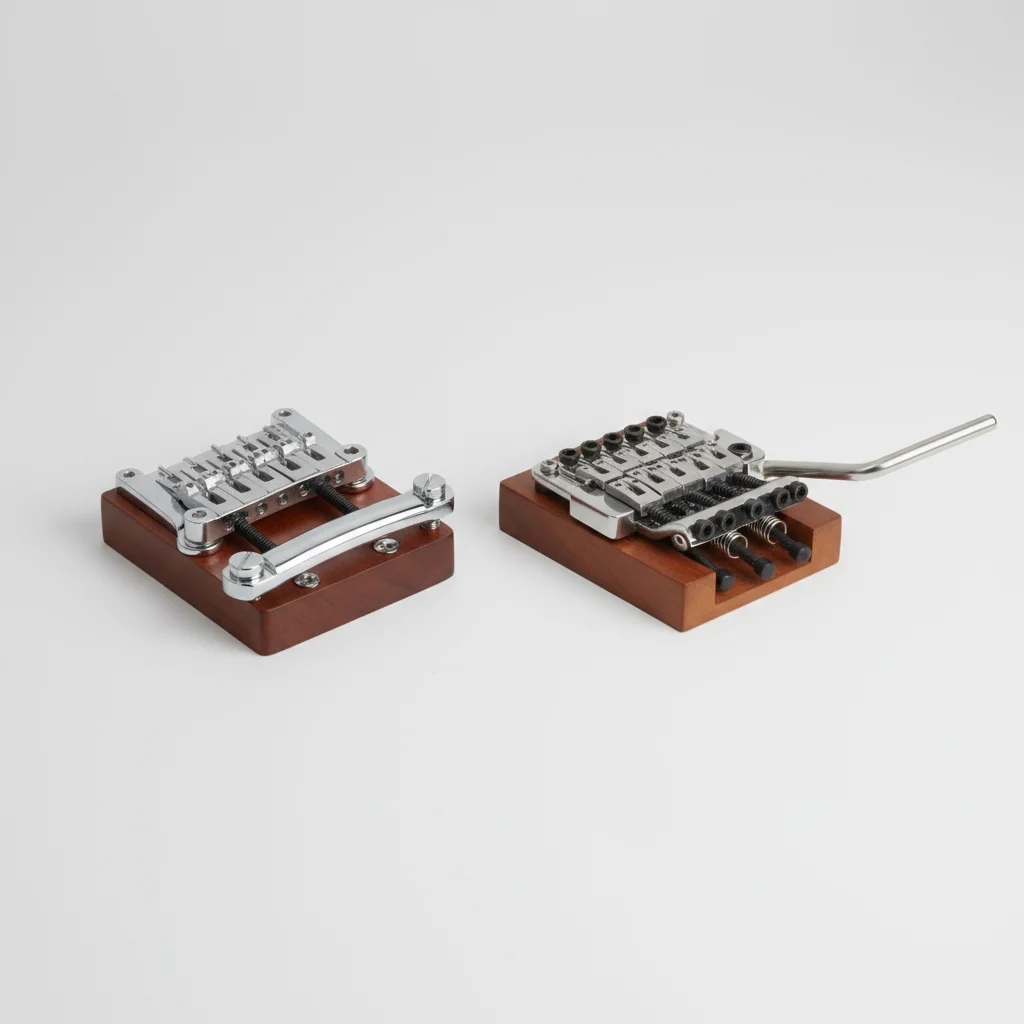
Choosing the right electric guitar bridge is crucial for both playability and tone, with two main types dominating the market: fixed and tremolo. The primary difference lies in their stability and expressive capabilities. Fixed bridges, like the Tune-o-Matic or hardtail, offer superior tuning stability and sustain due to their direct coupling with the guitar body. Tremolo systems, such as the Floyd Rose or Fender synchronized tremolo, provide expressive pitch bending and vibrato effects, but often at the cost of some tuning stability and sustain. Understanding these distinctions will help you select the bridge that best suits your playing style and musical needs.
Fixed Bridges: Unwavering Stability and Sustain
Fixed bridges are renowned for their rock-solid tuning stability and enhanced sustain. Because they are securely anchored to the guitar’s body, there’s no movement during play, which minimizes tuning issues. This direct contact also allows for maximum vibration transfer from the strings to the body, resulting in a richer, more resonant tone and longer sustain. Common examples include the Tune-o-Matic bridge, often found on Gibson-style guitars, and hardtail bridges, prevalent on many Fender-style instruments. These bridges are ideal for players who prioritize consistency, powerful tone, and don’t require pitch-bending effects. For see our electric guitar recommendations on this site.
Players who frequently use alternate tunings or aggressive strumming often prefer fixed bridges due to their reliability. The simplicity of their design also makes string changes and intonation adjustments straightforward. While they lack the dramatic flair of a tremolo, their dependable performance makes them a staple for genres like hard rock, metal, jazz, and blues where stability is paramount.
Tremolo Bridges: Expressive Pitch Bending and Vibrato
|
Our Picks for the Best Electric Guitar in 2026
As an Amazon Associate I earn from qualifying purchases.
|
||
| Num | Product | Action |
|---|---|---|
| 1 | WINZZ EGM100 30 Inches Real Kids Electric Guitar with Beginner Kit, Right Handed (Gradient Pink) |

|
| 2 | Ibanez GRG131DX - Black Flat |
|
| 3 | Jackson Dinky Minion JS1X Electric Guitar - Black |
|
| 4 | Fender Mini Stratocaster Electric Guitar Kit, Beginner Guitar Kit, with 2-Year Warranty, with Frontman 10G Amp, Padded Gig Bag, Strap, Cable, Tuner, and Picks, Daphne Blue |
|
| 5 | 16inch Mini Guitar Toy for Kids and Beginners, Electric Guitar with Strap for Toddlers and Boys and Girls Instrument Toys |
|
| 6 | RockJam Electric Guitar Kit with 10-Watt Amp, Gig Bag, Picks, Spare Strings & Lessons |
|
| 7 | Tostar 39 Inch Full Size Electric Guitar Kit For Beginners And Adults,SSS Pickup Stratocaster Guitarra Electrica Set Includes Tremolo Bridge,Amp,Strings,Stand,Case Bag, Birthday Holiday Gifts, Red |
|
| 8 | STRICH Electric Guitar Beginner Kit, Solid Body 39" Full Size Electric Guitar HSS Pick Up for Starter, with 10W Amp, Bag, Digital Tuner, Capo, Strap, String,Cable, Picks, SST-S20 Sapphire Blue |
|
| 9 | 39 Inch Electric Guitar Bag 7mm Padding Waterproof Electric Guitar Case, Electric Guitar Gig Bag Backpack with Neck Strap and Pockets, Black |
|
| 10 | LyxPro 39 inch Electric Guitar Kit Bundle with 20w Amplifier, All Accessories, Digital Clip On Tuner, Six Strings, Two Picks, Tremolo Bar, Shoulder Strap, Case Bag Starter kit Full Size - Blue |
|
Tremolo bridges, also known as vibrato systems, introduce a dynamic element to your playing by allowing you to alter the pitch of notes and chords. This is achieved through a spring-loaded mechanism that can be manipulated with a tremolo arm (whammy bar). From subtle shimmers to dramatic dive bombs, tremolo systems offer a wide range of expressive possibilities. The most popular types include the Fender synchronized tremolo, found on Stratocasters, and the locking Floyd Rose system, favored by shred guitarists for its extreme stability even during aggressive use.
While tremolo systems offer unparalleled expressive freedom, they can sometimes present challenges with tuning stability, especially with non-locking designs. The constant movement of the bridge can cause strings to go out of tune more easily. However, modern tremolo designs, particularly locking systems like the Floyd Rose, have significantly mitigated these issues, providing excellent stability for even the most demanding players.
Comparing Tuning Stability and Maintenance
When it comes to tuning stability, fixed bridges generally have the upper hand. Their static nature means fewer moving parts to cause friction or slippage, leading to more consistent tuning, especially during vigorous playing. Maintenance for fixed bridges is also typically simpler, involving basic string changes and intonation adjustments. Tremolo systems, particularly floating ones, require more attention. String changes can be more involved, and setting up the spring tension and intonation can be a more complex process. Locking tremolos, while offering superior stability once set up, also have a steeper learning curve for maintenance.
Impact on Sustain and Tone
The type of bridge also significantly influences a guitar’s sustain and tonal characteristics. Fixed bridges, with their direct and rigid connection to the guitar body, maximize the transfer of string vibrations, resulting in longer sustain and often a more resonant, full-bodied tone. Tremolo systems, especially floating ones, can slightly reduce sustain due to the energy absorbed by the springs and pivot points. However, this difference is often subtle and can be compensated for by other factors like pickup choice and amplifier settings. The tonal impact of a tremolo system can also introduce a certain

I recently switched from a tremolo system to a hardtail bridge on my main guitar, and the difference in sustain is night and day. It just feels so much more connected to the body, and the notes ring out forever. For my blues and rock playing, that extra sustain is exactly what I needed. Highly recommend trying a fixed bridge if you haven’t.
I’ve always leaned towards fixed bridges for my guitars, and this really solidified why. The Tune-o-Matic on my Les Paul just feels so reliable, and the sustain is incredible. I never have to worry about going out of tune mid-song, which is a huge plus for live gigs. Definitely sticking with fixed for my next purchase too.
I’ve been using a Fender synchronized tremolo for years, and while I love the vibrato effects, the tuning stability can be a real pain. I’m constantly having to re-tune, especially after some heavy whammy bar action. It’s a trade-off, but sometimes I wish I had something more stable for rhythm playing. Maybe I’ll try a hardtail next.
This was a good breakdown of the pros and cons. I’ve been considering a guitar with a Floyd Rose for those dive bombs, but I was worried about the tuning issues. It’s good to know what I’m getting into. I think for my style, the expressive capabilities might outweigh the slight hassle of re-tuning.