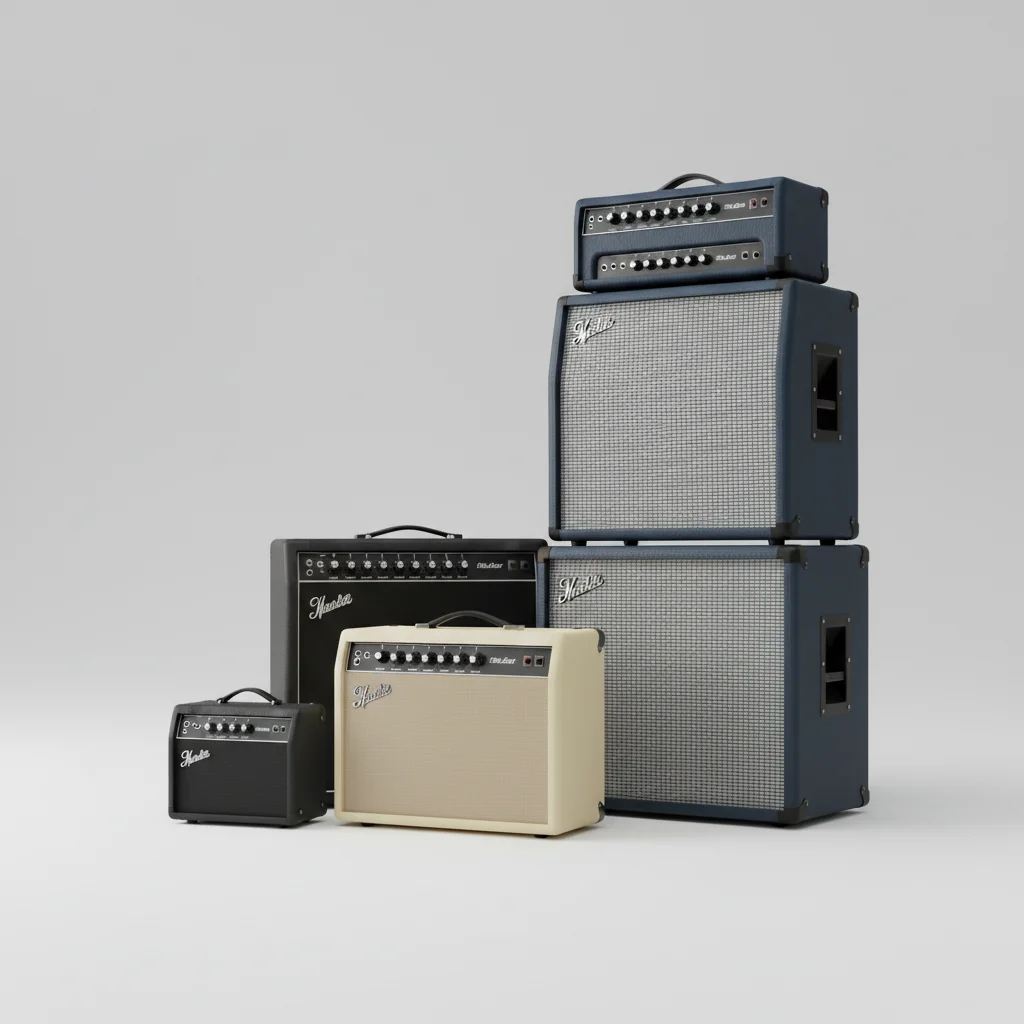
Choosing the right size electric guitar amp is crucial for achieving your desired sound and volume, whether you’re practicing at home, jamming with friends, or performing live. The ideal wattage and speaker size depend heavily on your specific use case. For home practice, a small 5-10 watt amp with an 8-inch speaker is often sufficient, while gigging musicians might require 50 watts or more with a 12-inch speaker or multiple speakers.
Understanding Amplifier Wattage and Volume
Many beginners mistakenly believe that wattage directly correlates to volume in a linear fashion. While higher wattage generally means more headroom and potential volume, the relationship isn’t one-to-one. A 50-watt amp isn’t five times louder than a 10-watt amp. Instead, higher wattage provides more clean headroom before the amplifier starts to distort, which is particularly important for genres requiring pristine clean tones at higher volumes. For home use, even a 1-watt amp can be surprisingly loud, especially with efficient speakers.
Consider the environment where you’ll be playing. A 15-watt tube amp can easily overpower a small apartment, whereas a 100-watt solid-state amp might be necessary to cut through a loud drummer and bass player in a band setting. Tube amps are generally perceived as louder than solid-state amps of the same wattage due to their different power compression characteristics.
Speaker Size and Tone Impact
The size of the speaker(s) in your amplifier significantly influences the overall tone and projection. Smaller speakers, like 8-inch or 10-inch, tend to have a tighter, more focused sound with a quicker response, often favored for blues, jazz, and some rock styles at lower volumes. They can also break up into overdrive more easily at lower volumes, which is desirable for certain tones.
Larger speakers, typically 12-inch, offer a fuller, richer sound with more bass response and greater projection. These are standard in many professional-grade combos and speaker cabinets, providing a more expansive soundstage suitable for a wider range of genres, from classic rock to metal. Some amps feature multiple speakers (e.g., 2×12 or 4×12 configurations) to further increase volume, bass response, and dispersion.
- 8-inch speakers: Ideal for practice, tight tones, early breakup.
- 10-inch speakers: Good balance for practice and small jams, articulate.
- 12-inch speakers: Standard for gigging, full tone, strong bass, good projection.
- Multiple speakers (e.g., 2×12, 4×12): Maximum volume, dispersion, and bass.
Solid-State vs. Tube Amps for Different Needs
|
Our Picks for the Best Electric Guitar in 2026
As an Amazon Associate I earn from qualifying purchases.
|
||
| Num | Product | Action |
|---|---|---|
| 1 | 16inch Mini Guitar Toy for Kids and Beginners, Electric Guitar with Strap for Toddlers and Boys and Girls Instrument Toys |

|
| 2 | LyxPro 39 inch Electric Guitar Kit Bundle with 20w Amplifier, All Accessories, Digital Clip On Tuner, Six Strings, Two Picks, Tremolo Bar, Shoulder Strap, Case Bag Starter kit Full Size - Blue |
|
| 3 | WINZZ EGM100 30 Inches Real Kids Electric Guitar with Beginner Kit, Right Handed (Gradient Pink) |
|
| 4 | RockJam Electric Guitar Kit with 10-Watt Amp, Gig Bag, Picks, Spare Strings & Lessons |
|
| 5 | Jackson Dinky Minion JS1X Electric Guitar - Black |
|
| 6 | Tostar 39 Inch Full Size Electric Guitar Kit For Beginners And Adults,SSS Pickup Stratocaster Guitarra Electrica Set Includes Tremolo Bridge,Amp,Strings,Stand,Case Bag, Birthday Holiday Gifts, Red |
|
| 7 | 39 Inch Electric Guitar Bag 7mm Padding Waterproof Electric Guitar Case, Electric Guitar Gig Bag Backpack with Neck Strap and Pockets, Black |
|
| 8 | Fender Mini Stratocaster Electric Guitar Kit, Beginner Guitar Kit, with 2-Year Warranty, with Frontman 10G Amp, Padded Gig Bag, Strap, Cable, Tuner, and Picks, Daphne Blue |
|
| 9 | STRICH Electric Guitar Beginner Kit, Solid Body 39" Full Size Electric Guitar HSS Pick Up for Starter, with 10W Amp, Bag, Digital Tuner, Capo, Strap, String,Cable, Picks, SST-S20 Sapphire Blue |
|
| 10 | Ibanez GRG131DX - Black Flat |
|
The choice between solid-state and tube amplifiers also plays a role in determining the right size. Solid-state amps are generally more reliable, require less maintenance, and offer consistent tone at any volume. They are often a more budget-friendly option and are excellent for clean tones or for use with pedalboards that provide the desired overdrive and effects. A 30-50 watt solid-state amp can be a versatile choice for home practice, rehearsals, and even small gigs.
Tube amps, on the other hand, are renowned for their warm, organic tone and dynamic response. They tend to sound best when pushed to their ‘sweet spot,’ where the power tubes begin to saturate and produce natural overdrive. This often means they need to be played at higher volumes to achieve their signature sound. For this reason, a 15-30 watt tube amp can be plenty powerful for many gigging situations, while smaller 1-5 watt tube amps are popular for achieving tube saturation at bedroom volumes.
Considering Features and Portability
Beyond wattage and speaker size, consider other features that impact your amp choice. Many modern amps include built-in effects like reverb, delay, and overdrive, which can reduce the need for external pedals. Some amps also offer headphone outputs for silent practice, auxiliary inputs for playing along with backing tracks, and USB connectivity for recording directly to a computer. Portability is another key factor; if you’re frequently transporting your amp, a lighter, more compact combo might be preferable over a heavy stack.
For home use, a small modeling amp offers incredible versatility with various amp models and effects in a compact package. For gigging, a head and cabinet setup provides flexibility to mix and match components, but a combo amp is often more convenient for transport and setup.
Matching Your Amp to Your Playing Environment
Ultimately, the best way to determine the right size electric guitar amp is to consider your primary playing environment. For exclusive home practice, a low-wattage combo (5-15 watts) with an 8-inch or 10-inch speaker is ideal, providing good tone without excessive volume. If you plan to jam with a drummer, stepping up to a 30-50 watt solid-state or 15-30 watt tube amp with a 12-inch speaker will give you the necessary headroom. For regular gigging in larger venues, 50 watts or more (solid-state) or 30 watts and up (tube) with a 12-inch speaker or multiple speakers will ensure you’re heard clearly. Always try out amps in person if possible to get a feel for their volume and tone characteristics.
