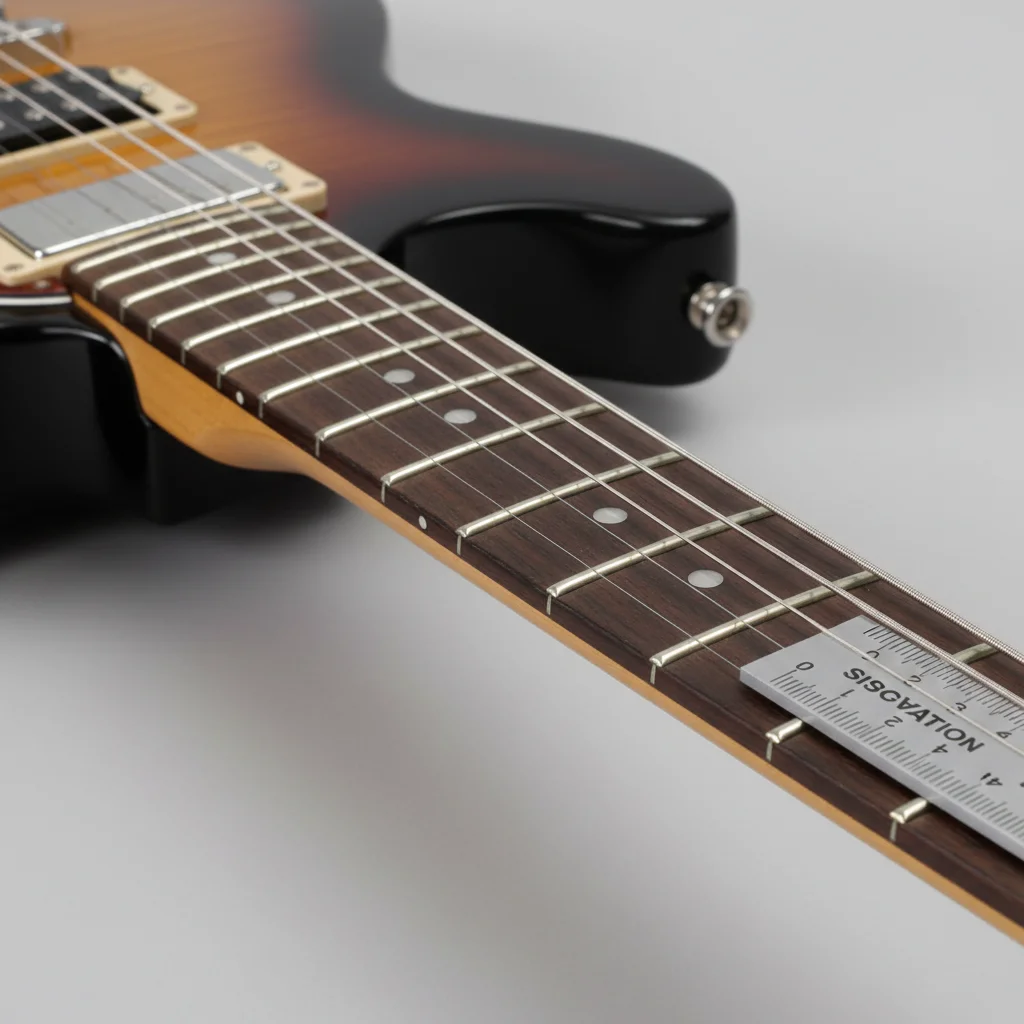
Setting the action on your electric guitar is a crucial adjustment that significantly impacts playability and tone. Generally, a good low action for an electric guitar ranges between 1.5mm and 2.0mm (0.06 to 0.08 inches) at the 12th fret for the low E string, and slightly lower, around 1.0mm to 1.5mm (0.04 to 0.06 inches), for the high E string. This range provides a comfortable playing experience without excessive fret buzz, allowing for faster playing and easier string bending.
Understanding Electric Guitar Action and Its Impact
Electric guitar action refers to the height of the strings above the fretboard. This seemingly small measurement has a profound effect on how your guitar feels and sounds. Lower action generally makes the guitar easier to play, requiring less finger pressure to fret notes, which can be beneficial for speed and intricate passages. However, if the action is too low, it can lead to fret buzz, where the strings vibrate against the frets, producing an undesirable rattling sound. Conversely, high action can make the guitar harder to play, causing finger fatigue, but it can also provide a clearer tone with more sustain, as the strings have more room to vibrate without interference.
Factors Influencing Optimal Action Height
Several factors determine the optimal action height for your electric guitar. Your playing style is a primary consideration; shredders and lead guitarists often prefer lower action for speed, while rhythm players or those who bend strings extensively might opt for slightly higher action to avoid choking notes. The guitar’s setup, including neck relief (the slight forward bow of the neck) and fret leveling, also plays a critical role. A properly leveled fretboard and correct neck relief are essential foundations for achieving a consistently low action without buzz. Additionally, string gauge can influence action; heavier strings typically require slightly higher action to prevent buzzing.
Adjusting Your Electric Guitar’s Action
|
Our Picks for the Best Electric Guitar in 2026
As an Amazon Associate I earn from qualifying purchases.
|
||
| Num | Product | Action |
|---|---|---|
| 1 | RockJam Electric Guitar Kit with 10-Watt Amp, Gig Bag, Picks, Spare Strings & Lessons |

|
| 2 | 16inch Mini Guitar Toy for Kids and Beginners, Electric Guitar with Strap for Toddlers and Boys and Girls Instrument Toys |
|
| 3 | WINZZ EGM100 30 Inches Real Kids Electric Guitar with Beginner Kit, Right Handed (Gradient Pink) |
|
| 4 | Tostar 39 Inch Full Size Electric Guitar Kit For Beginners And Adults,SSS Pickup Stratocaster Guitarra Electrica Set Includes Tremolo Bridge,Amp,Strings,Stand,Case Bag, Birthday Holiday Gifts, Red |
|
| 5 | Jackson Dinky Minion JS1X Electric Guitar - Black |
|
| 6 | LyxPro 39 inch Electric Guitar Kit Bundle with 20w Amplifier, All Accessories, Digital Clip On Tuner, Six Strings, Two Picks, Tremolo Bar, Shoulder Strap, Case Bag Starter kit Full Size - Blue |
|
| 7 | STRICH Electric Guitar Beginner Kit, Solid Body 39" Full Size Electric Guitar HSS Pick Up for Starter, with 10W Amp, Bag, Digital Tuner, Capo, Strap, String,Cable, Picks, SST-S20 Sapphire Blue |
|
| 8 | Fender Mini Stratocaster Electric Guitar Kit, Beginner Guitar Kit, with 2-Year Warranty, with Frontman 10G Amp, Padded Gig Bag, Strap, Cable, Tuner, and Picks, Daphne Blue |
|
| 9 | 39 Inch Electric Guitar Bag 7mm Padding Waterproof Electric Guitar Case, Electric Guitar Gig Bag Backpack with Neck Strap and Pockets, Black |
|
| 10 | Ibanez GRG131DX - Black Flat |
|
Adjusting the action on an electric guitar involves two main components: the bridge and the nut. The bridge saddles are the primary means of fine-tuning string height. Each saddle can be individually raised or lowered using a small hex wrench or screwdriver, allowing for precise control over the action of each string. The nut, located at the headstock, sets the string height at the first fret. While less frequently adjusted by beginners, a nut that is too high can make playing in the lower positions difficult. For significant action changes or persistent buzzing, it’s often best to consult a professional luthier, as improper adjustments can lead to further issues.
- Check neck relief before adjusting saddle height.
- Adjust saddle height incrementally, testing playability after each small turn.
- Use a string action gauge for accurate measurements.
- Consider your playing style and comfort when setting final height.
- If buzzing persists, check for uneven frets or a high nut.
Tools for Accurate Action Measurement
To accurately measure and adjust your electric guitar’s action, a few essential tools are highly recommended. A string action gauge is indispensable, providing precise measurements in millimeters or inches at various points on the fretboard. Feeler gauges are useful for checking neck relief, ensuring the neck has the correct amount of forward bow. A set of small hex wrenches (Allen keys) will be needed for adjusting bridge saddles, and a small screwdriver might be required for some bridge types. Investing in quality tools will make the adjustment process much easier and more accurate, helping you achieve your desired playability.These tools are readily available and can significantly improve your guitar setup experience.
Maintaining Your Preferred Action
Once you’ve achieved your preferred electric guitar action, regular maintenance is key to keeping it consistent. Environmental changes, particularly fluctuations in temperature and humidity, can cause the guitar’s wood to expand or contract, affecting neck relief and, consequently, string action. Periodically checking your action and neck relief, especially when changing string gauges or during seasonal shifts, will help you maintain optimal playability. A stable environment for your guitar, such as a climate-controlled room or a good quality case, can minimize these environmental impacts and reduce the frequency of adjustments needed.

Finally, a clear explanation of electric guitar action that makes sense! I’ve been playing for years but never really understood the nuances of string height. The part about how lower action can help with faster playing really resonated with me. My old Gibson SG feels brand new after making these adjustments.
I tried to get my action down to the 1.0mm mark on the high E string as suggested, but I ended up with a lot of fret buzz, especially around the 7th fret. My guitar might just need a professional setup, or maybe my technique isn’t quite there yet. It’s a good starting point for understanding the concepts, though.
This really helped me understand why my Fender Strat felt so different from my friend’s. I always just eyeballed the string height, but learning about the specific measurements for the low E and high E strings made a huge difference. My only minor complaint is that I wish there were a few more tips on how to deal with neck relief before adjusting the action, but overall, super helpful.
I’ve always struggled with getting my shred guitar set up just right, and this guide was a lifesaver. I used to think anything under 2.0mm was too low, but after following the advice here, my Ibanez plays like a dream. No more fighting the strings, and my solos are definitely cleaner. Highly recommend paying attention to these details.