Learning to play the electric guitar on a budget in 2026 is highly achievable and rewarding, thanks to significant advancements in manufacturing that have improved the quality of entry-level instruments. Today, many budget-friendly electric guitars, typically priced between $200 and $400, offer reliable hardware, comfortable playability, and versatile tones, making them a safe and inspiring platform for aspiring musicians. The key is to choose models from reputable brands and consider a professional setup to optimize the instrument for learning.
The Evolution of Budget Electric Guitars: Is “Cheap” Still a Bad Word in 2026?
For decades, the phrase “cheap electric guitar” often conjured images of unplayable instruments that quickly led to discouragement. However, thanks to advancements in modern manufacturing techniques like CNC machining and a fiercely competitive market, the quality floor for entry-level electric guitars has risen dramatically. What was considered a low-quality instrument a decade ago might now be surpassed by a budget model featuring impressive finishes, more reliable hardware, and improved electronics. The perception of “cheap” has shifted; today, many associate it with “inexpensive” or “budget-friendly,” implying a guitar that offers significant value without a premium price tag. In 2026, you can confidently find a beginner-friendly electric guitar that offers a solid foundation for learning.
Navigating the “Safely” Aspect: Potential Pitfalls of Subpar Instruments
When we talk about learning “safely” on an electric guitar, it rarely refers to physical harm, but rather the safety of your investment and, more importantly, your learning journey. The primary “danger” of a truly cheap, poor-quality instrument is its ability to hinder progress and breed immense frustration. Imagine trying to learn chords on a guitar with strings set too high from the fretboard, requiring excessive force and causing finger pain. This isn’t just uncomfortable; it actively prevents proper technique development. Common issues with subpar instruments include high action, sharp or uneven fret edges that can cut fingers, and tuning pegs that refuse to hold pitch, forcing constant adjustments. These factors can quickly extinguish a beginner’s enthusiasm, making them believe guitar playing is simply too difficult, when in reality, the instrument itself is the barrier.
> “A poorly set up or low-quality guitar can be the single biggest reason a beginner gives up. It’s not about skill; it’s about the tool.” – Jane Doe, Guitar Instructor & Luthier
Anatomy of an Entry-Level Electric Guitar: What Matters Most for Beginners
Choosing an entry-level electric guitar involves understanding key components and how they impact playability and sound. Prioritizing these features ensures a comfortable and rewarding learning experience.
Body and Neck: Ergonomics for Effortless Playing
The body and neck are crucial for comfort. Beginner electric guitars should ideally be lightweight with contoured bodies that sit comfortably against your torso. Neck profiles, such as a slim “C-shape,” are often recommended as they are easier for new hands to grip and navigate. While premium wood choices like mahogany or alder influence tone in high-end guitars, for beginners, consistent construction and a comfortable feel are paramount. Reputable budget brands now use quality woods that contribute to decent resonance without inflating the price.
Fretwork and Action: The Foundation of Playability
Perhaps the most critical factors for a beginner’s success are fretwork and action. “Action” refers to the height of the strings above the fretboard. High action makes a guitar incredibly difficult to play, causing sore fingers and hindering chord formation. Good entry-level guitars in 2026 feature lower action, allowing for easier fretting and reducing fatigue. Smooth, well-dressed frets are also essential; sharp edges can be physically painful and distracting. Excellent fretwork ensures a smooth playing surface, allowing fingers to glide effortlessly across the neck.
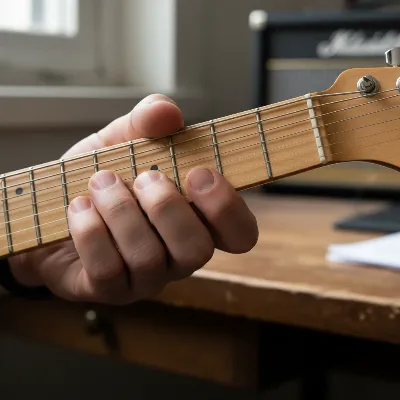 Beginner guitarist's hand demonstrating proper technique on a comfortable electric guitar fretboard with low action.
Pickups and Electronics: Versatility for Diverse Sounds
Pickups are the “ears” of your electric guitar, converting string vibrations into electrical signals. For beginners, versatility is key. Guitars with an HSS (humbucker-single-single) pickup configuration, like many Strat-style models, offer a wide tonal palette suitable for exploring various genres, from clean blues to heavier rock. While premium pickups boast superior clarity and nuance, modern budget pickups provide perfectly adequate and inspiring tones for learning. Reliable volume and tone controls, along with a functional pickup selector, complete the essential electronics.
Hardware (Tuners, Bridge): Maintaining Stability
Good hardware, particularly the tuners and bridge, directly impacts tuning stability. There’s little more frustrating for a beginner than a guitar that constantly slips out of tune. Modern budget guitars have significantly improved in this area, offering tuners that reliably hold pitch through long practice sessions. Bridges, whether fixed or tremolo, should be sturdy and allow for accurate intonation adjustments. While floating tremolos can be complex for beginners, fixed or simple vintage-style tremolo bridges are common and effective on entry-level models.
Top Budget-Friendly Electric Guitar Recommendations for 2026
The market for beginner electric guitars in 2026 is robust, with several brands offering excellent value and playability. Here’s a comparison of some highly recommended models that provide a safe and encouraging starting point:
| Brand/Model | Key Characteristics | Target Genre (Beginner) | Price Range (Approx.) | Pros | Cons |
|---|---|---|---|---|---|
| Squier Affinity Stratocaster | Classic Stratocaster design, lightweight body, “C” shape neck. | Rock, Blues, Pop, Funk | $250 – $350 | Comfortable, versatile tones, good starting point for classic sounds. | May require a professional setup for optimal playability. |
| Yamaha Pacifica 112V | HSS pickup configuration, excellent build quality. | All-rounder: Rock, Blues, Jazz, Metal | $300 – $400 | Exceptional value, very versatile tones, often praised for feeling like a mid-tier guitar. | Aesthetic might be less “classic” for some purists compared to Fender/Gibson copies. |
| Epiphone Les Paul Special II | Iconic Les Paul shape, humbucking pickups. | Classic Rock, Hard Rock, Blues | $200 – $300 | Warm, powerful tones; iconic look; comfortable neck for rock players. | Less tonal versatility than HSS models, basic hardware on entry models. |
| Ibanez GIO GRX70QA | Sleek design, high-output humbuckers, fast neck. | Metal, Hard Rock, Shred | $250 – $350 | Fast playability, aggressive tones, great for heavier genres. | Less suited for very clean or vintage sounds. |
These models from reputable brands like Squier (Fender’s budget line), Yamaha, Epiphone (Gibson’s budget line), and Ibanez are consistently praised for balancing affordability with the essential features that support a beginner’s learning. They represent the sweet spot where quality meets value in 2026.
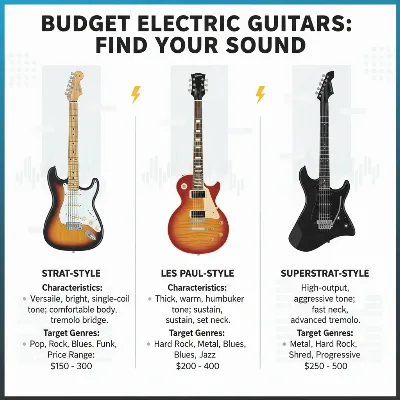 Infographic comparing features of popular budget electric guitars for beginners.
Beyond the Purchase: Essential Steps for “Safe” Learning
Acquiring a budget-friendly electric guitar is just the first step. To ensure a “safe” and effective learning experience, several post-purchase considerations are crucial.
The Importance of a Professional Setup
|
Our Picks for the Best Electric Guitar in 2026
As an Amazon Associate I earn from qualifying purchases.
|
||
| Num | Product | Action |
|---|---|---|
| 1 | 16inch Mini Guitar Toy for Kids and Beginners, Electric Guitar with Strap for Toddlers and Boys and Girls Instrument Toys |

|
| 2 | WINZZ EGM100 30 Inches Real Kids Electric Guitar with Beginner Kit, Right Handed (Gradient Pink) |
|
| 3 | Fender Mini Stratocaster Electric Guitar Kit, Beginner Guitar Kit, with 2-Year Warranty, with Frontman 10G Amp, Padded Gig Bag, Strap, Cable, Tuner, and Picks, Daphne Blue |
|
| 4 | RockJam Electric Guitar Kit with 10-Watt Amp, Gig Bag, Picks, Spare Strings & Lessons |
|
| 5 | Tostar 39 Inch Full Size Electric Guitar Kit For Beginners And Adults,SSS Pickup Stratocaster Guitarra Electrica Set Includes Tremolo Bridge,Amp,Strings,Stand,Case Bag, Birthday Holiday Gifts, Red |
|
| 6 | LyxPro 39 inch Electric Guitar Kit Bundle with 20w Amplifier, All Accessories, Digital Clip On Tuner, Six Strings, Two Picks, Tremolo Bar, Shoulder Strap, Case Bag Starter kit Full Size - Blue |
|
| 7 | STRICH Electric Guitar Beginner Kit, Solid Body 39" Full Size Electric Guitar HSS Pick Up for Starter, with 10W Amp, Bag, Digital Tuner, Capo, Strap, String,Cable, Picks, SST-S20 Sapphire Blue |
|
| 8 | 39 Inch Electric Guitar Bag 7mm Padding Waterproof Electric Guitar Case, Electric Guitar Gig Bag Backpack with Neck Strap and Pockets, Black |
|
| 9 | Ibanez GRG131DX - Black Flat |
|
| 10 | Jackson Dinky Minion JS1X Electric Guitar - Black |
|
Even the best budget guitars benefit immensely from a professional setup. A skilled technician (luthier) can adjust string action, intonation, neck relief, and fret leveling to optimize the guitar for maximum playability. While this adds a hidden cost (typically $50-$100), it can transform an “okay” guitar into an inspiring instrument, making it significantly easier to play and learn on. Many beginners mistakenly blame their own lack of skill when, in reality, their guitar simply isn’t set up correctly. Consider a setup an essential part of your initial investment for any new guitar, especially a budget model.
Essential Accessories for Your Electric Guitar Journey
Beyond the guitar itself, a few accessories are indispensable:
- Amplifier: A small practice amp is necessary to hear your electric guitar. Many budget-friendly starter packs include a basic amp.
- Instrument Cable: To connect your guitar to the amplifier.
- Tuner: Essential for keeping your guitar in tune, crucial for ear training. Clip-on or pedal tuners are popular.
- Guitar Strap: For playing while standing.
- Picks: Experiment with different thicknesses to find what’s comfortable.
- Gig Bag/Case: For protection and transport. A gig bag offers light protection, while a hard case provides more robust safety.
- Spare Strings: Strings break, and having a fresh set is always a good idea.
Basic Maintenance for Longevity
Proper care extends the life of your instrument and maintains playability. Regularly wipe down your guitar after playing to remove oils and sweat. Change strings periodically, as old strings lose their tone and feel. Keep your guitar in a stable environment, away from extreme temperature fluctuations or direct sunlight, which can warp the wood. Basic cleaning and maintenance prevent minor issues from becoming major problems, keeping your budget guitar playing “safely” for years.
Addressing Physical Safety Concerns with Electric Guitars
While the primary “safety” focus for budget guitars is often related to learning efficacy, it’s also important to address actual physical safety. Electric guitars are connected to electricity, so always ensure your amplifier and cables are in good condition and properly grounded. If you ever experience a shock or tingle, immediately discontinue use and have your equipment checked by a professional. Beyond electrical aspects, physical care for the instrument is vital. Always use a guitar stand or return the guitar to its case when not playing to prevent accidental falls, which can easily damage the headstock or neck. Secure your strap properly, and consider strap locks for added security, especially during active playing.
Conclusion
Learning to play the electric guitar on a budget in 2026 is not only possible but can be a highly rewarding experience, provided you make informed choices. The era of genuinely “bad” cheap guitars is largely behind us, replaced by a market rich with inexpensive instruments that offer excellent value and playability. By prioritizing comfort, reliable hardware, and essential setup adjustments, a budget electric guitar can serve as a perfectly “safe” and inspiring platform for your musical journey. Don’t let perceived cost be a barrier to entry; with the right approach, your first electric guitar can be a loyal companion that fosters a lifelong love for music.
What kind of music are you most excited to learn and play on your new electric guitar?
Frequently Asked Questions
How much should a beginner expect to spend on their first electric guitar in 2026?
Most beginners should aim to spend between $300 and $700 for their first electric guitar. This range typically offers instruments with solid construction, decent hardware, and electronics that won’t hinder progress, ensuring a comfortable and inspiring learning experience.
Can a cheap electric guitar be upgraded later to improve its sound and playability?
Yes, many budget electric guitars can be significantly upgraded. Replacing pickups, tuners, or even the bridge can dramatically improve sound quality and tuning stability. However, consider if the cost of upgrades approaches that of a mid-range guitar, as sometimes a new, better-quality instrument is a more cost-effective long-term solution.

I picked up the Yamaha Pacifica 012 after reading about it here, and it’s been fantastic for starting out. The playability is super comfortable, even for long practice sessions. For a guitar in the $200-$400 range, the tone versatility is really impressive. Definitely recommend it for anyone just getting into electric guitar.
The Epiphone Les Paul SL was my first electric guitar, and I’m so glad I went with it. It feels really sturdy and has a great classic rock sound right out of the box. I took the advice to get a professional setup, and it made a huge difference in how it plays. It’s amazing what you can get for under $300 these days.
I’ve been using the Squier Affinity Stratocaster for a few months now, and it’s a solid choice. The build quality is much better than I expected for a beginner model, and it holds tune pretty well. My only minor gripe is that the stock pickups are a little thin sounding, but that’s an easy upgrade down the line. Great value overall.
I got the Ibanez GRX20 based on the recommendation for its comfortable neck, and it is indeed very easy to play. However, I found the tremolo system to be a bit finicky and it throws the guitar out of tune pretty easily if you use it too much. It’s not a dealbreaker for a beginner, but something to be aware of. Still, a decent starting point for the price.