Choosing between an acoustic and an electric guitar depends on your musical aspirations, preferred genres, budget, and commitment level. Acoustic guitars are ideal for folk, country, and classical music, offering natural resonance and portability. Electric guitars are the backbone of rock, metal, and blues, providing versatile amplified tones and dynamic effects. For beginners, electric guitars often have lighter strings and thinner necks, making them physically easier to play initially, while acoustics build finger strength.
Acoustic vs. Electric Guitars: A Journey Through Sound and History
The history of the guitar is a rich tapestry woven with innovation and evolving musical needs. Both acoustic and electric guitars, while serving similar fundamental purposes, embarked on divergent evolutionary paths, each shaping distinct musical genres and playing styles. This evolution reflects a continuous quest for enhanced sound projection, tonal versatility, and player comfort.
Acoustic guitars represent the instrument in its purest form, relying solely on their physical construction to produce and amplify sound. Their lineage can be traced back thousands of years to ancient stringed instruments like the lute and oud. By the Renaissance, early versions resembling modern classical guitars began to emerge in Spain. A significant turning point arrived in the 19th century with the advent of steel strings and the innovative X-bracing techniques pioneered by luthiers like Christian Frederick Martin. These advancements allowed for louder, more resonant instruments, propelling the steel-string acoustic into the forefront of folk, country, and blues music. For explore our electric guitar reviews on this site.
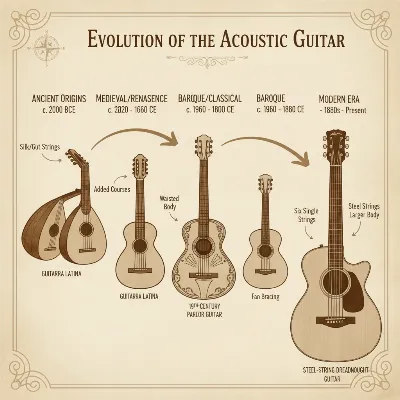 A historical evolution diagram showing ancient lutes transforming into classical and then steel-string acoustic guitars.
The electric guitar, however, was born out of a specific necessity in the early 20th century: volume. As bands grew larger and instrumentation became more diverse, acoustic guitars struggled to be heard alongside brass, percussion, and amplified vocals, particularly in jazz and big band ensembles. This challenge spurred a search for amplification, leading to experiments with electromagnetic pickups. The “Frying Pan,” developed by George Beauchamp and Adolph Rickenbacker in 1931, is often credited as the first commercially available electric guitar, initially a lap steel. The 1950s marked a golden age for electric guitar development, with Leo Fender introducing the iconic Telecaster (1950) and Stratocaster (1954), and Gibson unveiling the revolutionary Les Paul (1952). These solid-body designs drastically reduced feedback and offered unprecedented sustain and tonal manipulation, solidifying the electric guitar’s place as a cornerstone of rock and roll, blues, and jazz.
Unpacking the Differences: Popular Guitar Types and Their Traits
The vast world of guitars offers an array of models, each designed with specific tonal characteristics and playability in mind. While both acoustic and electric categories feature diverse shapes and sizes, their underlying principles of sound production dictate their primary applications and stylistic leanings.
Acoustic Guitar Varieties
|
Our Picks for the Best Electric Guitar in 2026
As an Amazon Associate I earn from qualifying purchases.
|
||
| Num | Product | Action |
|---|---|---|
| 1 | Jackson Dinky Minion JS1X Electric Guitar - Black |

|
| 2 | RockJam Electric Guitar Kit with 10-Watt Amp, Gig Bag, Picks, Spare Strings & Lessons |
|
| 3 | WINZZ EGM100 30 Inches Real Kids Electric Guitar with Beginner Kit, Right Handed (Gradient Pink) |
|
| 4 | Tostar 39 Inch Full Size Electric Guitar Kit For Beginners And Adults,SSS Pickup Stratocaster Guitarra Electrica Set Includes Tremolo Bridge,Amp,Strings,Stand,Case Bag, Birthday Holiday Gifts, Red |
|
| 5 | LyxPro 39 inch Electric Guitar Kit Bundle with 20w Amplifier, All Accessories, Digital Clip On Tuner, Six Strings, Two Picks, Tremolo Bar, Shoulder Strap, Case Bag Starter kit Full Size - Blue |
|
| 6 | Ibanez GRG131DX - Black Flat |
|
| 7 | 39 Inch Electric Guitar Bag 7mm Padding Waterproof Electric Guitar Case, Electric Guitar Gig Bag Backpack with Neck Strap and Pockets, Black |
|
| 8 | STRICH Electric Guitar Beginner Kit, Solid Body 39" Full Size Electric Guitar HSS Pick Up for Starter, with 10W Amp, Bag, Digital Tuner, Capo, Strap, String,Cable, Picks, SST-S20 Sapphire Blue |
|
| 9 | 16inch Mini Guitar Toy for Kids and Beginners, Electric Guitar with Strap for Toddlers and Boys and Girls Instrument Toys |
|
| 10 | Fender Mini Stratocaster Electric Guitar Kit, Beginner Guitar Kit, with 2-Year Warranty, with Frontman 10G Amp, Padded Gig Bag, Strap, Cable, Tuner, and Picks, Daphne Blue |
|
Acoustic guitars come in various body shapes and sizes, each influencing their volume, tone, and comfort. These instruments produce sound through the vibration of their strings resonating within a hollow body.
- Dreadnought: Characterized by a large, square-shouldered body, the Dreadnought is perhaps the most iconic acoustic shape. It’s known for its powerful volume, strong bass response, and rich mid-range, making it a favorite for strumming and flatpicking in folk, country, and bluegrass.
- Grand Auditorium: A popular modern shape, the Grand Auditorium offers a balanced tone with good projection and articulate highs. Its comfortable size makes it versatile for both strumming and fingerstyle playing, appealing to a wide range of genres.
- Jumbo: As its name suggests, Jumbo guitars are exceptionally large, producing immense volume and a full, resonant sound with pronounced bass. They are often favored by rhythm guitarists or those seeking a commanding presence.
- Classical (Nylon-string): Distinct from steel-string acoustics, classical guitars feature nylon strings, a wider neck, and a mellower, warmer tone. They are primarily used for classical, flamenco, bossa nova, and fingerstyle jazz, offering a softer attack and greater sustain for intricate melodies.
- Parlor: These small-bodied guitars were popular in the late 19th and early 20th centuries. They offer a focused, intimate sound with a strong mid-range, ideal for blues, folk, and quiet practice sessions where portability is key.
Electric Guitar Icons
Electric guitars rely on electronic amplification for their sound, allowing for incredible tonal variety through pickups, amplifiers, and effects pedals. Their solid or semi-hollow bodies come in numerous designs, many of which have become legendary.
- Stratocaster: The Fender Stratocaster is instantly recognizable with its double-cutaway body, three single-coil pickups, and tremolo system. Known for its bright, clear, and versatile sound, it’s a staple in rock, blues, funk, and country, favored by guitarists like Jimi Hendrix and Eric Clapton.
- Telecaster: The Fender Telecaster, simpler in design than the Strat, features a single-cutaway body and two single-coil pickups. It’s renowned for its distinctive “twangy” bridge pickup tone and sturdy construction, making it a workhorse for country, blues, and rock and roll.
- Les Paul: Gibson’s Les Paul is famous for its thick, warm tone, substantial sustain, and elegant single-cutaway design, typically equipped with humbucker pickups. It’s a powerhouse for rock, blues, and jazz, championed by artists such as Jimmy Page and Slash.
- SG: The Gibson SG boasts a thinner, double-cutaway mahogany body, making it lighter and offering easier access to higher frets. With a powerful, aggressive tone, it became a favorite for hard rock and heavy metal, famously used by Angus Young.
- Hollow Body & Semi-Hollow Body: These electric guitars incorporate a resonant chamber, similar to an acoustic but with pickups. Hollow bodies produce a warm, airy tone favored in jazz, while semi-hollows add a center block to reduce feedback, making them suitable for blues, rockabilly, and some rock genres.
Anatomy of Sound: Key Components of Acoustic and Electric Guitars
While both types share fundamental components like the neck, fretboard, and tuners, their primary sound-producing mechanisms and structural designs differ significantly. Understanding these parts illuminates why each guitar sounds and feels unique.
Acoustic Guitar Components
An acoustic guitar’s sound is a direct result of its materials and construction, with the entire instrument acting as an amplifier.
- Body: The large, hollow body is the heart of an acoustic guitar’s sound. It consists of a soundboard (top), back, and sides. Common tonewoods for the soundboard include spruce (bright, resonant) and cedar (warm, rich), while mahogany (strong mid-range) and rosewood (complex overtones) are popular for the back and sides, each contributing distinct tonal qualities.
- Bracing: Inside the body, a system of wooden struts called bracing reinforces the soundboard and influences its vibration. X-bracing is common for steel-string acoustics, providing strength and balanced tone, while ladder bracing is often found in classical guitars, allowing for a more focused, trebly sound.
- Bridge & Saddle: The bridge anchors the strings to the body, transferring string vibrations directly to the soundboard. The saddle, typically made from bone or a synthetic material like Tusq, rests on the bridge and supports the strings, playing a crucial role in tone and intonation.
- Neck: The neck, often made of mahogany or maple, supports the fretboard. Classical guitars typically have wider necks to accommodate fingerstyle playing, while steel-string acoustics often feature slightly narrower profiles.
- Soundhole: This circular opening in the soundboard allows the amplified sound from within the body to project outward.
Electric Guitar Components
Electric guitars generate sound electronically, offering unparalleled control and manipulation of their output. Their design prioritizes playability and electronic versatility over natural resonance.
- Body: Unlike acoustics, electric guitar bodies are often solid, typically made from woods like alder (balanced), ash (bright, resonant), mahogany (warm, sustain), or maple (bright, articulate). The choice of wood still affects the inherent tone and sustain, even with electronic amplification. Semi-hollow and hollow bodies exist, adding acoustic resonance.
- Pickups: These are the defining components of an electric guitar. Magnetic pickups convert string vibrations into electrical signals.
- Single-coil pickups (e.g., Stratocaster, Telecaster) produce a bright, clear, and articulate sound, often with a slight hum.
- Humbucker pickups (e.g., Les Paul, SG) feature two coils wired out of phase to cancel hum, resulting in a thicker, warmer, and more powerful tone with greater sustain.
- P90 pickups offer a unique sound profile, often described as falling between single-coils and humbuckers, with a gritty, full-bodied punch.
- Bridge: Electric guitar bridges serve to anchor the strings and transfer vibrations, but they also offer different functionalities. Fixed bridges (e.g., Tune-o-matic on Les Pauls) provide maximum sustain and tuning stability. Tremolo systems (e.g., Fender’s synchronized tremolo or Floyd Rose) allow players to bend the pitch of notes, creating vibrato effects or dive bombs.
- Neck: Electric guitar necks are generally thinner and narrower than acoustic necks, promoting faster playing and easier string bending. Common neck woods include maple and mahogany, often paired with rosewood or ebony fretboards. Neck shapes (C-shape, D-shape, V-shape) influence playability.
- Controls: Electric guitars feature various knobs and switches to shape their sound:
- Volume and Tone controls adjust the output level and filter frequencies.
- Pickup selector switches allow players to choose between individual pickups or combinations, drastically altering the tonal character.
Battle of the Brands: Comparing Top Acoustic and Electric Guitar Makers
The guitar market is dominated by several legendary brands, each with a rich history and a reputation for producing exceptional instruments. While some brands excel in specific areas, many offer a diverse range of models catering to both acoustic and electric players.
| Feature / Brand | Fender | Gibson | Martin | Taylor | Ibanez | PRS (Paul Reed Smith) | Yamaha |
|---|---|---|---|---|---|---|---|
| Specialty | Electric (Strat, Tele), some Acoustics | Electric (Les Paul, SG), some Acoustics | Acoustic (Dreadnought, OM) | Acoustic (Grand Auditorium, GS Mini), some Electrics | Electric (Shred, Metal), some Acoustics | High-end Electric, some Acoustics | Versatile (Acoustic, Electric, Classical) |
| Sound Profile | Bright, articulate, versatile | Warm, powerful, sustain | Rich, resonant, balanced | Clear, balanced, articulate | Modern, aggressive, fast | Refined, versatile, boutique tone | Consistent, reliable, good value |
| Target Player | All levels, rock, blues, country, pop | Intermediate to pro, rock, blues, jazz | Intermediate to pro, folk, country, bluegrass | All levels, singer-songwriters, modern styles | Intermediate to pro, metal, rock, fusion | Intermediate to pro, session players | Beginners to intermediate, all genres |
| Price Range | Mid to High (Squier for budget) | Mid to Very High (Epiphone for budget) | Mid to Very High | Mid to High | Entry to High | High-end, boutique | Entry to Mid |
| Noted Models | Stratocaster, Telecaster, Jazzmaster, CD-60S | Les Paul, SG, ES-335, J-45 | D-28, HD-28, OM-28 | 314ce, GS Mini, 814ce | RG Series, JS Series, Artcore | Custom 24, McCarty, SE Series | FG Series, Revstar, Pacifica |
Fender and Gibson are titans primarily known for their electric guitar innovations, with iconic models like the Stratocaster, Telecaster, Les Paul, and SG shaping entire genres. However, both also offer respected lines of acoustic guitars, with Gibson’s J-45 being a legendary acoustic workhorse. Martin and Taylor stand out as premier acoustic guitar manufacturers, celebrated for their craftsmanship, tonewoods, and consistent quality, producing instruments revered by folk, country, and modern acoustic players alike.
Ibanez carved its niche in the electric guitar world, particularly among shred and metal guitarists, known for their fast necks and aggressive tones. PRS Guitars, founded by Paul Reed Smith, represents a fusion of vintage aesthetics with modern playability and meticulous craftsmanship, offering high-end electrics favored by professional musicians. Yamaha, on the other hand, provides a broader spectrum, offering reliable and high-quality acoustic, electric, and classical guitars at various price points, often lauded for their exceptional value. The “best” brand ultimately depends on a player’s individual preferences, budget, and desired sound.
Your Ultimate Guitar Buying Guide: Acoustic vs. Electric
Deciding between an acoustic and an electric guitar, especially as a new player, can be daunting. The choice largely hinges on your musical aspirations, preferred genres, budget, and commitment level. There is no single “right” answer; it’s about finding the instrument that inspires you to play.
Factors to Consider When Buying
- Budget: Acoustic guitars generally have a lower entry cost since they don’t require an amplifier. An electric setup, however, necessitates an amplifier, cables, and potentially effects pedals, significantly increasing the initial investment. You can find good beginner acoustics for a few hundred dollars, while a decent electric guitar and amp combo will likely start around $400-$500.
- Musical Style and Genre: What kind of music do you love and want to play?
- Acoustic guitars excel in folk, country, bluegrass, classical, singer-songwriter, and intimate pop settings. Their natural warmth and resonance are perfect for strumming chords around a campfire or delicate fingerpicking.
- Electric guitars are the backbone of rock, metal, blues, jazz, funk, and modern pop. Their ability to produce a vast array of tones—from clean and bright to heavily distorted—makes them incredibly versatile for lead lines, riffs, and creative soundscapes.
- Playability and Comfort:
- Acoustic guitars (especially steel-string models) often have higher string tension and thicker necks, which can be harder on fingertips initially. However, building finger strength on an acoustic can make transitioning to an electric easier later.
- Electric guitars typically have lighter gauge strings, lower action (strings closer to the fretboard), and thinner necks, making them generally easier to fret notes and bend strings, especially for beginners. Their smaller, lighter bodies can also be more comfortable to hold.
- Portability and Practice Environment: An acoustic guitar is self-sufficient; you can pick it up and play anywhere without additional gear. This makes it ideal for impromptu jam sessions, outdoor playing, or quiet practice at home. Electric guitars require an amplifier to be heard at full volume, which means more gear to transport and a potentially louder practice environment. However, many modern amps offer headphone outputs for silent practice.
Advice for Different Skill Levels
- Beginners: Choose the guitar that excites you most and aligns with the music you want to play. While acoustics can build finger strength, the easier playability of an electric might keep you motivated. Consider comfort, as initial discomfort can be a major barrier. Many brands offer excellent beginner-friendly models in both categories, such as the Fender CD-60S for acoustics or the Squier Bullet Stratocaster for electrics.
- Intermediate Players: This is often when players consider adding the other type of guitar to their arsenal or upgrading their existing one. If you started on acoustic, explore an electric to expand your sonic horizons. If you began with electric, a quality acoustic will deepen your understanding of dynamics and natural tone. Look for instruments with improved components and craftsmanship, often in the $400-$800 range.
- Advanced Players: You likely know your preferences well. Focus on specific features, premium tonewoods, high-quality electronics, and refined craftsmanship that cater to your nuanced playing style and professional needs. The budget can range from $800 to several thousands for high-end, specialized instruments.
Essential Accessories for Both Guitar Types
Regardless of your choice, certain accessories are indispensable for any guitarist:
- Tuner: Essential for keeping your guitar in tune. Clip-on tuners are convenient and accurate.
- Picks: Come in various thicknesses; experiment to find what feels best for your playing style.
- Strings: Always have spare sets. String type (steel vs. nylon, gauge) significantly impacts tone and feel.
- Case or Gig Bag: Protects your investment during transport and storage.
- Strap: For playing while standing.
- Cleaning Supplies: Microfiber cloths, guitar polish, fretboard conditioner.
- Capo: For acoustic guitars, allows for easy key changes.
- For Electric Guitars Only:
- Amplifier: Crucial for producing sound. Practice amps are great for home use, while larger combo or head/cabinet setups are for gigs.
- Instrument Cable: High-quality cables minimize signal loss and noise.
- Effects Pedals: (Optional, but highly recommended) Add reverb, delay, distortion, and a myriad of other effects to shape your sound.
Troubleshooting Common Guitar Issues: Acoustic and Electric
Even the best guitars can encounter issues over time. Knowing how to diagnose and address common problems can save you trips to the repair shop and keep your instrument in top playing condition.
Common Acoustic Guitar Problems
Acoustic guitars, being primarily wood, are sensitive to environmental changes and mechanical stress.
- Neck Warping/High Action: Humidity changes can cause the neck to bow, leading to high string action (strings too far from the fretboard) and difficulty playing. A truss rod adjustment can often correct this, but it requires caution.
- Fret Buzz: Strings buzzing against frets can be caused by low action, uneven frets, a poorly cut nut, or neck relief issues. Addressing the root cause, whether it’s a truss rod adjustment, fret leveling, or saddle adjustment, is key.
- Bridge Pulling Up: Excessive string tension or dry conditions can cause the bridge to lift from the soundboard. This is a serious structural issue often requiring professional repair, sometimes involving regluing or adding internal bracing.
- Dry Fretboard: Over time, especially in dry climates, fretboards can dry out, leading to fret sprout (fret ends sticking out) or even cracking. Regular conditioning with a specialized fretboard oil prevents this.
- Cracked Top/Sides: Physical impacts or extreme humidity fluctuations can cause cracks in the wooden body. Small cracks can be stabilized with glue, but larger damage might need extensive luthier work.
Common Electric Guitar Problems
Electric guitars, with their electronic components, have a different set of common issues.
- No Sound or Intermittent Signal: This is frequently caused by a faulty instrument cable. Always test with a known good cable first. Other culprits include a loose output jack, a dead battery (for active pickups), or a problem with the amplifier itself.
- Buzzing or Humming Noise: A common complaint for electric guitars.
- Single-coil pickups naturally pick up some hum.
- Poor grounding within the guitar’s wiring or electrical interference from nearby devices (lights, computers) can also cause buzzing. Checking wiring connections and using shielded cavities can help.
- Pickups Not Working Properly: If a pickup suddenly loses output or sounds weak, check for disconnected wires in the control cavity or a malfunctioning pickup selector switch. Cleaning the switch contacts can resolve many issues.
- Crackling/Popping Sounds: Often linked to dirty or oxidized potentiometers (volume and tone knobs) or selector switches. Using a contact cleaner and rotating the controls can clear these up.
- Intonation Issues: Notes played on frets being out of tune with open strings. This requires adjusting the saddles on the bridge to ensure each string’s length is correct.
> “Many guitar issues, especially for electronics, boil down to simple connection problems. Always start with the simplest checks like cables and batteries before diving into complex diagnostics.” – Admin, ReviewMusical.com
When in doubt, especially for structural issues or complex electronic repairs, it’s always best to consult a professional guitar technician or luthier to avoid causing further damage.
Preserving Your Instrument: Maintenance and Cleaning for Longevity
Proper care and regular maintenance are crucial for both acoustic and electric guitars, ensuring their longevity, optimal playability, and consistent sound. A well-maintained instrument is a joy to play and will hold its value better over time.
General Cleaning Practices
Routine cleaning keeps your guitar looking great and prevents grime buildup that can affect playability.
- Wipe Down After Each Use: Use a soft, lint-free microfiber cloth to wipe down the body, neck, and strings after every playing session. This removes sweat, oils, and dust, which can corrode strings and accumulate on the fretboard.
- Body Cleaning: For deeper cleaning, use a specialized guitar polish or detailer designed for your instrument’s finish (glossy or satin). Apply sparingly to a clean cloth, then wipe the body, buffing gently to a shine. Avoid household cleaners, which can damage finishes.
- Fretboard Conditioning: The fretboard can dry out, especially if it’s unfinished wood like rosewood or ebony. Every few months (or when changing strings), apply a small amount of fretboard oil or conditioner to a cloth and rub it into the wood, then wipe off any excess. This keeps the wood hydrated and prevents cracking.
- String Care: Regularly wipe down your strings. Change strings every 1-3 months, depending on how often you play and your body chemistry. Old, corroded strings sound dull and can hinder intonation.
 A guitarist’s hand wiping down the fretboard of an acoustic guitar with a soft cloth and a bottle of fretboard oil on a workbench.
Humidity Control: Crucial for Acoustics
Humidity is perhaps the most critical factor for acoustic guitar health. Wood naturally expands and contracts with changes in moisture, and extreme fluctuations can lead to serious issues.
- Maintain Consistent Humidity: Aim for a relative humidity between 45% and 55% for acoustic guitars. Use a humidifier in dry environments and a dehumidifier or desiccants in excessively humid ones.
- In-Case Humidifiers: These small devices, placed inside your guitar case, are excellent for maintaining a stable micro-environment around your instrument.
- Avoid Extremes: Never leave an acoustic guitar in direct sunlight, near heaters, or in a car where temperatures and humidity can fluctuate wildly.
Other Important Maintenance Tasks
- Truss Rod Adjustment: The truss rod inside the neck controls its relief (the slight forward bow). Adjustments might be needed if the action becomes too high or low. This is a delicate procedure; if you’re unsure, consult a professional to avoid damaging the neck.
- Intonation Check: For electric guitars, regularly check that the intonation is accurate (notes are in tune across the fretboard). Adjust the bridge saddles as needed.
- Tighten Hardware: Periodically check and gently tighten any loose screws on tuning pegs, strap buttons, and other hardware.
- Proper Storage: When not playing, store your guitar in its case or on a stand in a stable environment. A case offers the best protection against impacts and environmental changes.
Consistent care ensures your guitar remains a reliable and inspiring companion for years to come, preserving its sound, feel, and beauty.
Conclusion
The choice between an acoustic and an electric guitar is a deeply personal one, driven by your musical journey and aspirations. Acoustic guitars offer a rich, organic sound, unparalleled portability, and are ideal for heartfelt strumming or intricate fingerstyle, connecting you to music in its most fundamental form. Electric guitars, on the other hand, unlock a universe of amplified tones, dynamic effects, and the power to shape genres, offering a thrilling playground for sonic exploration and high-energy performance.
There’s no definitive “best” instrument; only the one that best suits your goals for 2026 and beyond. Whether you’re drawn to the campfire singalongs of an acoustic or the electrifying riffs of an electric, both promise a rewarding path of creativity and personal expression. Ultimately, the best guitar for you is the one that you pick up most often, the one that inspires you to play and grow as a musician.
What musical adventures will you embark on with your chosen guitar this year?
Frequently Asked Questions
Is an electric guitar easier to learn than an acoustic for beginners?
Electric guitars often have lighter strings, lower action, and thinner necks, making them physically easier on the fingers and allowing for smoother fretting and bending. This can reduce initial discomfort and keep beginners more motivated, though acoustic guitar playing builds significant finger strength.
Can I play an electric guitar without an amplifier?
Yes, you can play an electric guitar unplugged, but it will be very quiet, similar to the sound of a hollow body without amplification. To hear its true potential and diverse tones, an amplifier is essential. Many amps offer headphone jacks for silent practice.
What are the main differences in sound between acoustic and electric guitars?
Acoustic guitars produce a natural, resonant, and warm sound through their hollow bodies, ideal for organic tones. Electric guitars, using pickups and amplification, offer a vast range of sounds from clean and bright to distorted and heavily processed, allowing for electronic manipulation of tone.
Do acoustic and electric guitars use the same type of strings?
Most steel-string acoustic guitars use bronze or brass strings, which are typically heavier gauge for greater volume and resonance. Electric guitars use lighter gauge steel or nickel strings, designed to interact with magnetic pickups and facilitate bending. Classical acoustics use nylon strings.
How often should I clean and maintain my guitar?
A quick wipe-down after each playing session is recommended. Deeper cleaning, string changes, and fretboard conditioning should be done every 1-3 months or as needed, depending on playing frequency and environmental conditions, to ensure optimal playability and longevity.
Frequently Asked Questions
Is an electric guitar easier to learn than an acoustic for beginners?
Electric guitars often have lighter strings, lower action, and thinner necks, making them physically easier on the fingers and allowing for smoother fretting and bending. This can reduce initial discomfort and keep beginners more motivated, though acoustic guitar playing builds significant finger strength.
Can I play an electric guitar without an amplifier?
Yes, you can play an electric guitar unplugged, but it will be very quiet, similar to the sound of a hollow body without amplification. To hear its true potential and diverse tones, an amplifier is essential. Many amps offer headphone jacks for silent practice.
What are the main differences in sound between acoustic and electric guitars?
Acoustic guitars produce a natural, resonant, and warm sound through their hollow bodies, ideal for organic tones. Electric guitars, using pickups and amplification, offer a vast range of sounds from clean and bright to distorted and heavily processed, allowing for electronic manipulation of tone.
Do acoustic and electric guitars use the same type of strings?
Most steel-string acoustic guitars use bronze or brass strings, which are typically heavier gauge for greater volume and resonance. Electric guitars use lighter gauge steel or nickel strings, designed to interact with magnetic pickups and facilitate bending. Classical acoustics use nylon strings.
How often should I clean and maintain my guitar?
A quick wipe-down after each playing session is recommended. Deeper cleaning, string changes, and fretboard conditioning should be done every 1-3 months or as needed, depending on playing frequency and environmental conditions, to ensure optimal playability and longevity.
How to Choose Between Acoustic and Electric Guitars
This guide helps you decide between an acoustic and electric guitar based on budget, musical style, playability, and portability.
Acoustic guitars generally have a lower entry cost, as they don't require an amplifier. A decent electric guitar and amp combo will likely start around $400-$500, while beginner acoustics can be found for a few hundred dollars.
Acoustic guitars excel in folk, country, and classical music, perfect for strumming or fingerpicking. Electric guitars are the foundation of rock, metal, and blues, offering a vast array of tones from clean to distorted for lead lines and riffs.
Electric guitars typically have lighter strings, lower action, and thinner necks, making them easier to fret and bend, especially for beginners. Acoustic guitars, particularly steel-string models, often have higher string tension and thicker necks, which can build finger strength.
Acoustic guitars are self-sufficient and can be played anywhere without additional gear, ideal for impromptu sessions. Electric guitars require an amplifier, meaning more gear to transport, though many modern amps offer headphone outputs for silent practice.

I appreciated the breakdown of genres for each type of guitar. I mostly play folk and country, so my acoustic has always been perfect. However, the mention of dynamic effects for electrics has me thinking about trying something new. It’s a good reminder that there’s a whole world of sound out there beyond just natural resonance.
This was super helpful in making my decision! I’m a total beginner and was torn. The point about electric guitars helping to build finger strength initially, even with lighter strings, really resonated with me. I’m excited to dive into some amplified tones and see what I can create.
While it’s true electrics can be easier for beginners due to string tension, I think it glosses over the initial cost. You need an amp and cables too, which adds up. An acoustic is often a simpler, all-in-one purchase to start with. Still, good points about the versatility for rock and metal.
I’ve been playing acoustic for years, but I’ve always been curious about electric. This really helped me understand the differences, especially about the lighter strings and thinner necks on electrics. I’m definitely leaning towards getting an electric now for some blues and rock. It sounds like a great way to expand my playing.